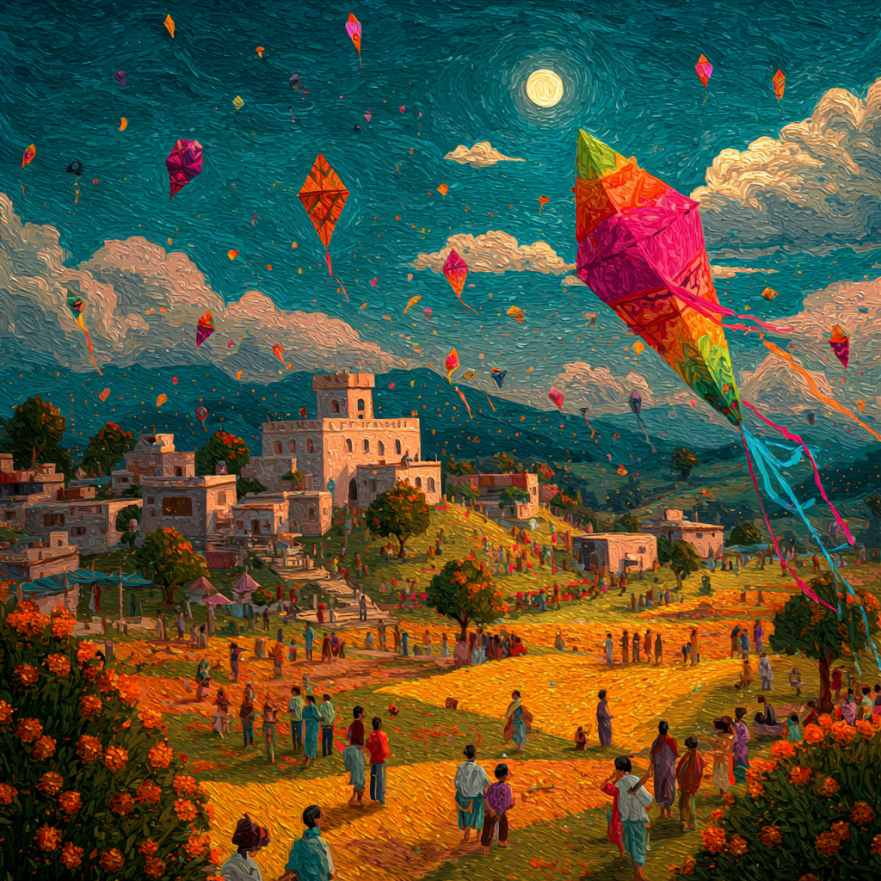
Makar Sankranti is one of the most widely celebrated Hindu festivals in India. It marks the transition of the Sun into Makara Rashi, the zodiac sign of Capricorn, according to the traditional sidereal solar calendar. The word Sankranti refers to the movement of the Sun from one zodiac sign to another, while Makara refers to Capricorn.
Makar Sankranti (Uttarayana / Pongal) 2027: Date, Puja Timings, Rituals & Stories
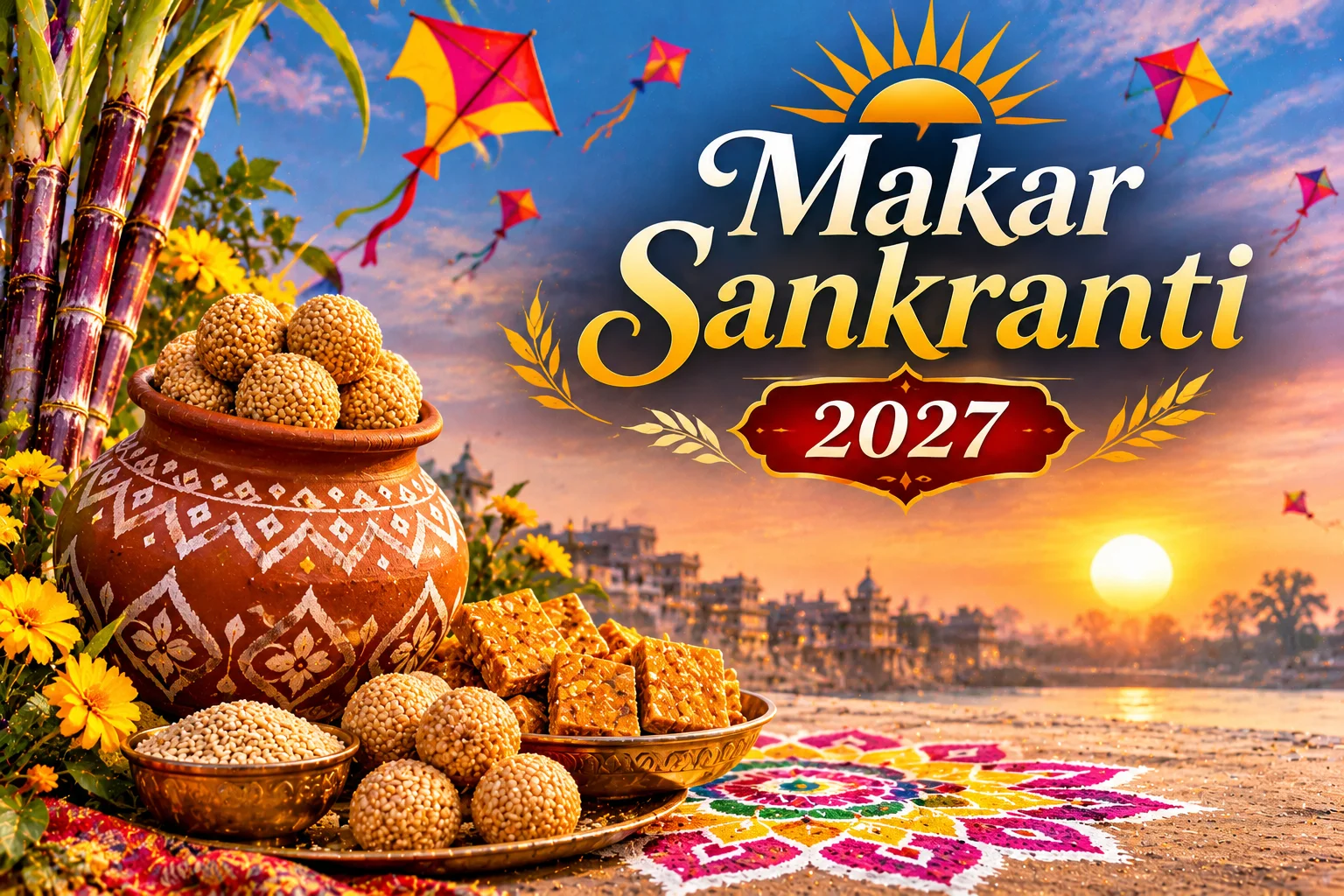
Makar Sankranti (Uttarayana / Pongal) Timings & Panchang
Important festival dates and auspicious timings
Usha Arghya (Sunrise)
07:15 am
Sandhya Arghya (Sunset)
05:46 pm
Start Date
Friday, 15 Jan 2027
Puja Muhurat
01:58 pm – 02:13 pm
Makar Sankranti (Uttarayana / Pongal)
The festival holds special importance because it is associated with Uttarayana, the traditionally auspicious northward course of the Sun. It symbolises light, renewal, spiritual progress, and the gradual transition from the colder part of the year towards longer and brighter days.
Unlike most Hindu festivals that follow the lunar calendar, Makar Sankranti is determined by the Sun's movement through the zodiac. For this reason, it generally falls around the middle of January in the Gregorian calendar, although its exact observance date and auspicious timings should be determined using the applicable Panchang.
Makar Sankranti is celebrated with different names and customs throughout India. It is known as Uttarayan in Gujarat, Pongal in Tamil Nadu, Magh Bihu in Assam, Maghi in parts of northern India, Poush Sankranti in West Bengal, Khichdi Parv in parts of Uttar Pradesh, and Makara Sankramana in Karnataka.
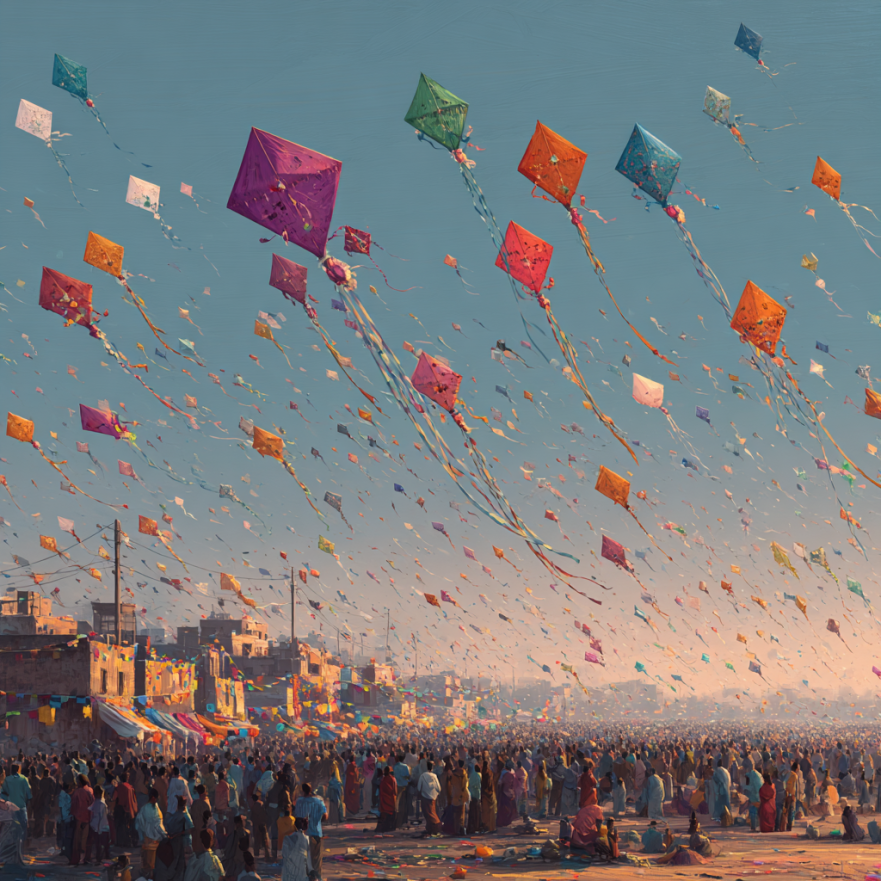
Devotees traditionally begin the day with a holy bath, worship Lord Surya, offer water to the Sun, donate sesame seeds, jaggery, grains, clothes, and other necessities, and prepare seasonal foods. Kite flying, sharing sesame-jaggery sweets, preparing khichdi, and celebrating the harvest are also important regional customs.
Makar Sankranti represents gratitude towards the Sun, respect for nature, agricultural prosperity, charity, and the importance of harmonious relationships. It encourages people to welcome positive changes, share their blessings, and begin a new phase with devotion and generosity.
Why is Makar Sankranti (Uttarayana / Pongal) Celebrated?
Makar Sankranti is celebrated to mark the Sun's entry into Makara Rashi and to honour the spiritual and seasonal significance associated with this transition. It is also a harvest celebration that expresses gratitude for agricultural abundance, sunlight, and the natural forces that sustain life.
The festival combines solar worship, traditional bathing, charity, seasonal food, and regional harvest customs. Its observance reflects the belief that generosity, devotion, and righteous actions performed during an auspicious solar transition bring spiritual merit and well-being.
- To celebrate the Sun's transition into Makara Rashi: Makar Sankranti marks the entry of Lord Surya into Capricorn, an important event in the Hindu solar calendar.
- To welcome Uttarayana: The festival is traditionally associated with the Sun's northward course, symbolising increasing light, spiritual progress, and an auspicious phase.
- To worship Lord Surya: Devotees offer water, prayers, and salutations to the Sun as the source of energy, warmth, light, and life.
- To express gratitude for the harvest: The festival celebrates agricultural abundance and acknowledges the efforts of farmers and the importance of seasonal crops.
- To perform charity and donation: Donating sesame seeds, jaggery, grains, blankets, food, and other useful items is considered an important observance.
- To take holy baths: Devotees bathe in sacred rivers and other holy water bodies, believing that ritual bathing during the Sankranti period is spiritually beneficial.
- To honour traditional food customs: Sesame, jaggery, rice, lentils, sugarcane, and other seasonal ingredients are prepared and shared as symbols of abundance and goodwill.
- To strengthen family and community relationships: People exchange sweets, visit relatives, participate in community celebrations, and share their happiness.
History and Origins of Makar Sankranti
The Ancient Tradition of Solar Worship
The worship of the Sun has a significant place in ancient Indian religious and cultural traditions. The Sun is regarded as the visible source of light, warmth, energy, and life. Its movement through the sky and its importance in agriculture made solar observances an essential part of traditional Indian calendars.
Ancient Vedic traditions contain hymns and prayers dedicated to Surya and other solar deities. The Rigveda includes several hymns associated with the Sun, while the Gayatri Mantra invokes the divine radiance of Savitr, a solar deity.
Makar Sankranti developed as an important solar observance connected with the Sun's entry into Makara Rashi. The transition is significant because it represents a change in the solar calendar and is traditionally associated with Uttarayana.
Over generations, this astronomical event became an occasion for worship, ritual bathing, charity, agricultural celebrations, and community gatherings.
Meaning of Sankranti
The Sanskrit word Sankranti is associated with movement, transition, or passage. In the traditional solar zodiac, a Sankranti occurs whenever the Sun enters a new Rashi.
There are twelve solar Sankrantis in a year, corresponding to the Sun's entry into the twelve zodiac signs. Among them, Makar Sankranti holds particular importance because of its association with Uttarayana and the transition into Makara Rashi.
The term Makar refers to the zodiac sign Capricorn. Therefore, Makar Sankranti signifies the Sun's transition into Makara.
The Tradition of Uttarayana
Uttarayana means the northern course or northward movement of the Sun. In Hindu religious and cultural traditions, this period is considered especially auspicious for spiritual practices, worship, charity, and important religious observances.
Spiritual Significance of Makar Sankranti
Worship of Lord Surya
The central spiritual significance of Makar Sankranti is the worship of Lord Surya, the Sun God. In Hindu traditions, Surya is regarded as the visible source of light, energy, warmth, and life.
Devotees offer water to the rising Sun, recite Surya mantras, and express gratitude for the natural forces that sustain the world. Surya worship is associated with vitality, clarity, discipline, good health, and spiritual awareness.
The festival reminds devotees that sunlight supports agriculture, nourishes living beings, and maintains the natural rhythms of life.
The Auspiciousness of Uttarayana
Uttarayana represents the Sun's traditionally recognised northward course. In Hindu religious thought, it is associated with light, spiritual advancement, knowledge, and the movement towards higher consciousness.
The Bhagavad Gita describes the northern and southern paths in the context of the soul's journey after death. These teachings have contributed to the belief that Uttarayana is a spiritually significant period.
Makar Sankranti therefore symbolises the movement from darkness towards light, from ignorance towards knowledge, and from inactivity towards purposeful action.
Purification Through Holy Bathing
Taking a holy bath on Makar Sankranti is considered an important spiritual practice. Devotees traditionally visit sacred rivers, pilgrimage centres, and other holy water bodies to perform snana.
The ritual symbolises purification of the body and mind. It is accompanied by prayers, remembrance of the divine, and the intention to cultivate virtuous thoughts and actions.
Those who cannot visit a sacred river may take a respectful bath at home and perform their prayers according to family tradition.
How Makar Sankranti Is Celebrated
Makar Sankranti is celebrated through religious rituals, holy bathing, charity, seasonal foods, and regional festivities. The precise customs vary across India, but worship of the Sun, gratitude for agricultural abundance, and sharing happiness are common themes.
1. Wake Up Early and Prepare for the Festival
- Devotees traditionally wake up early and prepare for the day's religious observances.
- Homes may be cleaned and decorated with rangoli, flowers, and traditional designs.
- Families arrange sesame seeds, jaggery, rice, lentils, fruits, flowers, and other offerings.
- People who follow a particular family tradition prepare their bathing and worship arrangements in advance.
2. Take a Holy Bath
A ritual bath, known as snana, is one of the important practices associated with Makar Sankranti. Devotees traditionally visit sacred rivers and pilgrimage places to bathe and offer prayers.
A holy bath symbolises purification and the beginning of the festival with a clean body and a peaceful mind. Those who cannot visit a pilgrimage centre may bathe at home and continue with their regular devotional practices.
3. Offer Arghya to Lord Surya
After bathing, devotees offer arghya to the rising Sun. Water is poured slowly from a clean vessel while facing the Sun and reciting Surya mantras or prayers.
This practice expresses gratitude to Lord Surya for providing light, energy, warmth, and life. Some families also perform Surya Namaskar or recite the Aditya Hridayam according to their devotional tradition.
4. Perform Makar Sankranti Puja
Makar Sankranti (Uttarayana / Pongal) Puja Vidhi (Step by Step)
- 1
Clean the Puja Area
Clean the place where the worship will be performed. Arrange a clean platform or altar and place an image or representation of Lord Surya. Decorate the area with flowers and traditional rangoli if desired.
- 2
Take a Holy Bath
Wake up early and take a bath according to your family tradition. Devotees who can visit a sacred river may perform snana there. Others may take a bath at home with a prayerful intention of purification.
- 3
Wear Clean Clothes
After bathing, wear clean clothes and prepare the puja samagri. Keep water, flowers, sesame seeds, jaggery, fruits, incense, and a diya ready.
- 4
Offer Arghya to Lord Surya
Face the rising Sun and offer water from a clean vessel. Recite 'Om Suryaya Namah' or another Surya mantra while offering arghya. Pray for good health, strength, clarity, and prosperity.
- 5
Invoke Lord Surya
Offer flowers and water to Lord Surya and recite Surya mantras or prayers according to your tradition. Devotees may also perform Surya Namaskar as a devotional expression.
Makar Sankranti (Uttarayana / Pongal) Puja Samagri List
Main Puja Samagri
- Image or representation of Lord Surya
- Clean water
- Copper or other clean water vessel
- Flowers
- Fresh fruits
- Incense sticks
- Diya
- Cotton wicks
- Ghee or suitable diya oil
- Camphor
- Akshat (unbroken rice grains)
- Roli or kumkum
- Sandalwood paste
- Clean puja cloth
Traditional Sankranti Offerings
- Sesame seeds (Til)
- Jaggery (Gur)
- Til laddoos
- Gajak
- Til chikki
- Rice
- Moong dal
- Sugarcane
- Peanuts
Mantras and Prayers for Makar Sankranti (Uttarayana / Pongal)
Makar Sankranti (Uttarayana / Pongal) Vrat Rules and Fasting Guidelines
Fasting on Makar Sankranti
Fasting on Makar Sankranti is followed by some devotees according to family traditions, regional customs, and personal religious beliefs. However, there is no single compulsory fasting method followed by every community.
Some people observe a partial fast, consume only permitted foods, or eat after completing their worship and charitable activities. Others celebrate the occasion with traditional meals and seasonal sweets.
Traditional Observances
- Wake up early and take a ritual bath according to family tradition.
- Offer arghya to Lord Surya and recite prayers or mantras.
- Prepare sesame seeds, jaggery, rice, and other traditional foods.
- Perform charity by donating food, grains, clothes, blankets, or other useful items.
- Share sweets and meals with family members, neighbours, and people in need.
- Respect regional customs and household traditions associated with the festival.
- Maintain a spirit of gratitude, kindness, generosity, and self-discipline.
Food and Dietary Practices
Traditional Makar Sankranti foods vary by region. Sesame, jaggery, rice, lentils, peanuts, sugarcane, and other seasonal ingredients are commonly used. People who observe a fast should follow their own family or religious dietary guidelines.
Charity and Service
Dos and Don'ts of Makar Sankranti (Uttarayana / Pongal)
Good Practices (Do's)
- Wake up early and perform a ritual bath according to your family tradition.
- Offer arghya to Lord Surya with devotion and gratitude.
- Recite Surya mantras, the Gayatri Mantra, or other traditional prayers.
- Prepare traditional foods using sesame seeds, jaggery, rice, lentils, and seasonal produce.
- Donate food grains, sesame seeds, jaggery, blankets, clothes, or other necessities to people in need.
Makar Sankranti (Uttarayana / Pongal) Across Regions
| Region | Local Name |
|---|---|
| Gujarat | Uttarayan |
| Rajasthan | Makar Sankranti |
| Maharashtra | Makar Sankranti |
| Punjab | Maghi |
| Haryana | Sakraat and Maghi |
| Uttar Pradesh | Khichdi Parv |
| Bihar | Makar Sankranti and Dahi-Chura |
| Jharkhand | Makar Sankranti |
| West Bengal | Poush Sankranti |
| Assam | Magh Bihu and Bhogali Bihu |
| Tamil Nadu | Thai Pongal |
| Andhra Pradesh and Telangana | Pedda Panduga and Sankranti |
Makar Sankranti (Uttarayana / Pongal) FAQs
What is Makar Sankranti?
Makar Sankranti is a Hindu solar festival that marks the Sun's transition into Makara Rashi, or Capricorn, in the traditional sidereal zodiac. It is associated with Uttarayana, harvest celebrations, Surya worship, holy bathing, charity, and the exchange of traditional foods.
Why is Makar Sankranti celebrated?
Makar Sankranti is celebrated to mark the Sun's entry into Makara Rashi and to honour the traditional significance of Uttarayana. It is also a harvest festival that expresses gratitude for agricultural abundance, sunlight, and nature. Devotees celebrate through Surya worship, ritual bathing, charity, and regional festivities.
What does Makar Sankranti mean?
Makar refers to the zodiac sign Capricorn, while Sankranti means transition or movement. Makar Sankranti therefore refers to the Sun's transition into Makara Rashi.
Upcoming Festivals
View All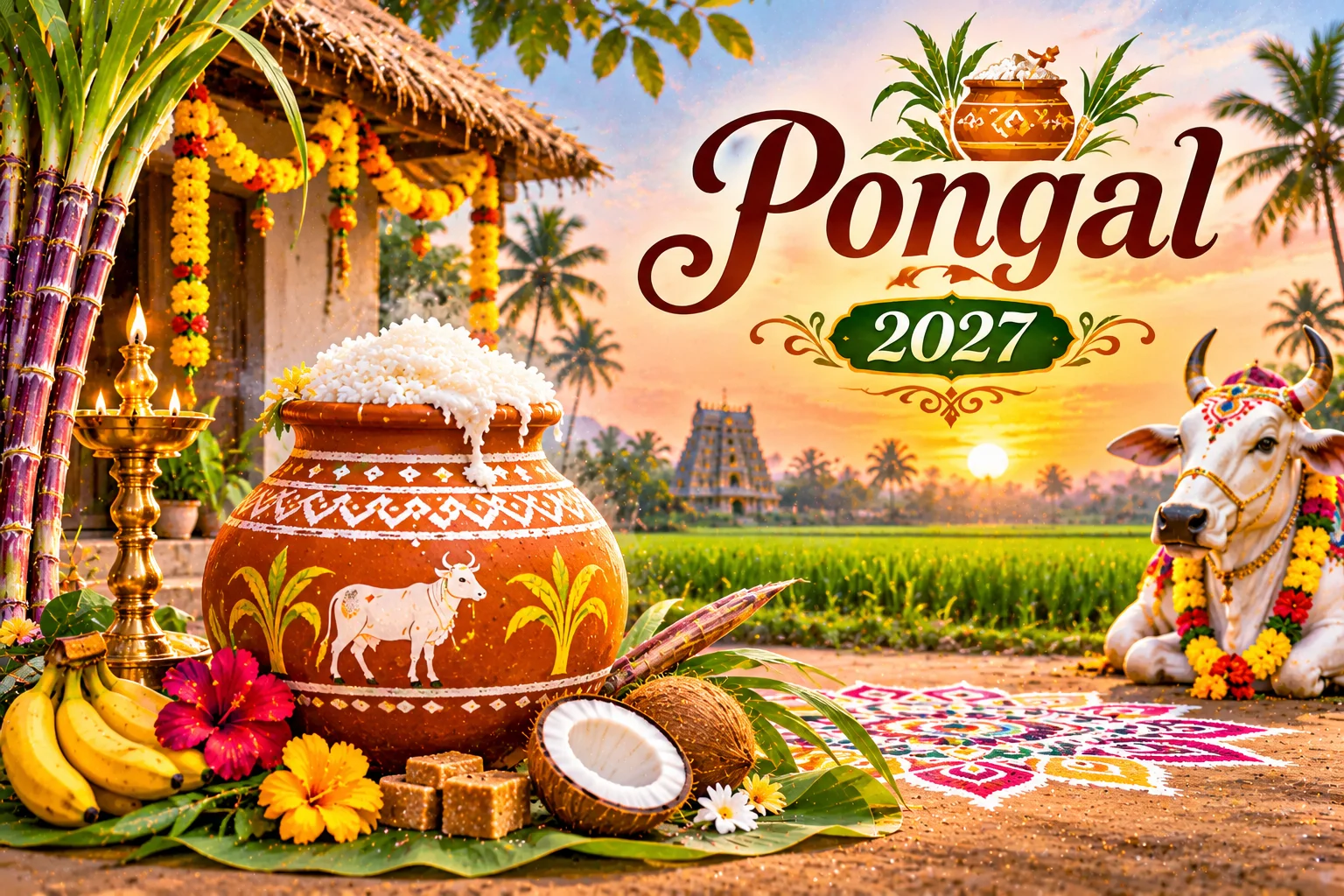
Friday, Jan 15, 2027
Pongal
Pongal is one of the most important traditional harvest festivals of Tamil Nadu. Celebrated with devotion and enthusiasm by Tamil communities in India and around the world, it is a festival of thanksgiving dedicated to the Sun, Mother Nature, agricultural abundance, and the cattle that support farming.
View Festival Guide
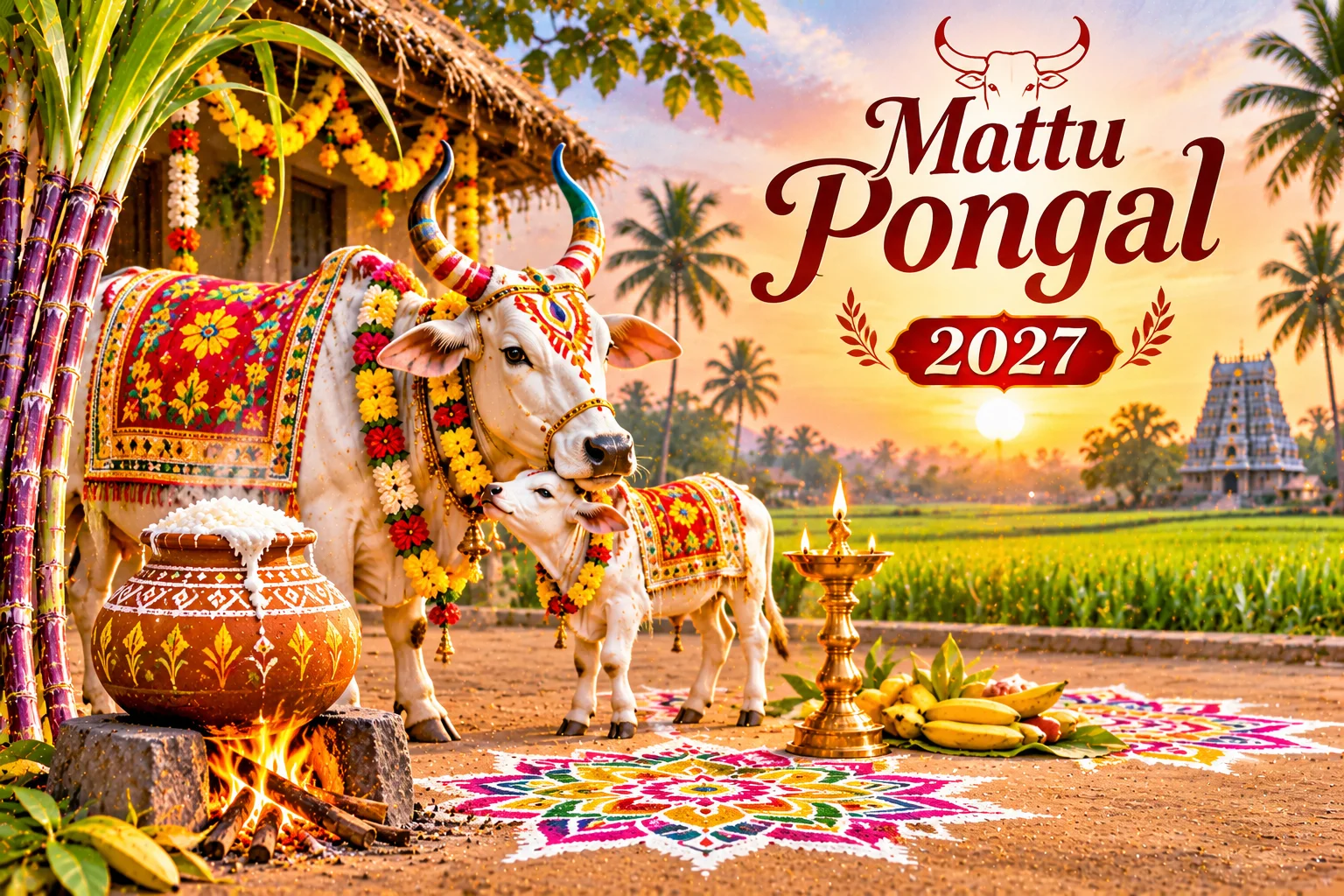
Saturday, Jan 16, 2027
Mattu Pongal
Mattu Pongal is the third day of the traditional four-day Pongal harvest festival celebrated primarily in Tamil Nadu. The word Mattu means cattle in Tamil, and the day is dedicated to honouring cows, bulls, oxen, and other cattle for their valuable contribution to agriculture and rural life.
View Festival Guide
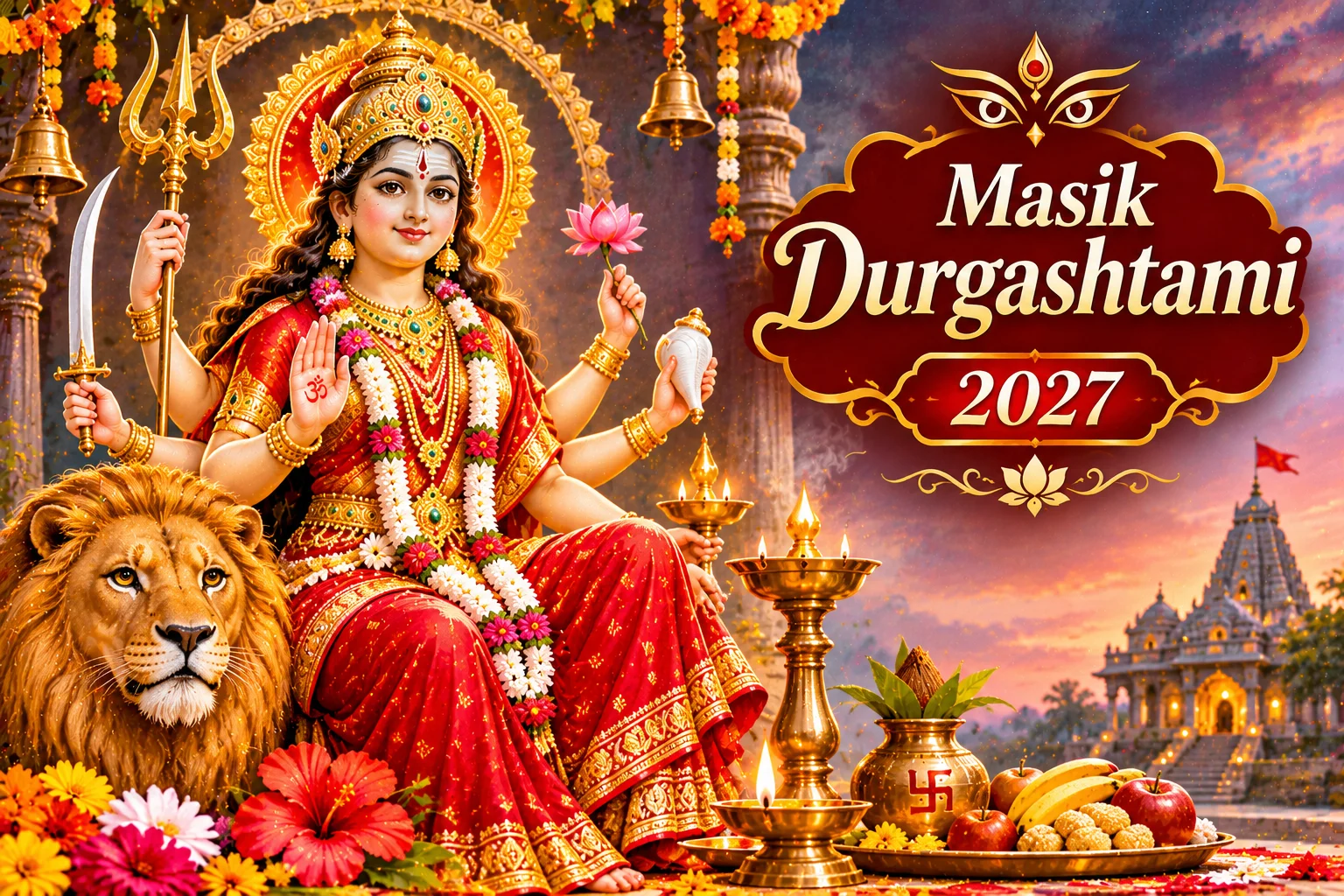
Saturday, Jan 16, 2027
Masik Durgashtami
Masik Durgashtami, also known as Maas Durgashtami or Monthly Durga Ashtami, is a Hindu monthly vrata dedicated to Goddess Durga. It is observed on the Ashtami Tithi, the eighth lunar day of Shukla Paksha, during every Hindu lunar month.
View Festival Guide
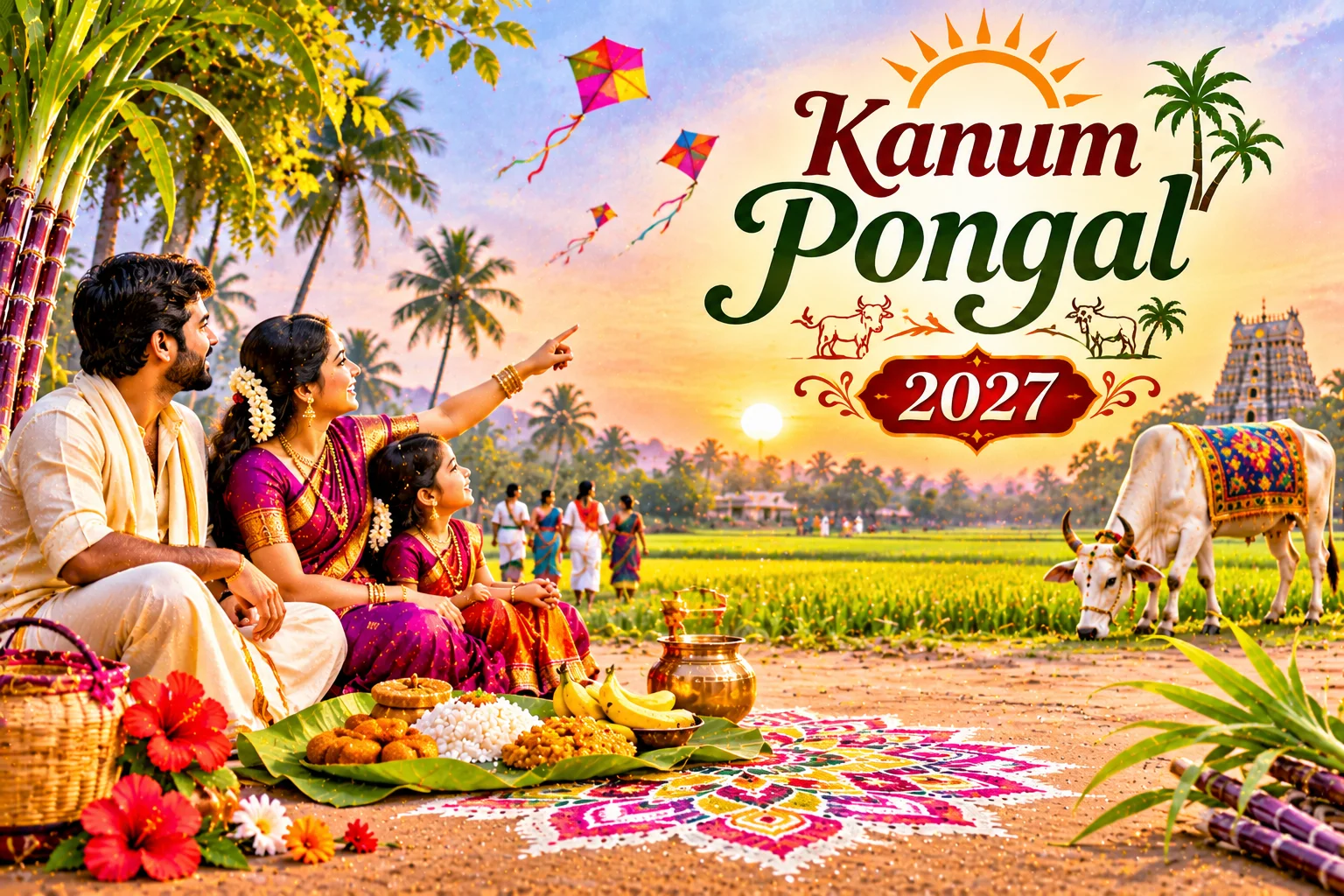
Sunday, Jan 17, 2027
Kanum Pongal
Kanum Pongal, also known as Kaanum Pongal or Kannum Pongal, is the fourth and final day of the traditional four-day Tamil Pongal harvest festival. It is primarily associated with family reunions, visiting relatives, receiving blessings from elders, community gatherings, and spending time with loved ones.
View Festival Guide
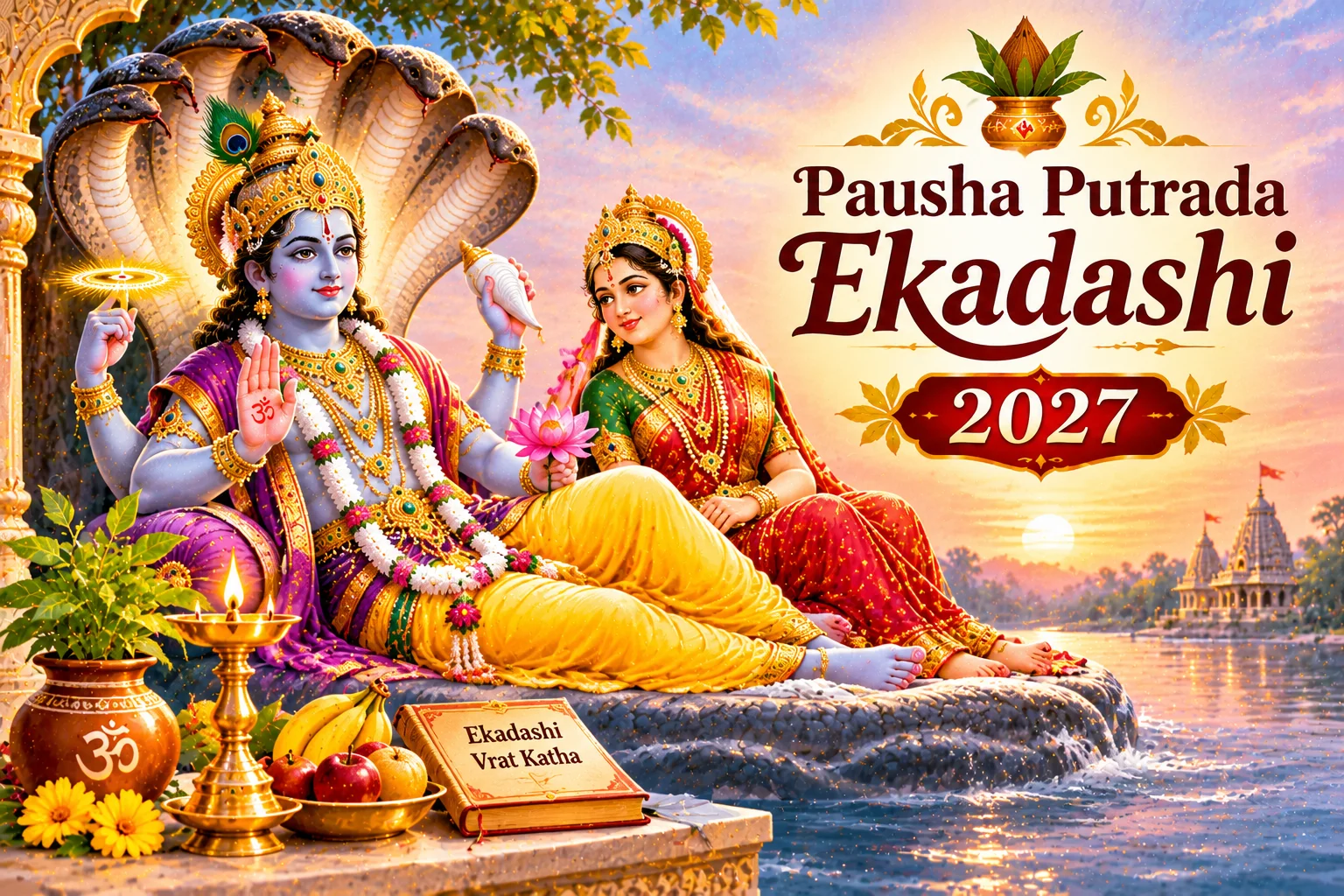
Monday, Jan 18, 2027
Pausha Putrada Ekadashi
Pausha Putrada Ekadashi is a sacred Hindu fasting day observed on the Ekadashi, or eleventh lunar day, of the Shukla Paksha (waxing fortnight) in the Hindu month of Pausha. It is dedicated to Lord Vishnu and is traditionally associated with prayers for children, family well-being, prosperity, and spiritual blessings.
View Festival Guide
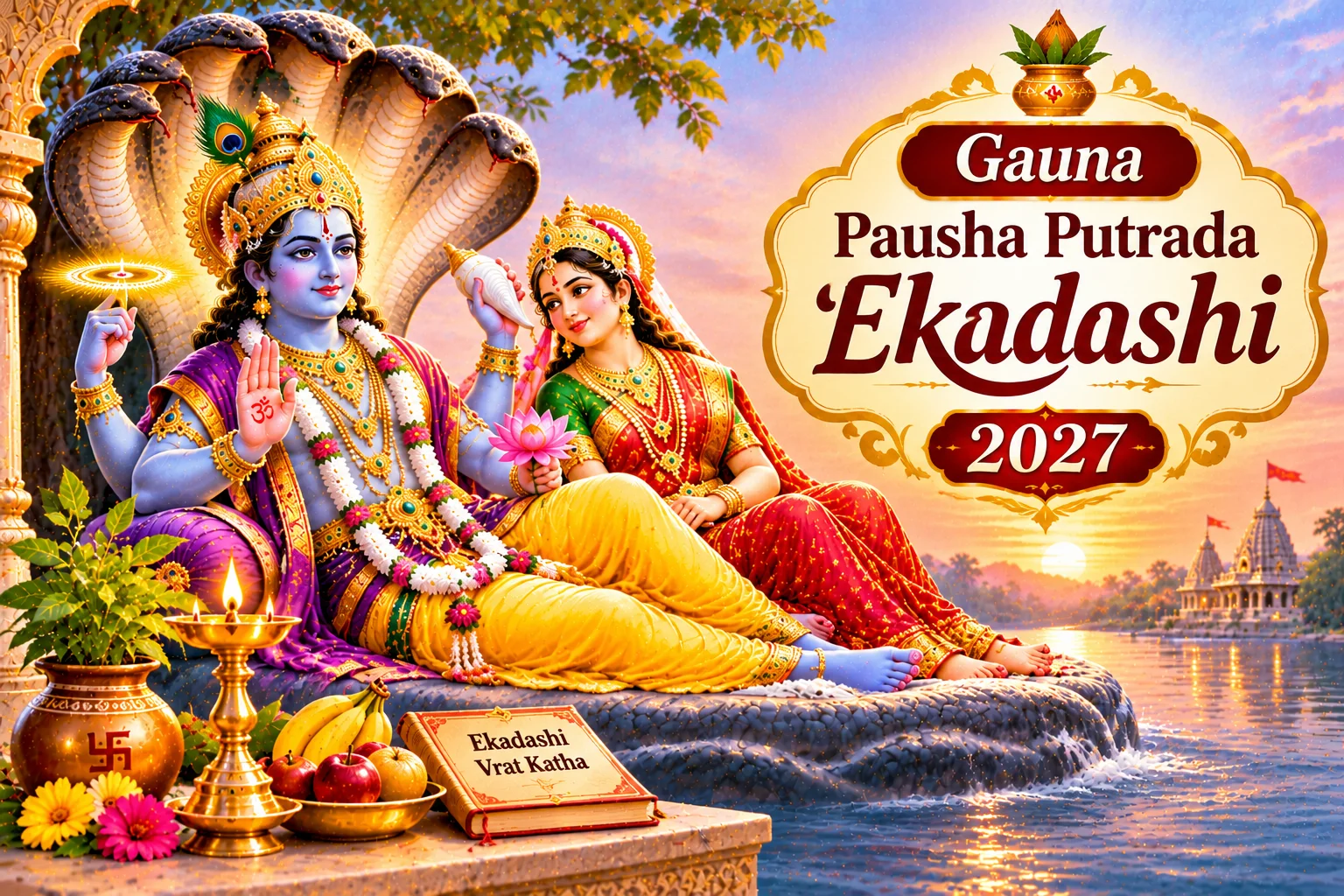
Tuesday, Jan 19, 2027
Gauna Pausha Putrada Ekadashi
Gauna Pausha Putrada Ekadashi is the alternate Vaishnava observance of Pausha Putrada Ekadashi, the sacred Ekadashi occurring during the Shukla Paksha of the Hindu month of Pausha. It is dedicated to Lord Vishnu and is traditionally associated with prayers for children, family happiness, prosperity, and spiritual well-being.
View Festival Guide
Wednesday, Jan 20, 2027
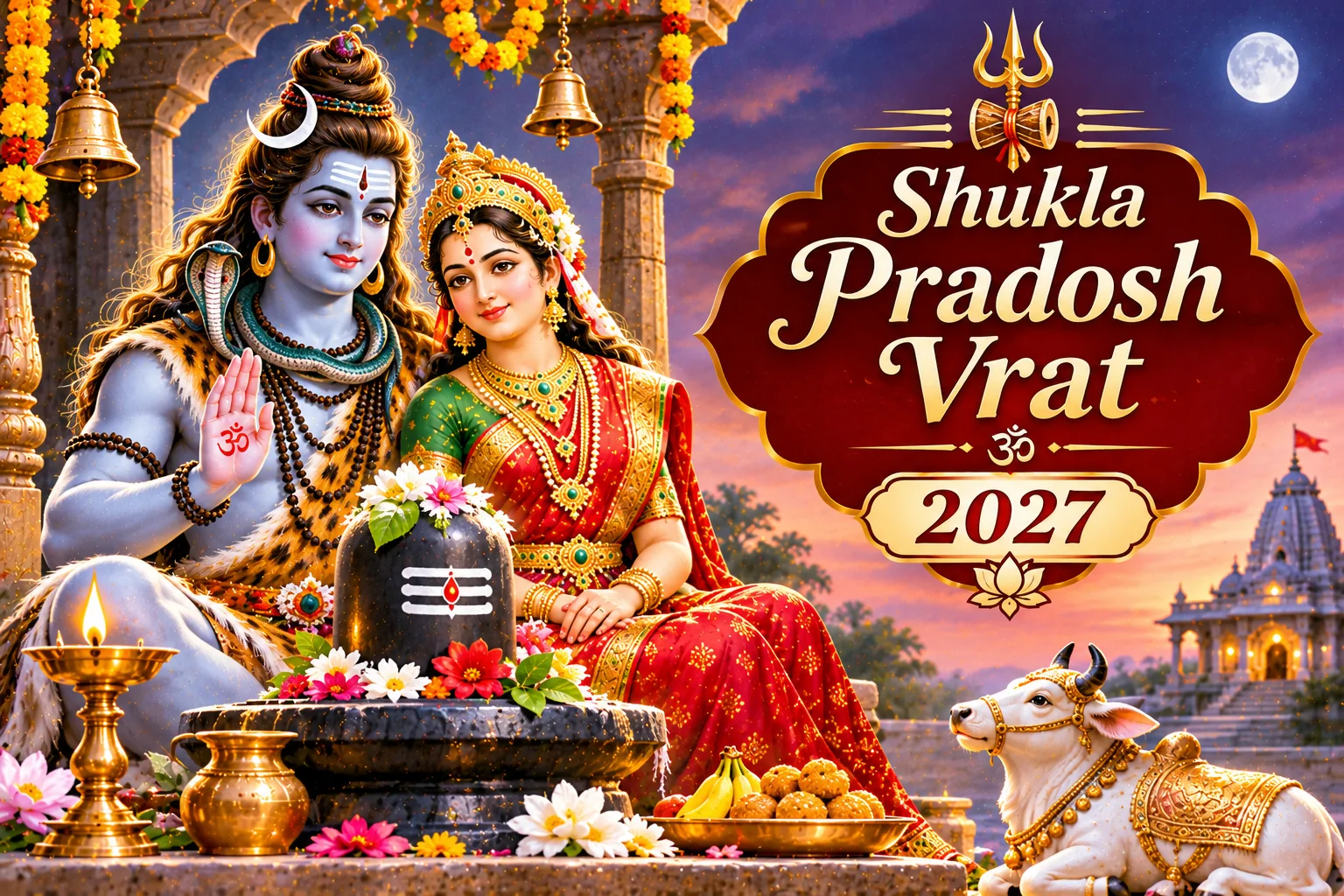
Shukla Pradosh Vrat
Shukla Pradosh Vrat is a sacred Hindu observance dedicated to Lord Shiva and Goddess Parvati. It is observed on the Trayodashi Tithi, the thirteenth lunar day of the Shukla Paksha, or waxing phase of the Moon.
View Festival Guide
Friday, Jan 22, 2027
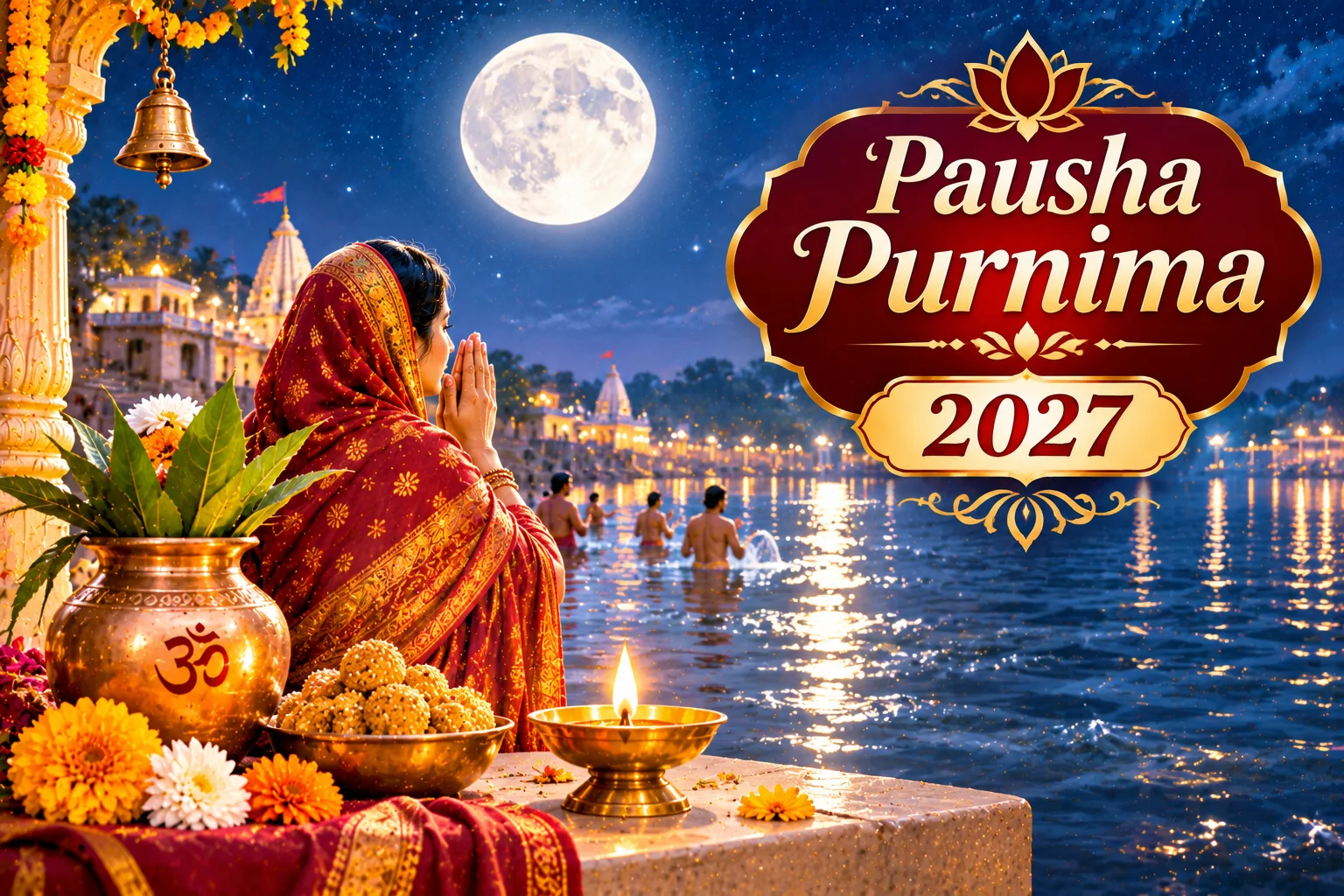
Pausha Purnima (Shakambhari Jayanti)
Pausha Purnima, also known as Paush Purnima, is an important Hindu observance celebrated on the full moon day of the Shukla Paksha in the lunar month of Pausha. It is traditionally associated with sacred bathing, fasting, charity, devotion and spiritual purification.
View Festival Guide
Wallpapers
359
381
364

375
379
399
388
347
364
375
353
392
346
343

365

334
382
367
381
327