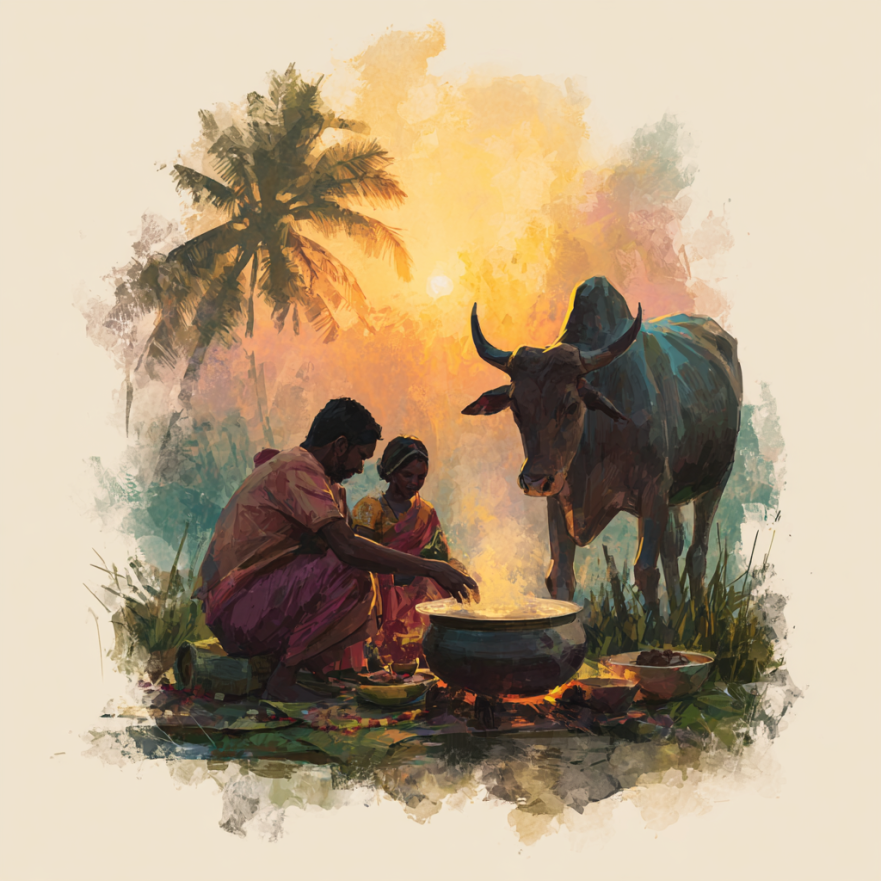
Pongal is one of the most important traditional harvest festivals of Tamil Nadu. Celebrated with devotion and enthusiasm by Tamil communities in India and around the world, it is a festival of thanksgiving dedicated to the Sun, Mother Nature, agricultural abundance, and the cattle that support farming.
Pongal 2027: Date, Puja Timings, Rituals & Stories
Pongal Timings & Panchang
Important festival dates and auspicious timings
Usha Arghya (Sunrise)
07:15 am
Sandhya Arghya (Sunset)
05:46 pm
Start Date
Friday, 15 Jan 2027
Puja Muhurat
01:58 pm – 02:13 pm
Pongal
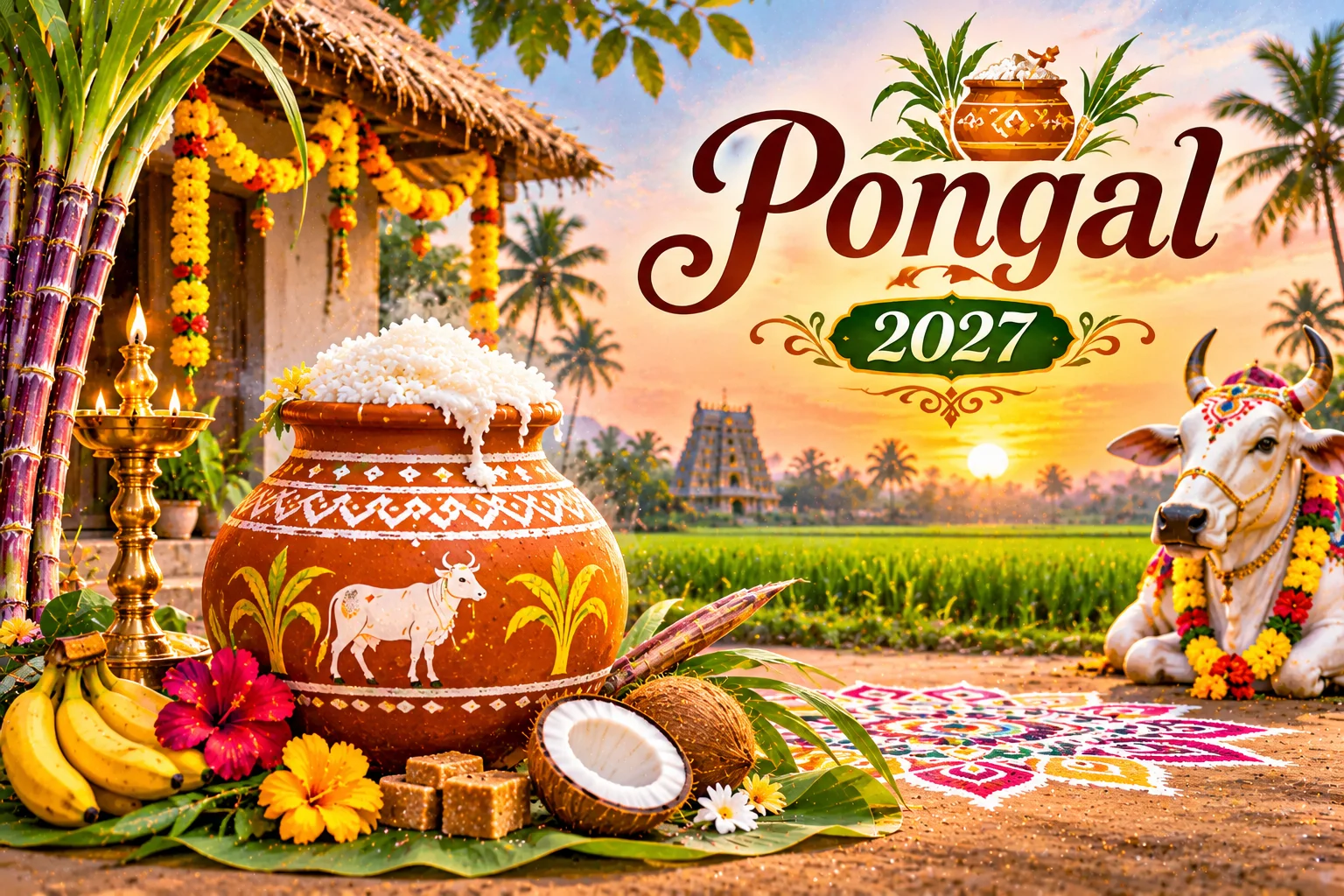
The festival is celebrated over four days and marks the beginning of the Tamil month of Thai. The four observances are Bhogi Pongal, Thai Pongal or Surya Pongal, Mattu Pongal, and Kaanum Pongal. Each day has its own customs and significance, together expressing gratitude for nature, agricultural prosperity, and family relationships.
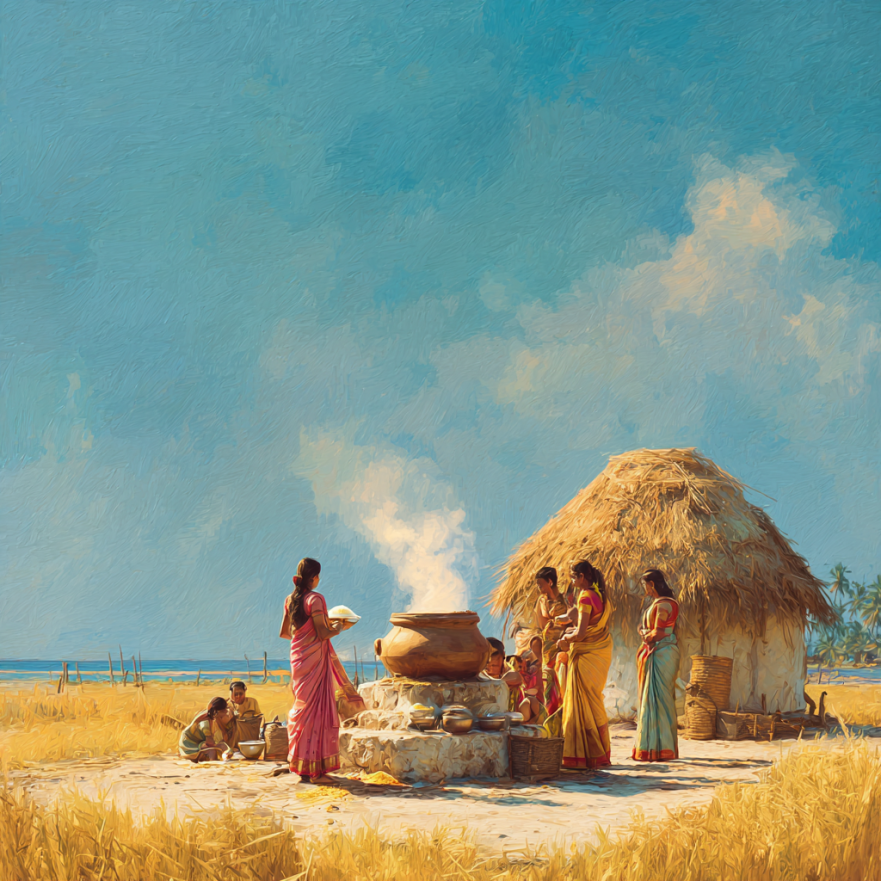
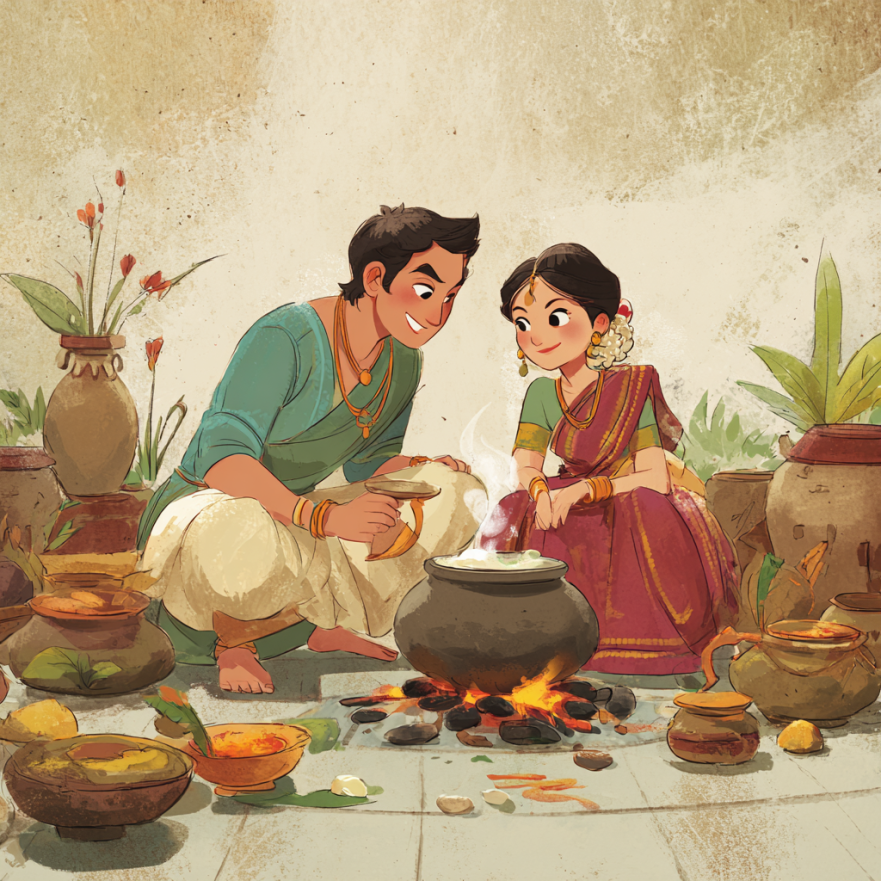
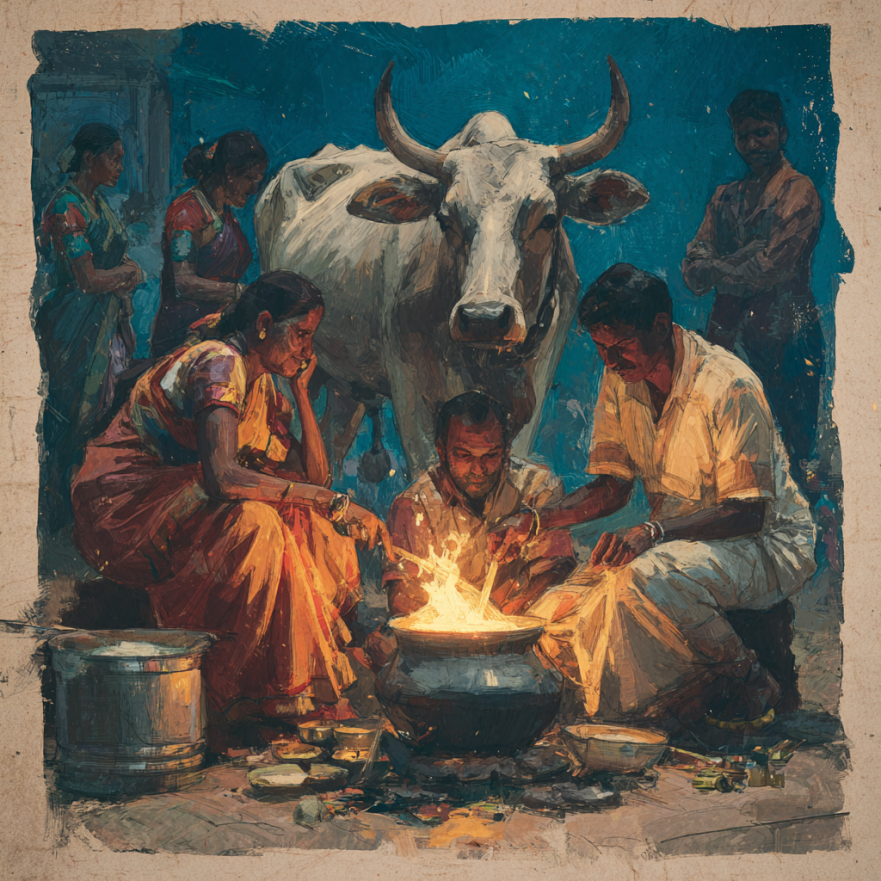
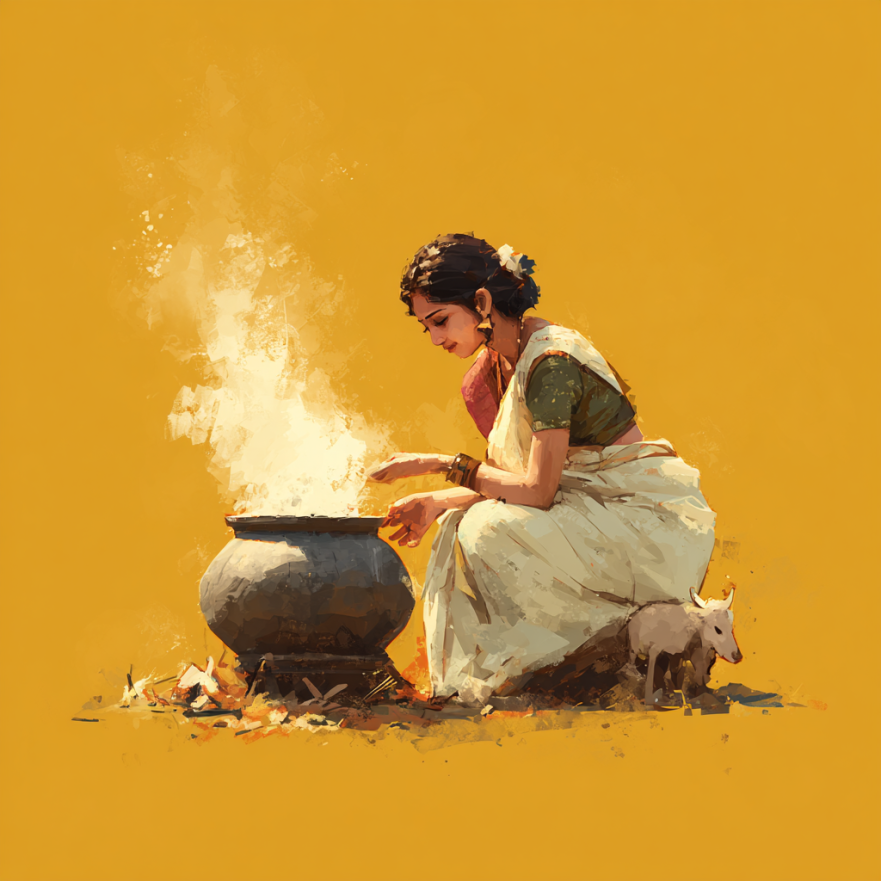
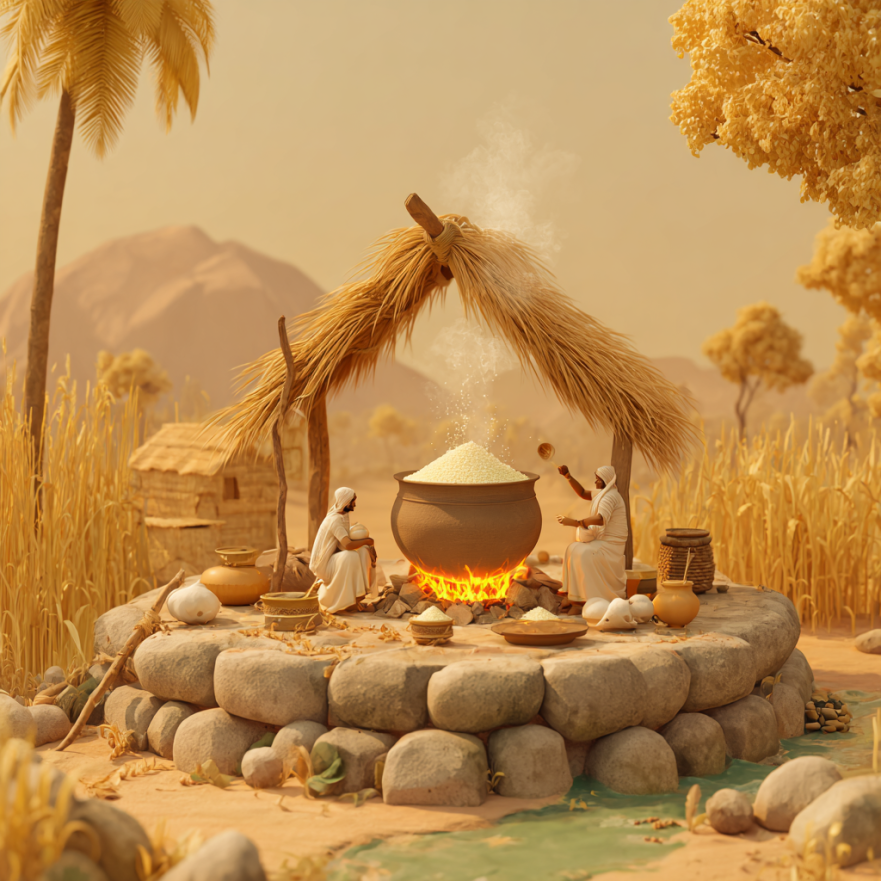
The word Pongal comes from the Tamil word pongu, meaning to boil over or overflow. It also refers to the traditional dish prepared during the festival using newly harvested rice, milk, and jaggery. When the mixture boils over from a decorated clay pot, family members joyfully call out Pongalo Pongal, expressing their wishes for abundance and prosperity.
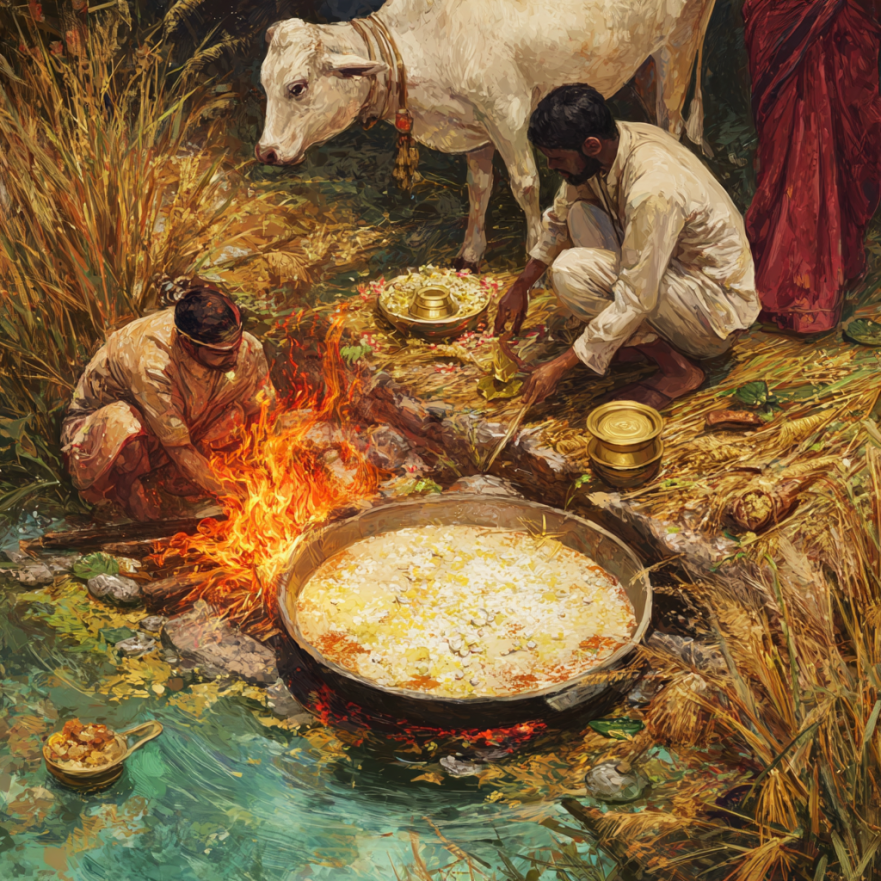
Thai Pongal, the main day of the celebration, is dedicated to Lord Surya. Families prepare sweet Pongal outdoors, traditionally facing the rising Sun, and offer the freshly cooked dish as an expression of gratitude for sunlight, warmth, and the harvest.
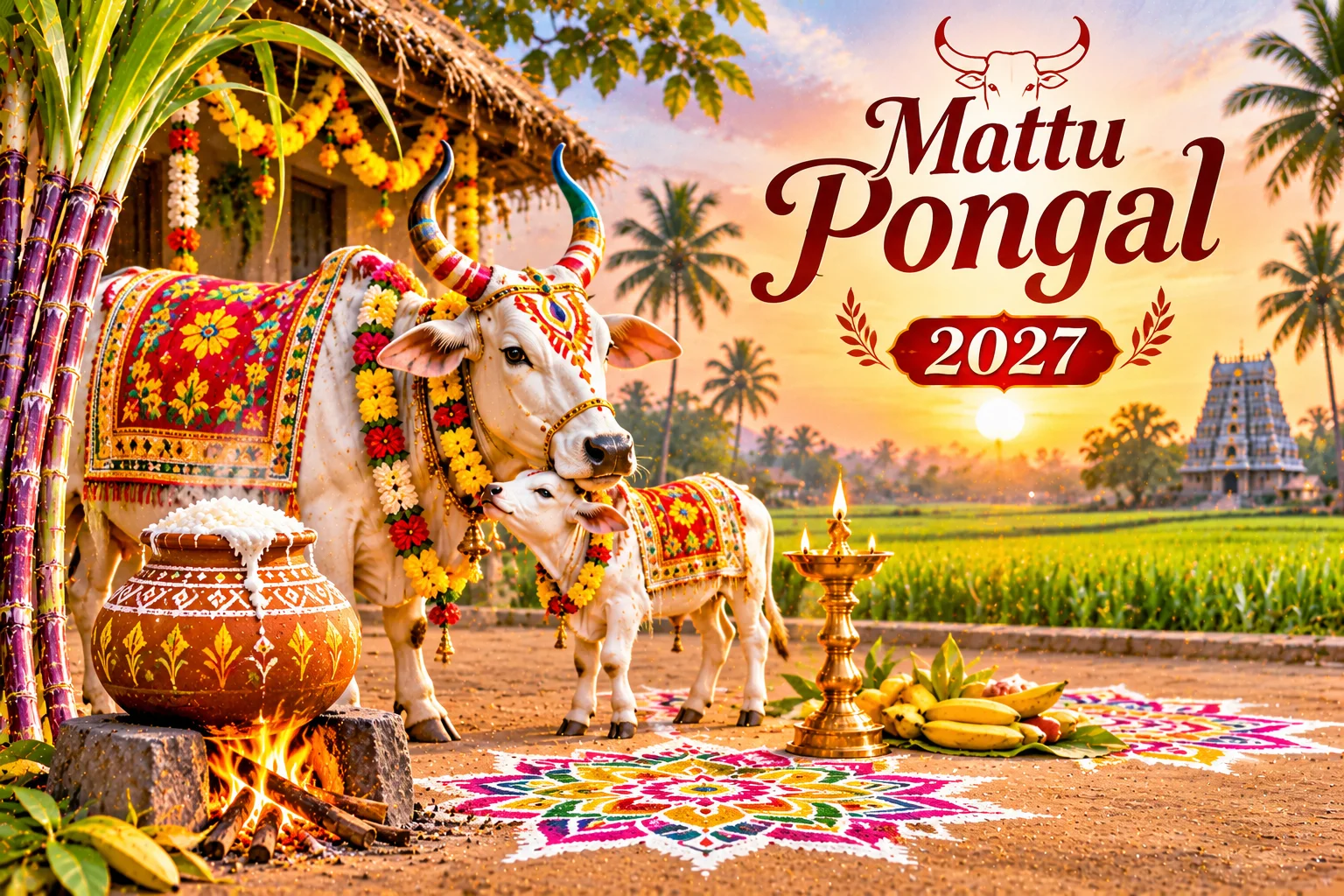
Mattu Pongal is dedicated to cattle, particularly cows and bulls, which have traditionally played an essential role in agricultural life. Farmers bathe and decorate their cattle with colourful ornaments, flowers, and bells to honour their contribution to farming and rural livelihoods.
Kaanum Pongal is associated with family visits, community gatherings, and strengthening social relationships. People visit relatives, share meals, enjoy traditional activities, and seek the blessings of elders.
Pongal is more than a harvest celebration. It represents gratitude, respect for nature, the dignity of agricultural work, generosity, and the importance of living in harmony with the natural world.
Why is Pongal Celebrated?
Pongal is celebrated to express gratitude for a successful harvest and acknowledge the natural forces that make agriculture possible. The festival honours the Sun for its light and energy, the land for its fertility, rain for nourishing crops, and cattle for their contribution to farming.
It also marks the beginning of the Tamil month of Thai, traditionally considered an auspicious period associated with new beginnings, prosperity, and positive developments.
- To thank Lord Surya: The main day of Pongal is dedicated to the Sun God, whose light and warmth support agricultural production and sustain life.
- To celebrate the harvest: Farmers express gratitude for newly harvested rice, sugarcane, turmeric, and other agricultural produce.
- To honour Mother Nature: The festival recognises the importance of land, water, rain, sunlight, and the natural cycles that sustain agriculture.
- To worship cattle: Mattu Pongal honours cows, bulls, and other cattle for their traditional contribution to ploughing, transportation, dairy production, and rural livelihoods.
- To welcome the Tamil month of Thai: The beginning of Thai is traditionally associated with auspicious beginnings, hope, prosperity, and new opportunities.
- To celebrate abundance: The overflowing Pongal pot symbolises prosperity, happiness, nourishment, and the wish that every household should have sufficient food.
- To preserve Tamil culture: Pongal keeps traditional Tamil customs, folk songs, kolam designs, agricultural practices, and regional foods alive.
- To strengthen family relationships: Kaanum Pongal encourages relatives and friends to meet, share meals, exchange greetings, and seek the blessings of elders.
- To express gratitude to farmers: The festival recognises the dedication of farmers and agricultural workers who produce food and support communities.
History and Origins of Pongal
Ancient Agricultural Roots
Pongal is widely regarded as an ancient Tamil harvest festival rooted in the agricultural traditions of Tamil society. Its customs reflect the importance of farming, seasonal crops, cattle, sunlight, and rainfall in traditional rural life.
The festival is commonly associated with the ancient Tamil cultural period, including traditions connected with the Sangam Age. Agricultural activities were central to the social and economic life of early Tamil communities, and seasonal celebrations provided opportunities to express gratitude for food production and natural abundance.
The preparation of rice, worship of the Sun, respect for cattle, and community celebrations are longstanding elements of Tamil agricultural culture. Over generations, these practices developed into the four-day festival now known as Pongal.
Pongal is therefore not simply a religious observance but also a celebration of Tamil identity, agricultural heritage, and the relationship between people and the natural environment.
Pongal in Ancient Tamil Traditions
Traditional accounts associate Pongal with ancient Tamil agricultural celebrations and seasonal observances. The Tamil month of Thai has long held cultural importance because it is connected with the agricultural cycle and the beginning of a new seasonal phase.
Ancient Tamil literature contains references to agricultural life, harvest celebrations, cattle, seasonal food, and the worship of natural forces. These cultural elements help explain the historical background of Pongal, although the modern four-day format should not be assumed to have existed in exactly the same form in every historical period.
Traditional Tamil literature and later religious and cultural practices preserve the importance of thanksgiving, communal food preparation, and the celebration of agricultural abundance.
The festival continued through different historical periods and developed into an important cultural occasion observed by Tamil communities across regions and generations.
Spiritual Significance of Pongal
Gratitude to Lord Surya
The worship of Lord Surya is central to Thai Pongal. The Sun is regarded as a life-sustaining force that provides light, warmth, and energy to the Earth.
In agricultural communities, sunlight is essential for crop growth and the development of food. Offering freshly prepared Pongal to Surya represents gratitude for the natural energy that supports life and agricultural prosperity.
The ritual encourages devotees to recognise the importance of the Sun and develop an attitude of thankfulness towards the forces that sustain the world.
Respect for Mother Nature
Pongal expresses reverence for Mother Nature and the resources that make agriculture possible. Fertile soil, rain, rivers, sunlight, plants, and animals are all essential parts of the agricultural ecosystem.
The festival reminds people that human prosperity is closely connected with the natural environment. It encourages respect for the land, responsible use of resources, and appreciation for the balance of nature.
The traditional preparation of food using newly harvested crops symbolises the relationship between the natural world and human nourishment.
The Sacred Meaning of the Overflowing Pot
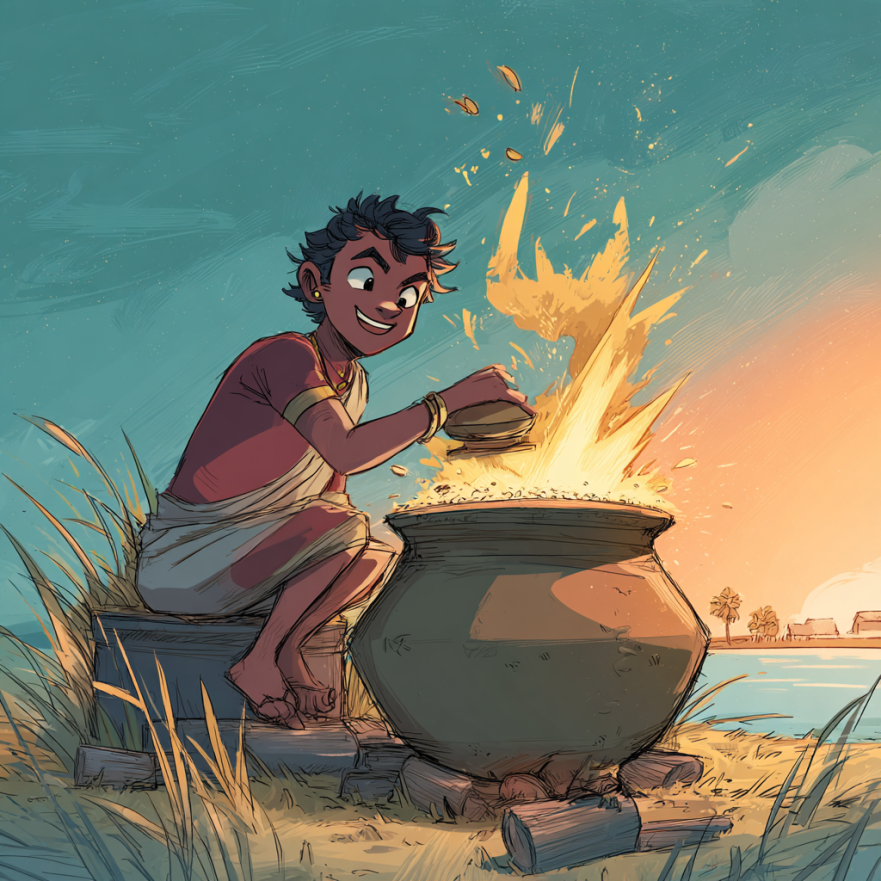
The most recognisable ritual of Thai Pongal is allowing the rice and milk mixture to boil over from the cooking pot.
The overflowing preparation represents abundance, prosperity, happiness, and the hope that every household will enjoy sufficient food and resources.
When the dish rises and spills over, people joyfully call out Pongalo Pongal. This expression celebrates the arrival of prosperity and the blessings of a successful harvest.
The ritual also symbolises generosity. Just as the pot overflows, people are encouraged to share their happiness, food, and blessings with others.
How Pongal Is Celebrated
Pongal is traditionally celebrated over four days, with each day representing a different aspect of agricultural and family life. The celebrations combine household cleaning, worship, cooking, cattle care, traditional decorations, and community activities.
1. Bhogi Pongal
Bhogi marks the beginning of the four-day Pongal celebration. Families clean their homes, organise their belongings, and prepare for the main harvest festival.
Traditional Bhogi customs include removing old and unwanted items to symbolise a fresh beginning. In some communities, a bonfire is lit using suitable natural materials. The practice is associated with leaving behind the old and welcoming positive changes.
Homes may be decorated, family members wear clean or new clothes, and traditional prayers are offered. Some customs also associate Bhogi with Lord Indra and gratitude for rainfall.
2. Thai Pongal or Surya Pongal
Thai Pongal is the main day of the festival and is dedicated to Lord Surya. Families clean and decorate their homes with colourful kolam designs, sugarcane, turmeric plants, and other traditional decorations.
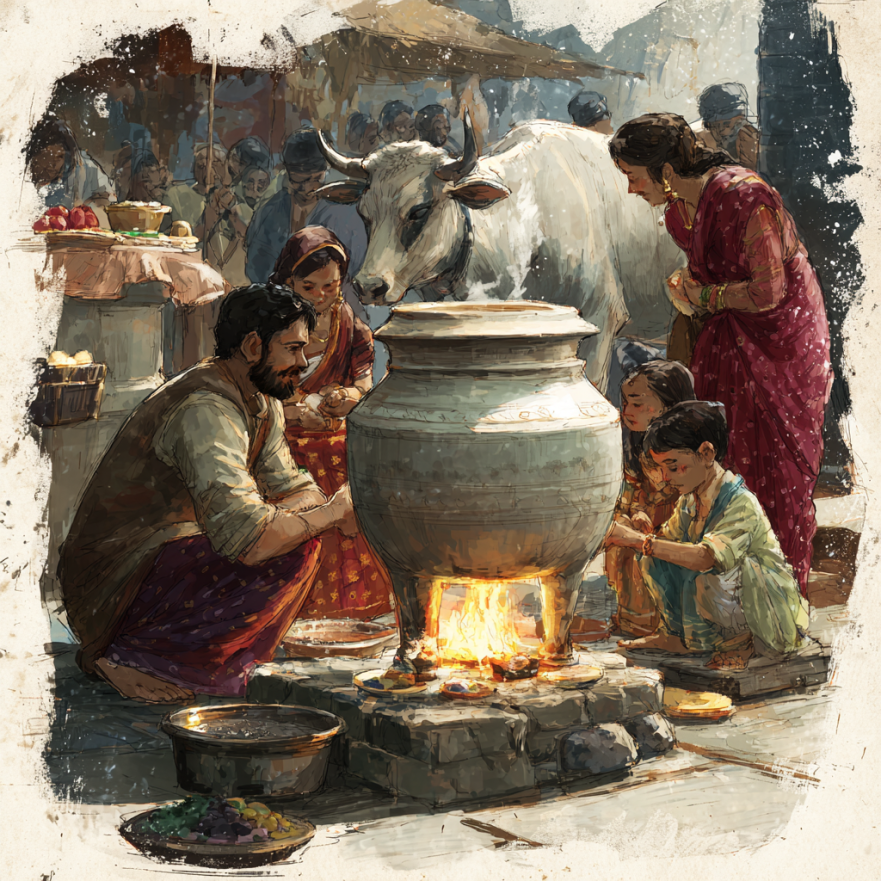
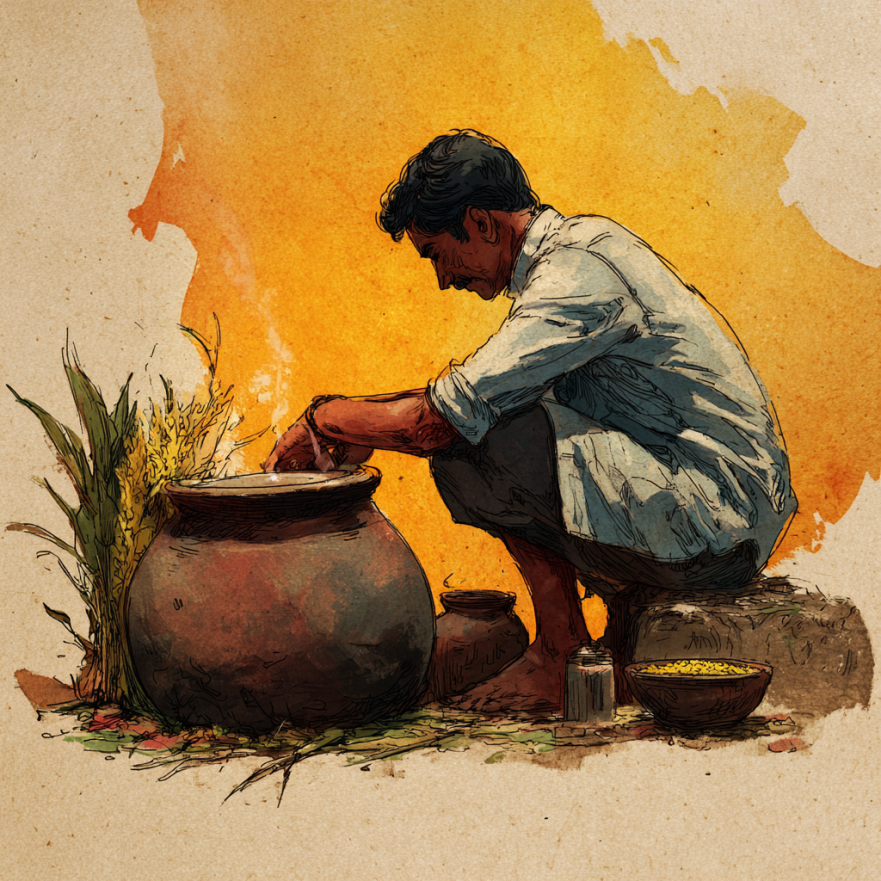
The central ritual is preparing sweet Pongal in a new clay pot using newly harvested rice, milk, and jaggery. The pot is traditionally decorated with turmeric leaves or plants and placed outdoors in a suitable location.
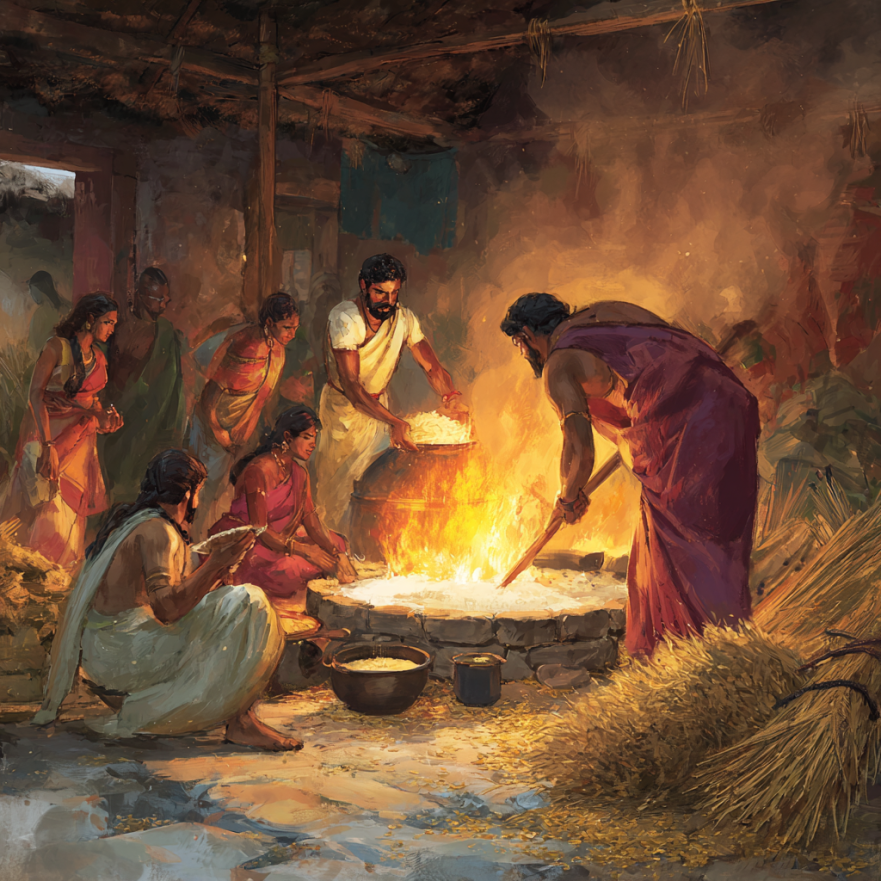
As the mixture boils over, family members call out Pongalo Pongal. The dish is then offered to Lord Surya with prayers and gratitude before being shared as prasad.
Families may also prepare ven pongal, sugarcane, coconut, fruits, and other traditional foods as part of the celebration.
3. Mattu Pongal
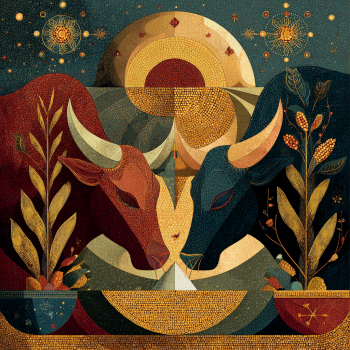
Mattu Pongal is dedicated to cows, bulls, and other cattle. Farmers and families express gratitude for the animals that support agricultural production and rural life.
Pongal Puja Vidhi (Step by Step)
- 1
Clean and Decorate the House
Clean the home and prepare the entrance for the Pongal celebration. Draw a traditional kolam using rice flour or other suitable materials. Decorate the cooking area with flowers, sugarcane, turmeric plants, and traditional ornaments.
- 2
Arrange the Pongal Cooking Materials
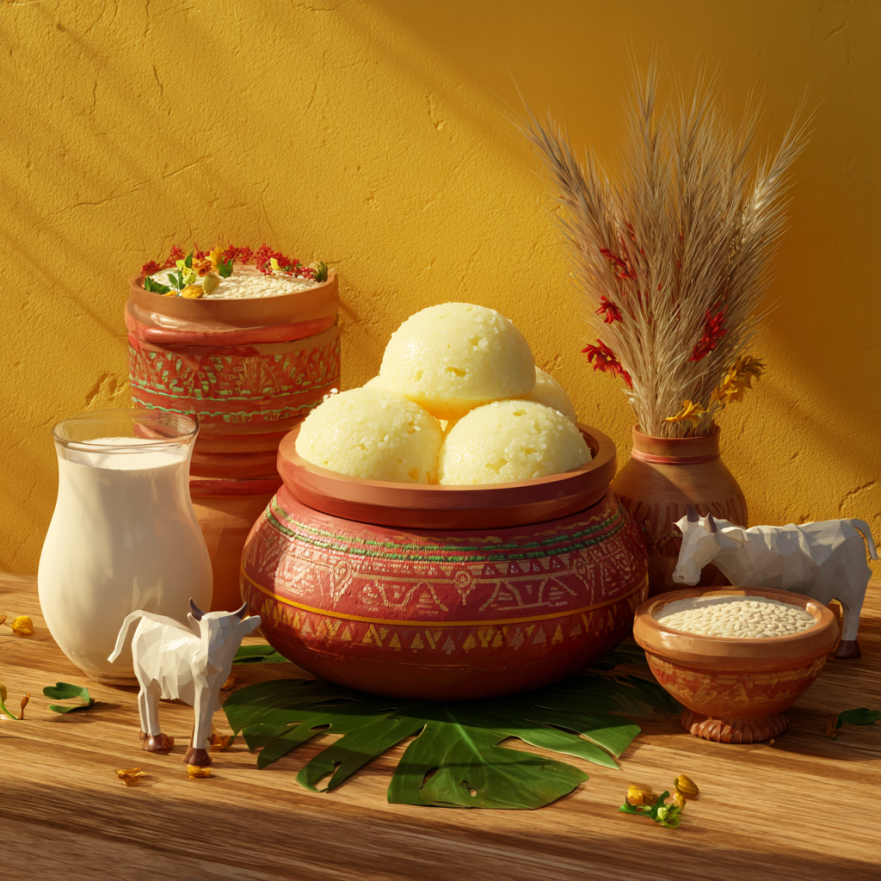
Arrange a clean new clay pot, newly harvested rice if available, milk, jaggery, moong dal, ghee, cardamom, cashews, raisins, and other ingredients required for sweet Pongal. Prepare a separate vessel for offerings.
- 3
Prepare the Traditional Cooking Area
Select a clean and safe cooking location, traditionally outdoors. Place the clay pot securely on a suitable stove or traditional cooking arrangement. Decorate the pot with turmeric leaves, a turmeric plant, or traditional threads according to family custom.
- 4
Begin Cooking Pongal
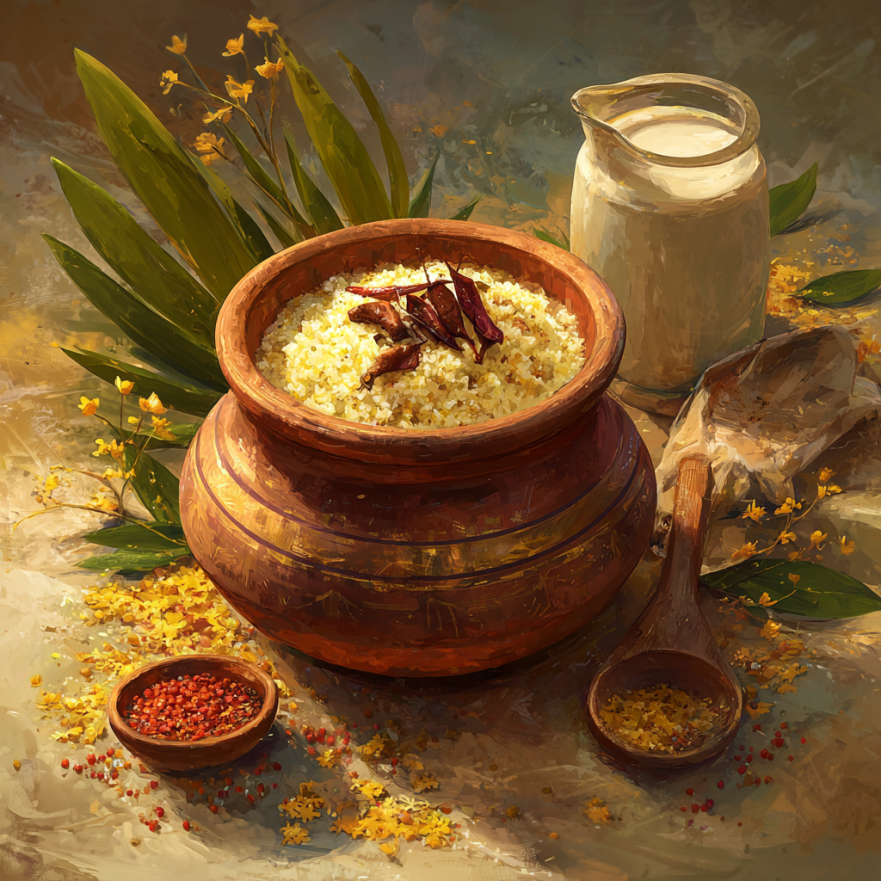
Add milk and water to the pot and allow them to heat. Add the prepared rice and other ingredients according to the family's recipe. Traditionally, the pot is allowed to boil over as a symbol of prosperity and abundance.
- 5
Pongal Puja Samagri List
Main Pongal Puja Samagri
- Image or representation of Lord Surya
- New clay Pongal pot
- Newly harvested rice or clean rice
- Milk
- Water
- Jaggery
- Moong dal
- Ghee
- Cardamom
- Cashews
- Raisins
- Flowers
- Fresh fruits
- Sugarcane
- Turmeric plant or turmeric leaves
Traditional Puja Items
- Diya
- Cotton wicks
- Ghee or suitable diya oil
- Incense sticks
- Camphor
- Roli or kumkum
- Sandalwood paste
- Akshat (unbroken rice grains)
Mantras and Prayers for Pongal
Pongal Vrat Rules and Fasting Guidelines
Fasting on Pongal
Pongal is primarily a harvest and thanksgiving festival. It does not have one universally prescribed fasting rule followed by every Tamil household or community.
Some devotees may observe personal fasting or follow family-specific religious practices. However, the central tradition of Thai Pongal is preparing and offering freshly cooked Pongal as an expression of gratitude to Lord Surya.
Traditional Religious Observances
- Begin the day with cleanliness and a prayerful attitude.
- Offer prayers and arghya to Lord Surya.
- Prepare sweet Pongal using traditional ingredients.
- Offer the freshly prepared dish before sharing it with family members.
- Respect agricultural traditions and the natural environment.
- Honour cattle on Mattu Pongal through safe and humane practices.
- Visit relatives and seek elders' blessings on Kaanum Pongal.
- Share food with neighbours and people in need.
- Maintain gratitude, kindness, and respect towards all living beings.
Food and Dietary Practices
Traditional Pongal food includes sweet Pongal, savoury Pongal, rice preparations, sugarcane, coconut, fruits, and other regional vegetarian dishes. People who follow a particular fast or dietary discipline should observe their own household or religious guidelines.
Mattu Pongal Observances
Dos and Don'ts of Pongal
Good Practices (Do's)
- Celebrate Pongal with gratitude towards Lord Surya, Mother Nature, and agricultural abundance.
- Clean and decorate the home with traditional kolam designs.
- Prepare sweet Pongal using traditional ingredients such as rice, milk, jaggery, and ghee.
- Offer the freshly prepared Pongal to Lord Surya according to household tradition.
- Use a clean and stable cooking arrangement when preparing Pongal outdoors.
- Respect farmers and acknowledge the importance of agricultural work.
Pongal Across Regions
| Region | Local Name |
|---|---|
| Tamil Nadu | Thai Pongal |
| Puducherry | Pongal |
| Sri Lanka | Thai Pongal |
| Singapore | Pongal |
| Malaysia | Thai Pongal |
| United States, Canada, and United Kingdom | Tamil Pongal Celebrations |
| Andhra Pradesh and Telangana | Sankranti |
| Karnataka | Makara Sankramana |
| Kerala | Makara Sankranti |
Pongal FAQs
What is Pongal?
Pongal is a traditional Tamil harvest festival celebrated over four days. It expresses gratitude to Lord Surya, Mother Nature, agricultural abundance, and cattle. The festival is known for preparing sweet Pongal, decorating homes with kolam, and celebrating family and community relationships.
Why is Pongal celebrated?
Pongal is celebrated to thank nature and the Sun for supporting agricultural production and providing a successful harvest. It also honours cattle, celebrates the beginning of the Tamil month of Thai, and strengthens family and community relationships.
What is the meaning of Pongal?
The Tamil word Pongal comes from pongu, meaning to boil over or overflow. It refers both to the traditional rice dish prepared during the festival and to the overflowing pot that symbolises abundance, prosperity, and happiness.
Upcoming Festivals
View All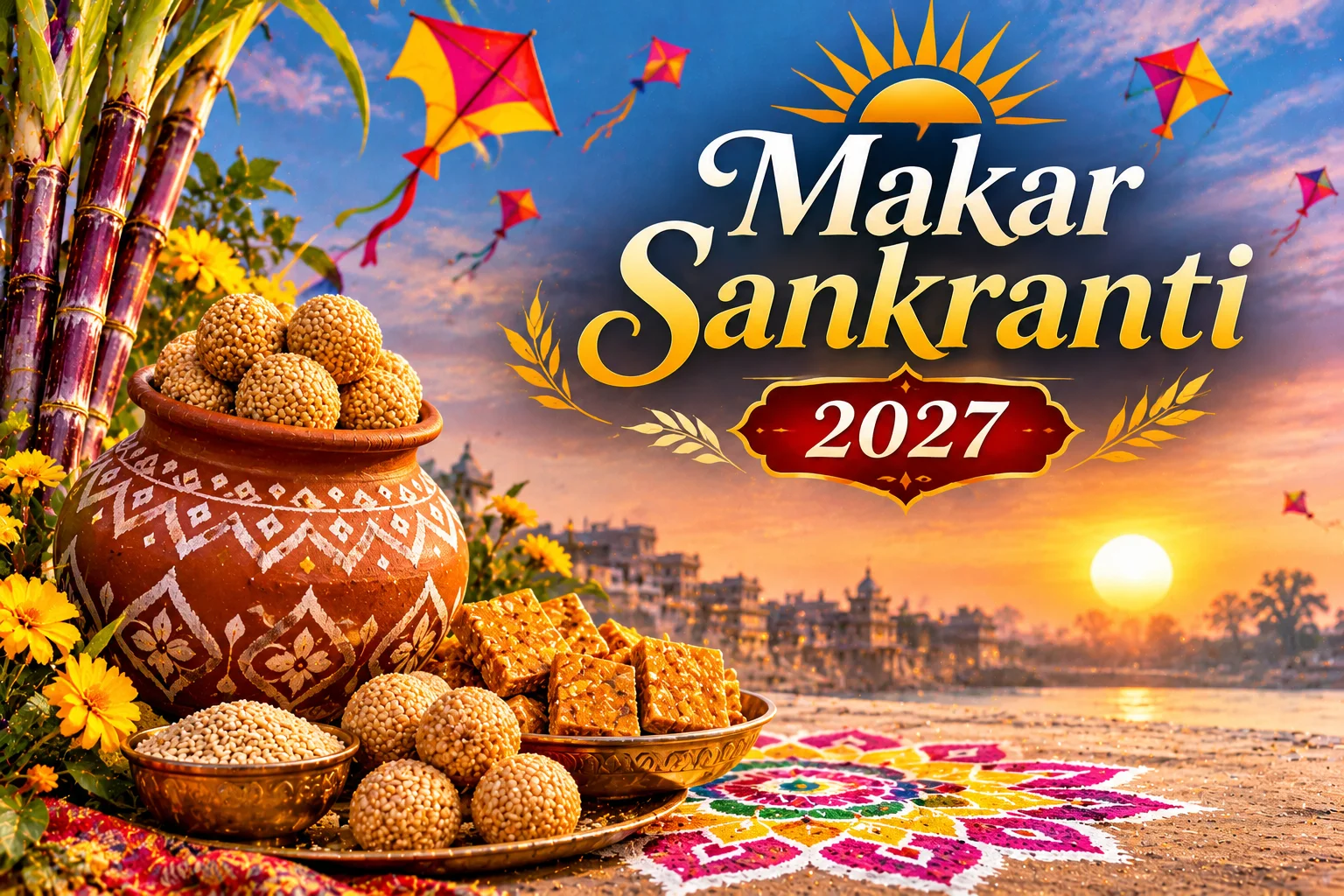
Friday, Jan 15, 2027
Makar Sankranti (Uttarayana / Pongal)
Makar Sankranti is one of the most widely celebrated Hindu festivals in India. It marks the transition of the Sun into Makara Rashi, the zodiac sign of Capricorn, according to the traditional sidereal solar calendar. The word Sankranti refers to the movement of the Sun from one zodiac sign to another, while Makara refers to Capricorn.
View Festival Guide
Saturday, Jan 16, 2027
Mattu Pongal
Mattu Pongal is the third day of the traditional four-day Pongal harvest festival celebrated primarily in Tamil Nadu. The word Mattu means cattle in Tamil, and the day is dedicated to honouring cows, bulls, oxen, and other cattle for their valuable contribution to agriculture and rural life.
View Festival Guide
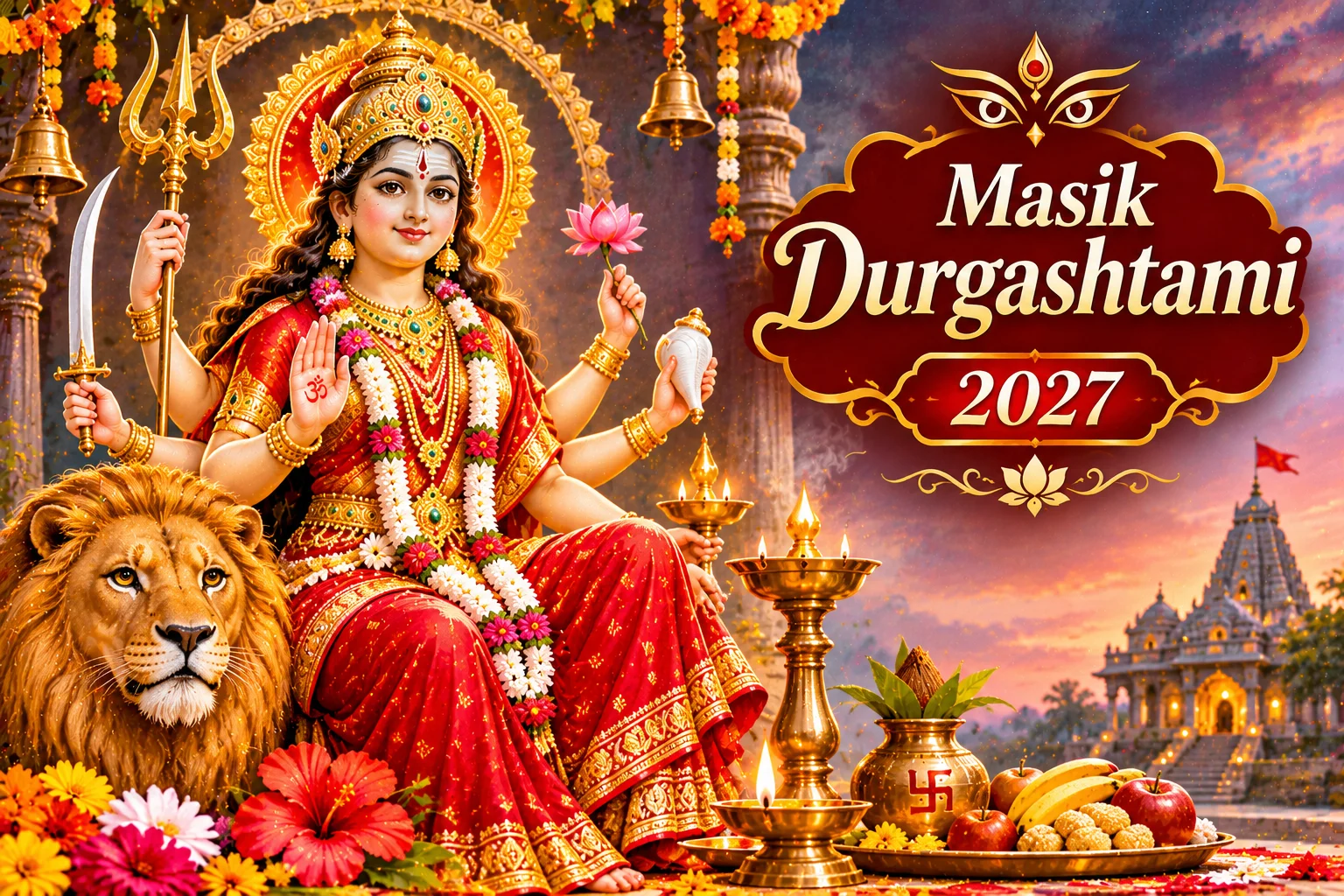
Saturday, Jan 16, 2027
Masik Durgashtami
Masik Durgashtami, also known as Maas Durgashtami or Monthly Durga Ashtami, is a Hindu monthly vrata dedicated to Goddess Durga. It is observed on the Ashtami Tithi, the eighth lunar day of Shukla Paksha, during every Hindu lunar month.
View Festival Guide
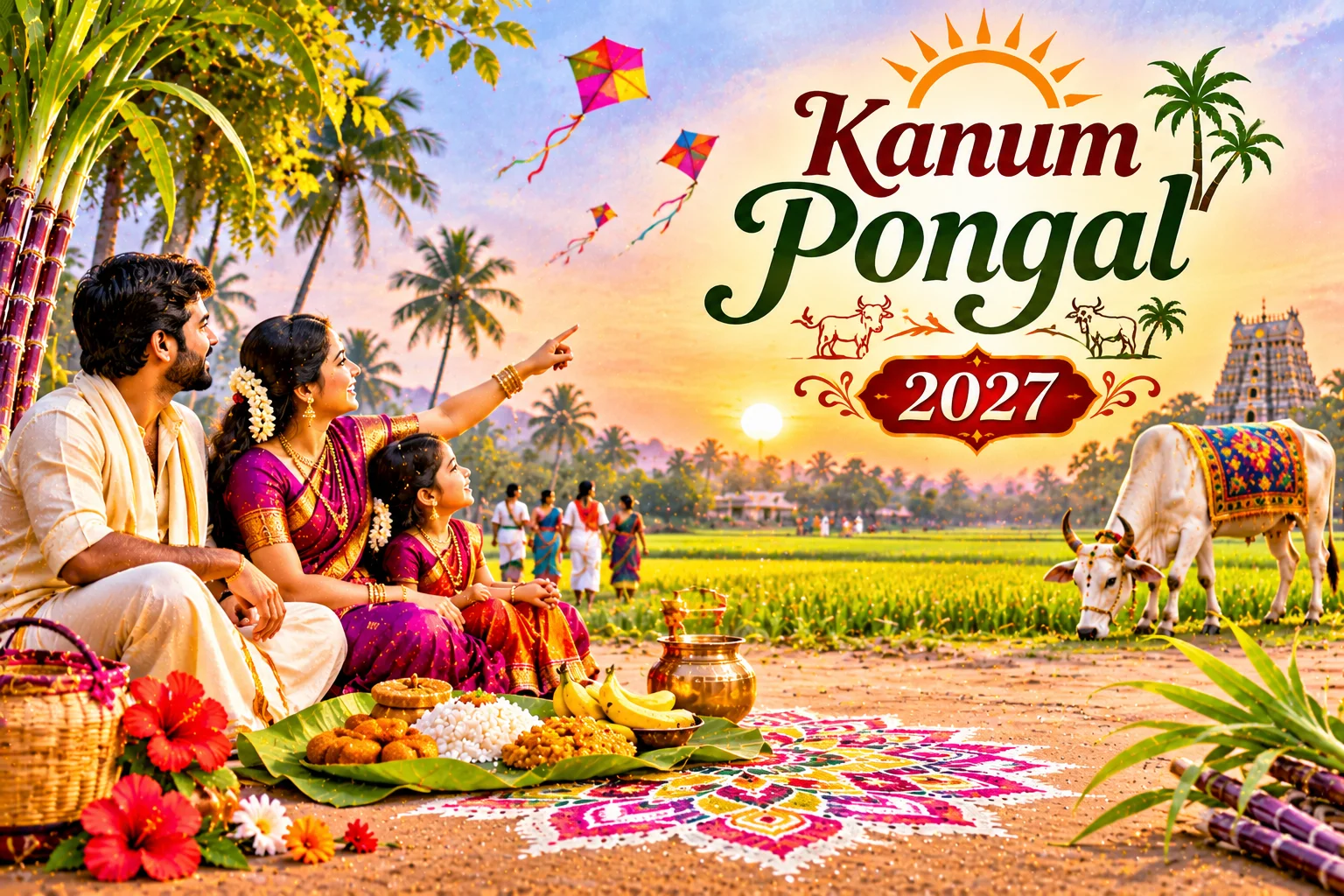
Sunday, Jan 17, 2027
Kanum Pongal
Kanum Pongal, also known as Kaanum Pongal or Kannum Pongal, is the fourth and final day of the traditional four-day Tamil Pongal harvest festival. It is primarily associated with family reunions, visiting relatives, receiving blessings from elders, community gatherings, and spending time with loved ones.
View Festival Guide
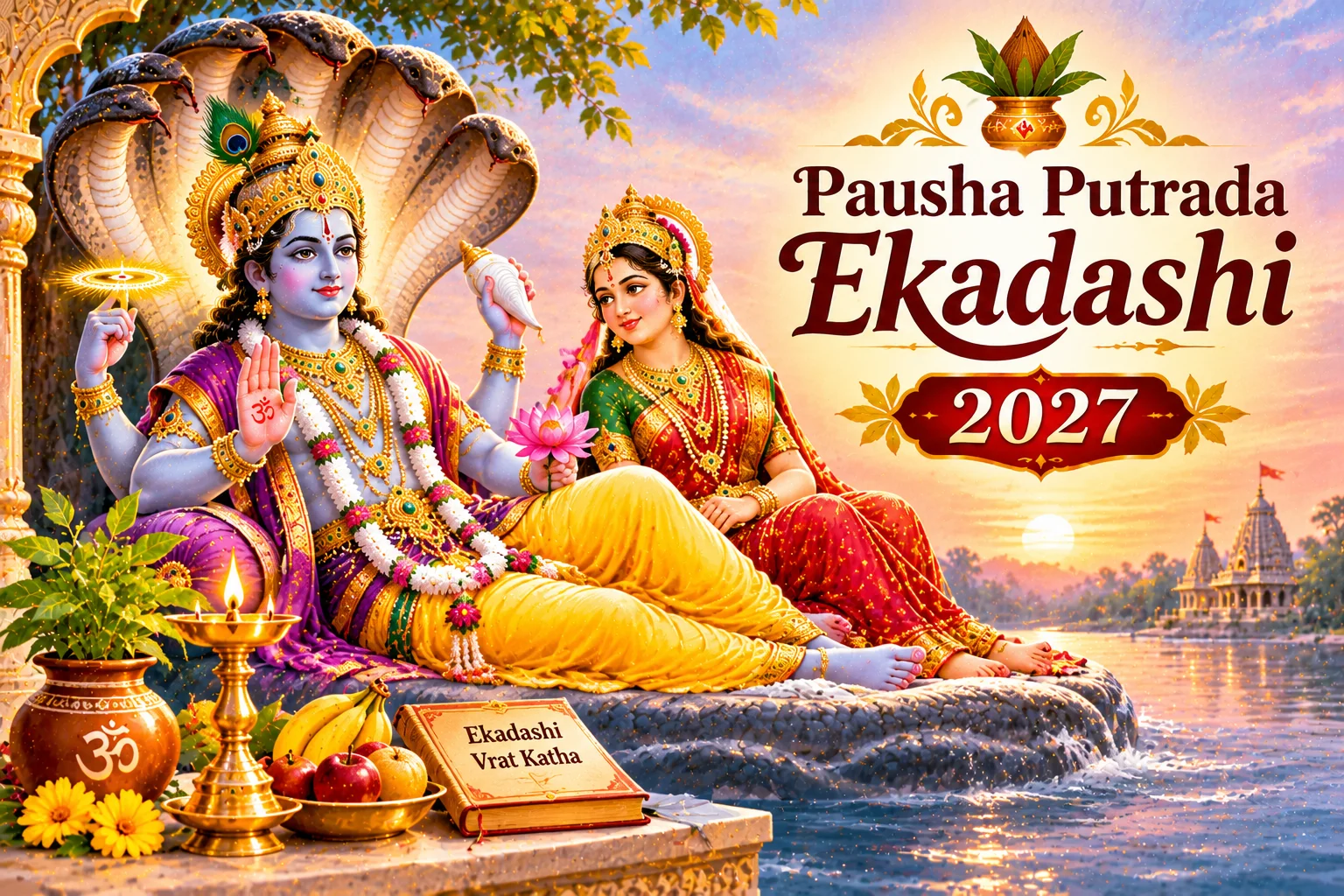
Monday, Jan 18, 2027
Pausha Putrada Ekadashi
Pausha Putrada Ekadashi is a sacred Hindu fasting day observed on the Ekadashi, or eleventh lunar day, of the Shukla Paksha (waxing fortnight) in the Hindu month of Pausha. It is dedicated to Lord Vishnu and is traditionally associated with prayers for children, family well-being, prosperity, and spiritual blessings.
View Festival Guide
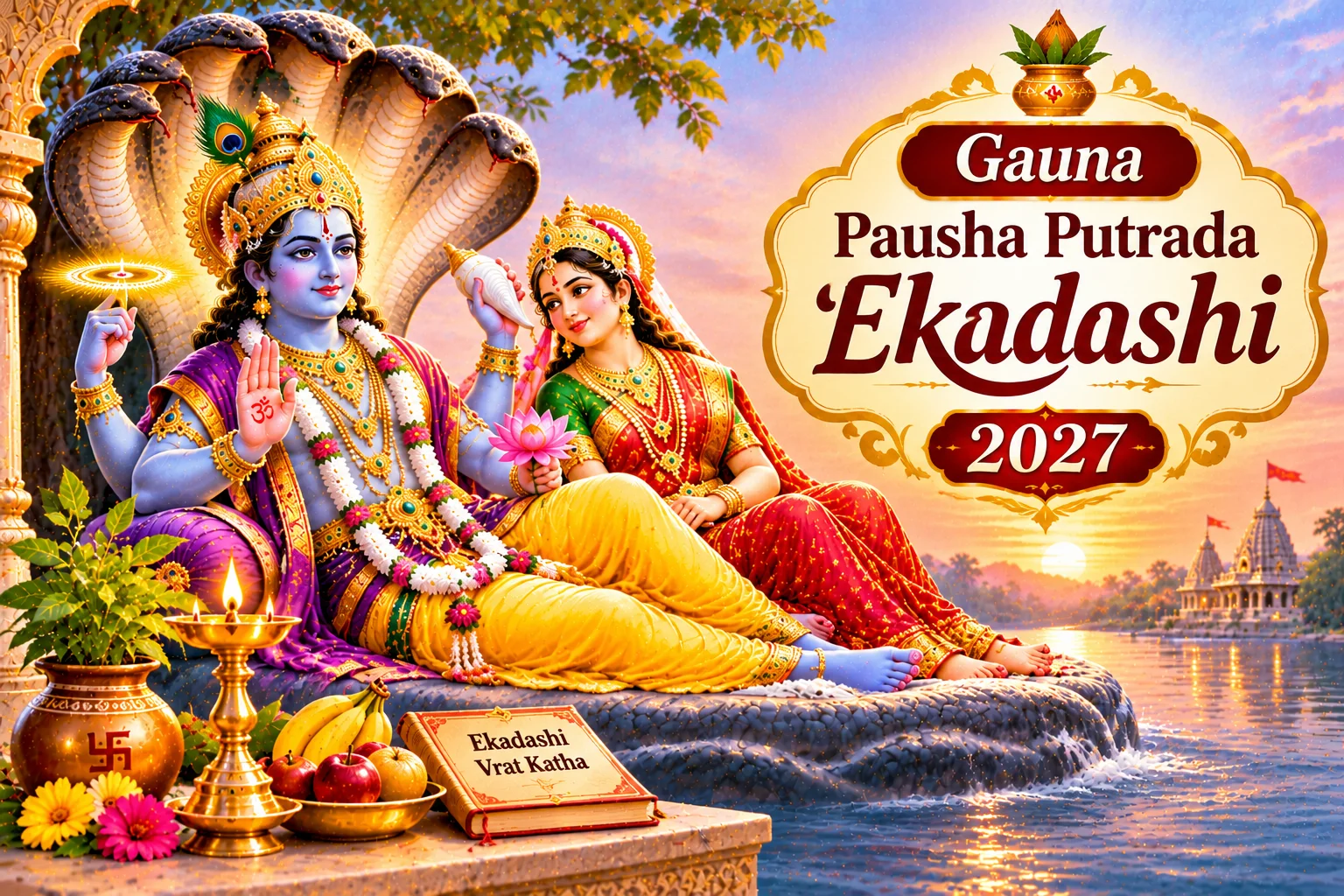
Tuesday, Jan 19, 2027
Gauna Pausha Putrada Ekadashi
Gauna Pausha Putrada Ekadashi is the alternate Vaishnava observance of Pausha Putrada Ekadashi, the sacred Ekadashi occurring during the Shukla Paksha of the Hindu month of Pausha. It is dedicated to Lord Vishnu and is traditionally associated with prayers for children, family happiness, prosperity, and spiritual well-being.
View Festival Guide
Wednesday, Jan 20, 2027
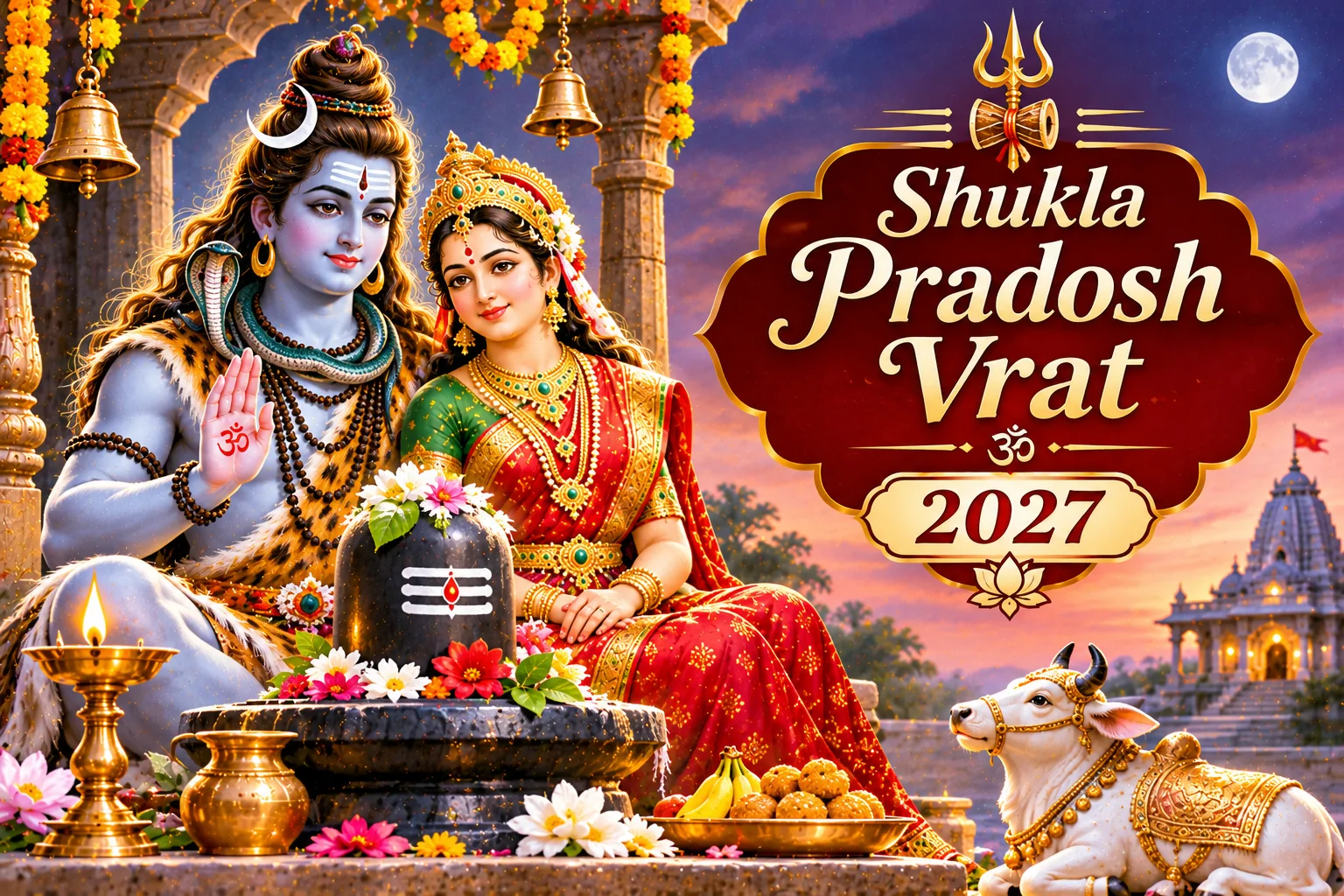
Shukla Pradosh Vrat
Shukla Pradosh Vrat is a sacred Hindu observance dedicated to Lord Shiva and Goddess Parvati. It is observed on the Trayodashi Tithi, the thirteenth lunar day of the Shukla Paksha, or waxing phase of the Moon.
View Festival Guide
Friday, Jan 22, 2027
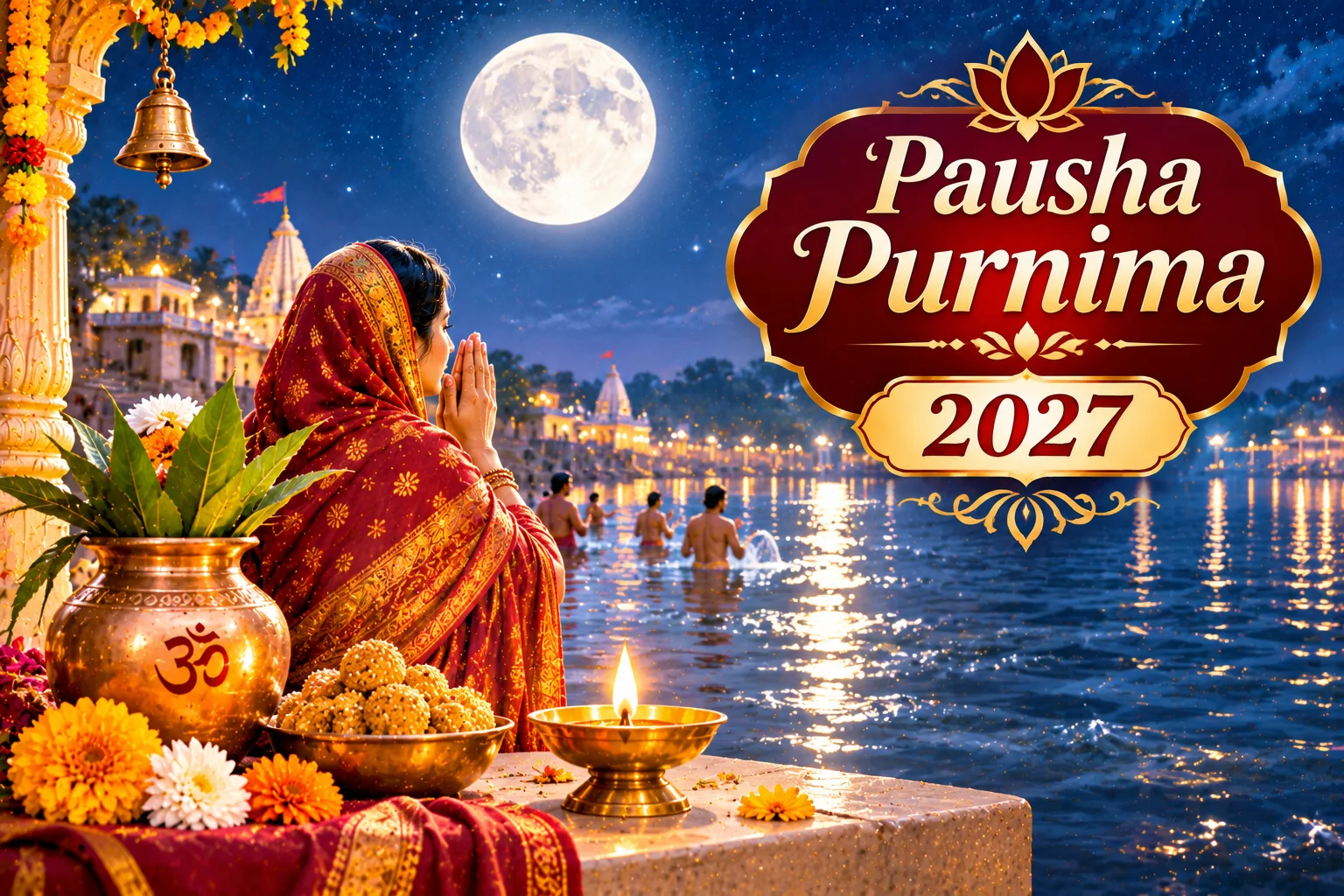
Pausha Purnima (Shakambhari Jayanti)
Pausha Purnima, also known as Paush Purnima, is an important Hindu observance celebrated on the full moon day of the Shukla Paksha in the lunar month of Pausha. It is traditionally associated with sacred bathing, fasting, charity, devotion and spiritual purification.
View Festival Guide
Wallpapers
386
336
329
348
326
390
352
348
326
384
317
351
374
364
389
391
373
354
384
355