




Sita Navami, widely celebrated as Janaki Jayanti, marks the sacred appearance anniversary of Goddess Sita, the divine consort of Lord Rama and the supreme embodiment of devotion, sacrifice, moral fortitude, and dharmic grace. Falling on the Shukla Paksha Navami (ninth lunar day) of the holy month of Vaishakha, this auspicious tithi occurs exactly one month after Rama Navami (Chaitra Shukla Navami), symbolizing the cosmic unity and balance of Sri Rama and Mata Sita.
Sita Navami 2027: Date, Puja Timings, Rituals & Stories
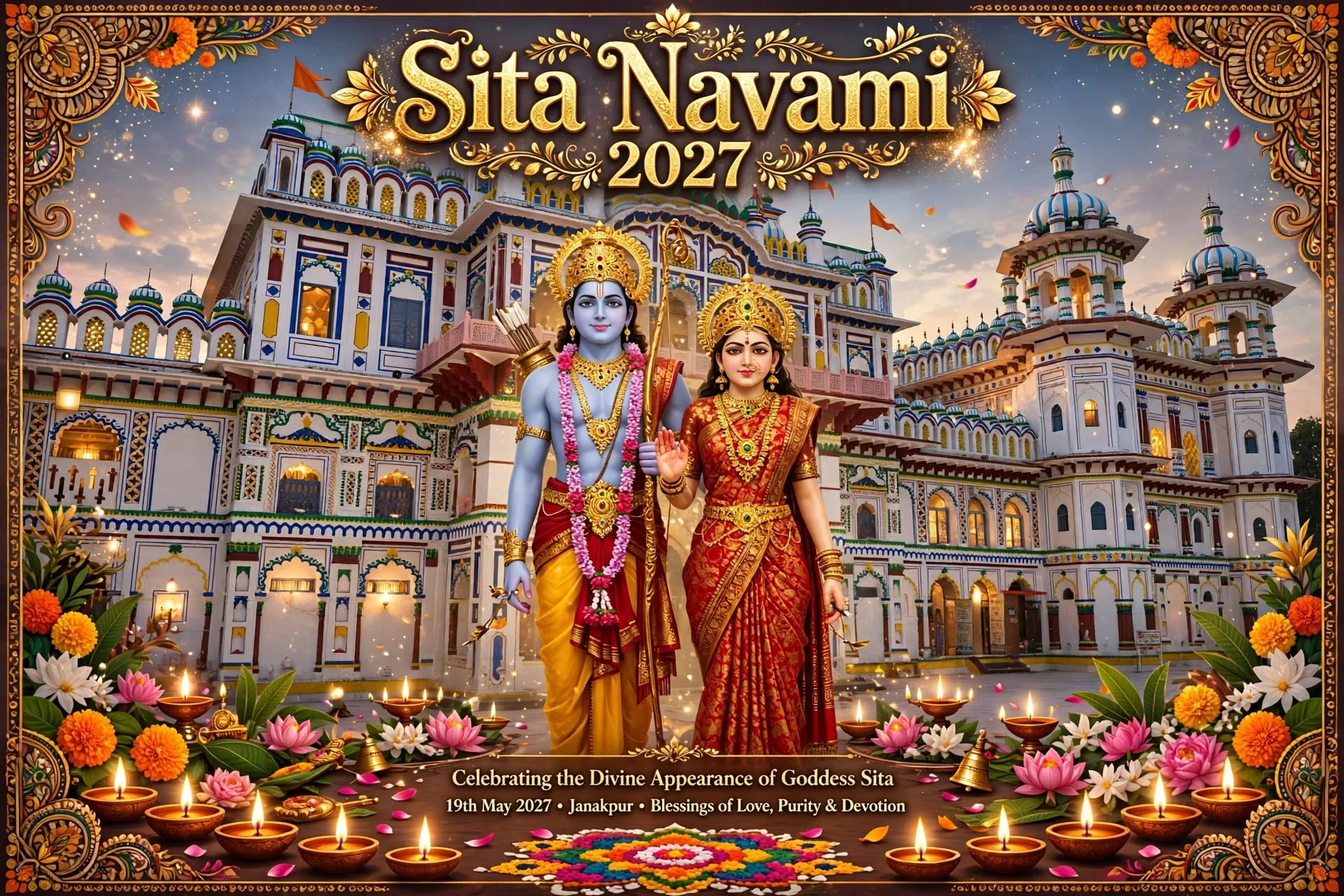
Sita Navami Timings & Panchang
Important festival dates and auspicious timings
Usha Arghya (Sunrise)
05:31 am
Sandhya Arghya (Sunset)
07:04 pm
Start Date
Friday, 14 May 2027
Puja Muhurat
09:18 pm – 07:39 pm
Sita Navami
According to the Valmiki Ramayana, Goddess Sita was not born from a biological womb (Ayonija) but miraculously manifested from Mother Earth (Bhudevi) when the virtuous King Janaka of Mithila was ritually plowing a golden furrow in a field to prepare for a divine yajna to relieve his kingdom of drought. As the plowshare (called "Sita" in ancient Sanskrit) struck a golden casket, baby Janaki emerged radiantly, filling the realm with sudden life-giving rains and prosperity.
Celebrated with profound devotion throughout India, Nepal (especially Janakpur Dham), and Sri Lankan sites, Sita Navami is marked by fasting, special Sita-Rama Kalyanotsavam (wedding ceremonies), recitation of the Ramayana and Janaki Stotra, and prayers by women and families for marital harmony, loyalty, unyielding courage, and household prosperity.
Why is Sita Navami Celebrated?
Sita Navami is celebrated to venerate the supreme divine feminine (Shakti) in her most resilient, patient, and selfless manifestation as Goddess Sita, an incarnation of Goddess Mahalakshmi. Her life illustrates the pinnacle of Pativrata Dharma, absolute integrity, detachment from material royal luxuries, and graceful perseverance in the face of immense personal trials.
It is also celebrated to mark the day when the earth yielded its purest spiritual gem to King Janaka, reminding humanity of the deep, sacred bond between the soil, agriculture, and divine blessings.
- Commemorates the miraculous divine appearance of Mata Sita from the sacred furrow of Mother Earth.
- Honors the highest ideals of feminine dignity, patience, courage, and unconditional devotion.
- Inspires marital fidelity, domestic peace, and emotional strength during challenging life circumstances.
- Invokes the combined protective grace of Sita-Rama and prosperity of Goddess Mahalakshmi.
The Divine Emergence from the Furrow of Mithila
King Janaka's Plowing and the Discovery in the Furrow
As recorded in the Balakanda of the Valmiki Ramayana, the kingdom of Mithila suffered from an acute prolonged drought. Sages and spiritual advisors counseled the philosopher-king Janaka to plow the sacrificial ground personally with a golden plow to invoke divine favor. As the king plowed with deep humility and reverence, the tip of the plowshare (sita) struck a buried object.
Upon gently excavating the earth, a magnificent golden casket was discovered containing an infant girl radiating celestial brilliance. The moment King Janaka lifted the child into his arms, torrential showers of rain quenched the parched earth, revitalizing crops and rivers. A celestial voice echoed from the heavens declaring: "O King, this divine child is your daughter in dharma, born of the earth herself."
Upbringing as Vaidehi and the Trial of the Bow
Raised as Princess Janaki and Vaidehi in the cultured court of Mithila, she displayed divine grace and strength from childhood, effortlessly moving the heavy Pinaka (the cosmic bow of Lord Shiva) during simple house chores. This inspired Janaka to declare that only the hero capable of stringing Shiva's bow would be worthy of marrying her, leading to the historic union with Lord Rama.
Source: Valmiki Ramayana, Balakanda, Sarga 66 & Adhyatma Ramayana
The Essence of Bhumi Tattva and the Trial of Golden Purity
Embodiment of Mother Earth (Bhumi Tattva)
As the daughter of the Earth, Sita embodies patience (Kshama), endurance (Dhairya), and boundless nourishment. The earth absorbs heat, rain, and plowing without complaint, yet yields life-giving grains and blossoms. Similarly, Sita absorbed the hardships of fourteen years of forest exile, abduction, and separation, remaining radiant in her inner chastity and compassion even toward her tormentors.
The Supreme Intercessor of Grace
In Sri Vaishnava philosophy (especially through the teachings of Ramanujacharya), Sita is revered as the ultimate Mediatrix (Purushakara). While Rama represents absolute cosmic justice, Sita represents unconditioned mercy and forgiveness. When Hanuman sought to punish the demonesses in the Ashoka Vatika, Sita restrained him, proclaiming: "There is no one who does not make mistakes; kindness must be shown to all."
Observance Protocol, Fasting, and Ceremonial Marriage
Fasting and Altar Decorations
Devotees observe a fast from sunrise, adorning their home altars with yellow and red silk. Statues of Goddess Sita and Lord Rama are installed together, accompanied by Lakshmana and Hanuman. Beautiful floral canopies (Mandapams) are constructed, symbolizing the royal wedding in Mithila.
Sita-Rama Kalyanam and Evening Kirtans
Temples perform the elaborate "Sita Kalyanam" ritual where the divine wedding is reenacted with traditional music, exchange of garlands, and Vedic chants. Women gather to sing folk songs praising Sita's virtues and listen to the Sundarakanda from the Ramacharitmanas.
Sita Navami Puja Vidhi (Step by Step)
- 1
Pratah Snana
Take an early morning bath, wear auspicious red or yellow traditional clothes, and purify the worship area with Gangajal.
- 2
Sankalpa
Hold flowers, akshata, and pure water in hand, taking a vow to observe Sita Navami with devotion, patience, and truthfulness.
- 3
Mandapa Sthapana
Set up a small ceremonial canopy (Mandap) using banana stems or yellow cloth, placing images or idols of Sita and Rama in the center.
- 4
Ganapati and Bhumi Pujan
Offer first prayers to Lord Ganesha, followed by offering akshata and flowers to Mother Earth (Bhudevi) in gratitude for Sita's birth.
- 5
Sita-Rama Avahana
Invoke the presence of Mata Janaki and Lord Ramachandra onto the altar with folded hands and welcome shlokas.
- 6
Sita Navami Puja Samagri List
Deity Adornment and Shringara Materials
Sacred adornments and auspicious items specifically offered to Mata Sita.
- Idols of Goddess Sita and Lord Rama
- Red silk sari / Chunri for Sita
- Yellow silk Pitambari for Rama
- Suhaag items (Sindoor, red bangles, bindi, kajal, alta)
- Panchamrita ingredients and Gangajal
- Pure sandalwood paste, turmeric, and kumkum
Floral and Altar Articles
Decorations and natural aromatics for the ceremonial wedding altar.
- Fresh lotus blossoms and red hibiscus
- Yellow marigold garlands
- Brass Diya and pure cow ghee
- Bhimseni camphor and dhoop sticks
- Banana tree stems or leaves for mandap
Naivedya and Feast Offerings
Sattvic sweets and traditional celebratory dishes.
- Rice kheer prepared in cow milk
- Traditional sweets (Laddus, Gujiya)
Mantras and Prayers for Sita Navami
Sita Navami Vrat Rules and Fasting Guidelines
Fasting Protocol and Sattvic Discipline
The fast begins at sunrise on Vaishakha Shukla Navami and extends through the day until the evening aarti is concluded.
- Fast can be observed with water and fruits (phalahari) according to physical capacity
- Strictly avoid grains, non-vegetarian food, onion, garlic, and tamasic substances
- Spend the daytime reading the Ramayana, practicing patience, and avoiding any arguments
Charity and Suhaag Dana
Auspicious gifts of marital welfare are shared with married women and the needy.
- Gift red clothes, bangles, sindoor, and sweets to married women (Suvasinis)
- Provide food and clothing to underprivileged young girls and mothers
- Break the fast in the evening after concluding the Sita-Rama Kalyanotsavam
Dos and Don'ts of Sita Navami
Good Practices (Do's)
- Wake up at dawn, bathe, and worship Goddess Sita alongside Lord Rama.
- Offer red flowers, sindoor, yellow clothes, and kheer to the divine couple.
- Read or listen to the sacred stories of Sita's courage from the Ramayana.
- Respect, honor, and support women in the family, community, and workplace.
- Gift auspicious marital articles (Suhaag Samagri) and sweets to deserving women.
Sita Navami Across Regions
| Region | Local Name |
|---|---|
| Mithila Region (Bihar & Janakpur, Nepal) | Janaki Jayanti / Sita Navami Mahotsav |
| Northern India (Ayodhya, Uttar Pradesh) | Sita Navami Pujan |
| Southern India (Telangana, Andhra Pradesh, Tamil Nadu) | Sita Jayanthi / Sri Rama Navami Utsava Phalam |
Sita Navami FAQs
Why does Sita Navami occur exactly one month after Rama Navami?
Rama Navami falls on Chaitra Shukla Navami, while Sita Navami falls on Vaishakha Shukla Navami. This precise one-month interval honors their celestial partnership, reflecting cosmic balance and symmetry.
What is the scriptural meaning of the name "Sita"?
In ancient Sanskrit, "Sita" refers to the furrow created by a plow. Because she was discovered in the furrow while King Janaka was plowing the sacred sacrificial field, she was named Sita.
What blessings are believed to come from observing Sita Navami?
Devotees believe observing Sita Navami bestows marital longevity, harmony, patience, moral integrity, protection from adversities, and the enduring grace of Goddess Mahalakshmi.
Upcoming Festivals
View All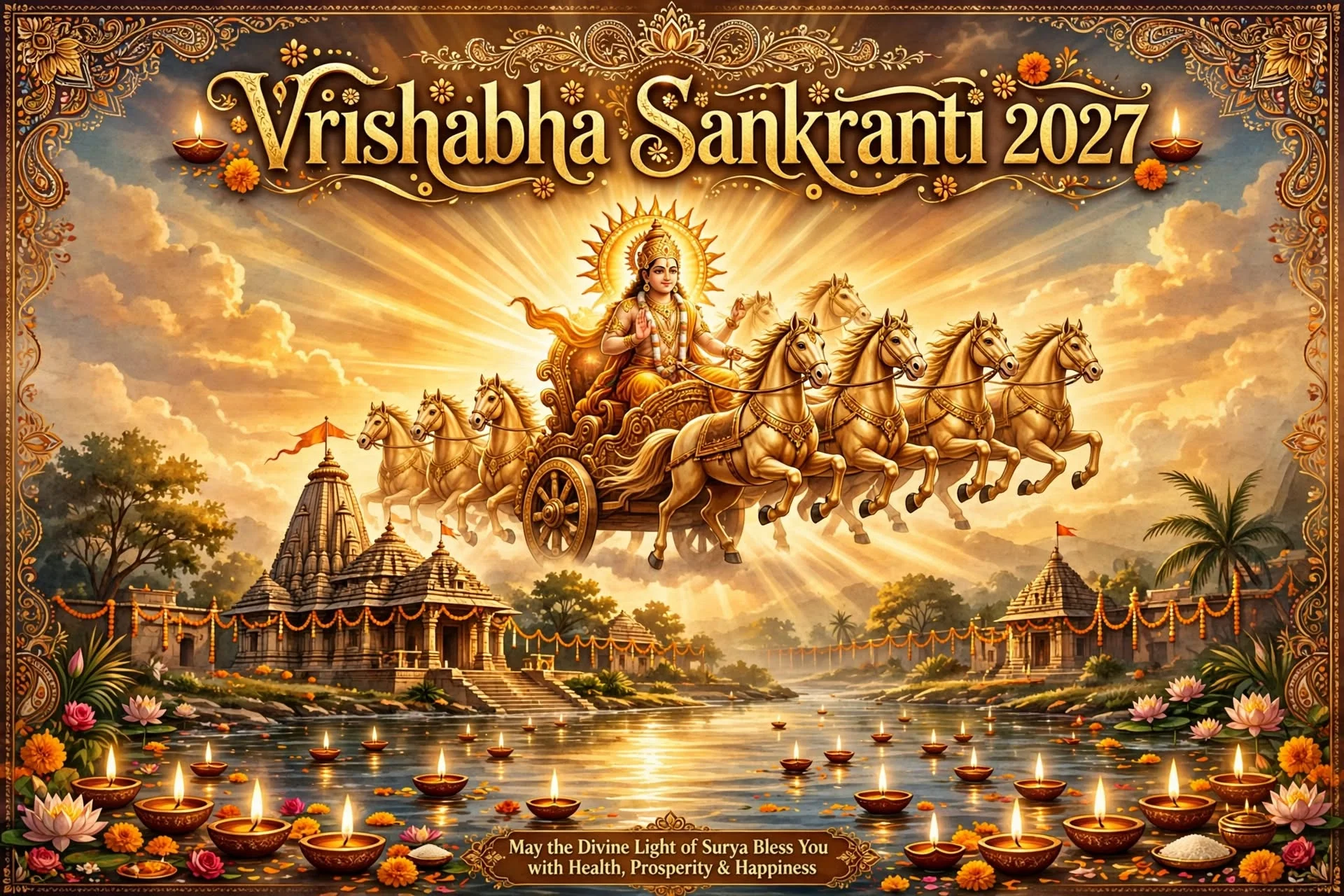
Saturday, May 15, 2027
Vrishabha Sankranti
Vrishabha Sankranti, also known as Vrishabha Sankramanam, marks the astronomical transition of the Sun (Surya) from Mesha Rashi (Aries) into Vrishabha Rashi (Taurus) in the sidereal zodiac. This solar ingress marks the beginning of the Vrishabha solar month and is traditionally observed around the middle of May. The Sanskrit word 'Vrishabha' means bull and represents the second sign of the zodiac, associated in Hindu astrological tradition with stability, nourishment, fertility, patience, and material sustenance.
View Festival Guide
Sunday, May 16, 2027
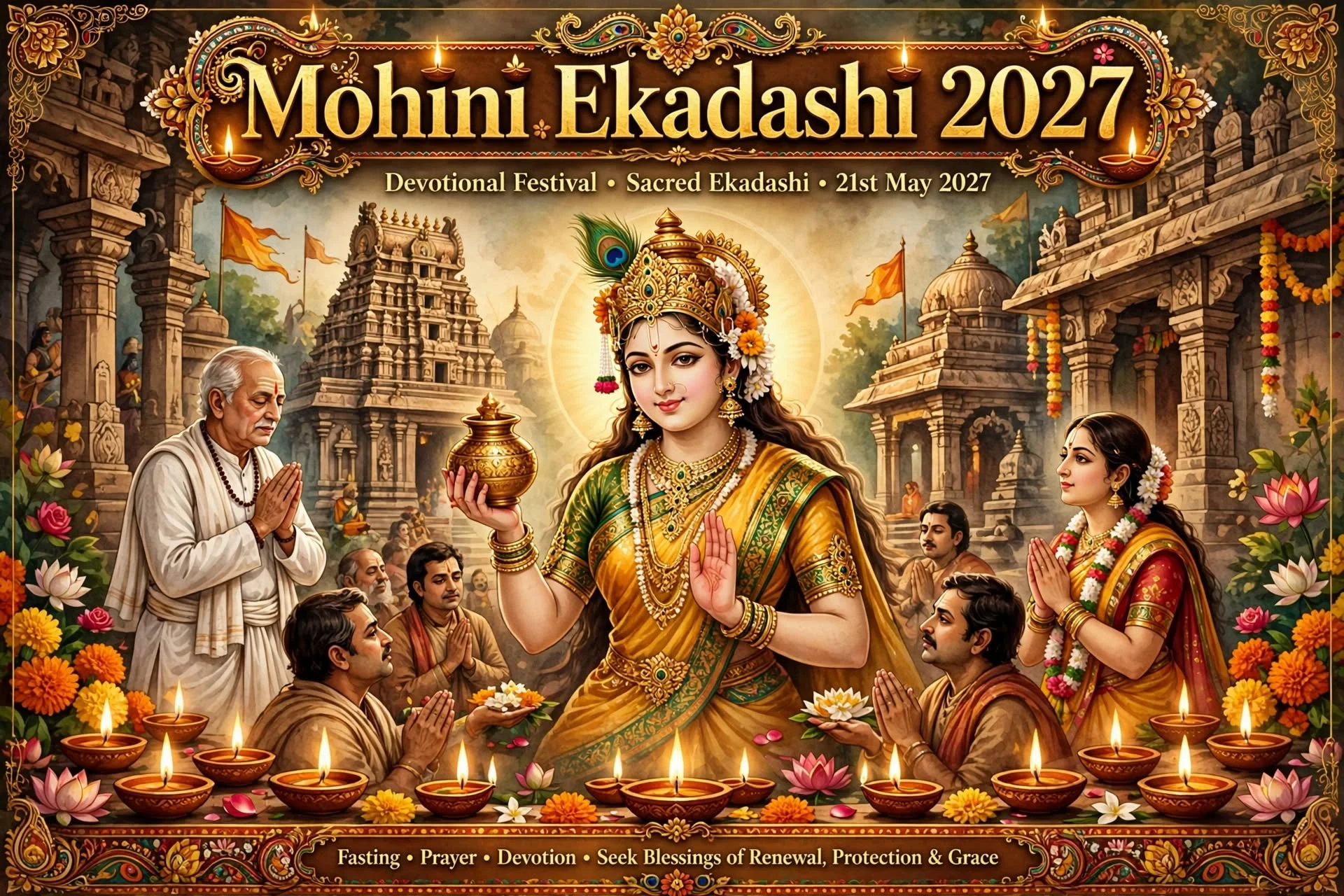
Mohini Ekadashi
Mohini Ekadashi is an extraordinarily celebrated and sacred fasting observance occurring during the Shukla Paksha (waxing lunar phase) of the auspicious Hindu month of Vaishakha. This holy tithi commemorates the divine manifestation of Lord Vishnu's only female incarnation—the mesmerizing, enchantingly beautiful enchantress Mohini. Manifesting during the cosmic churning of the celestial ocean (Samudra Manthan), Mohini Avatar protected cosmic balance by distributing the nectar of immortality (Amrita) to the benevolent devas while outwitting the aggressive asuras.
View Festival Guide
Monday, May 17, 2027
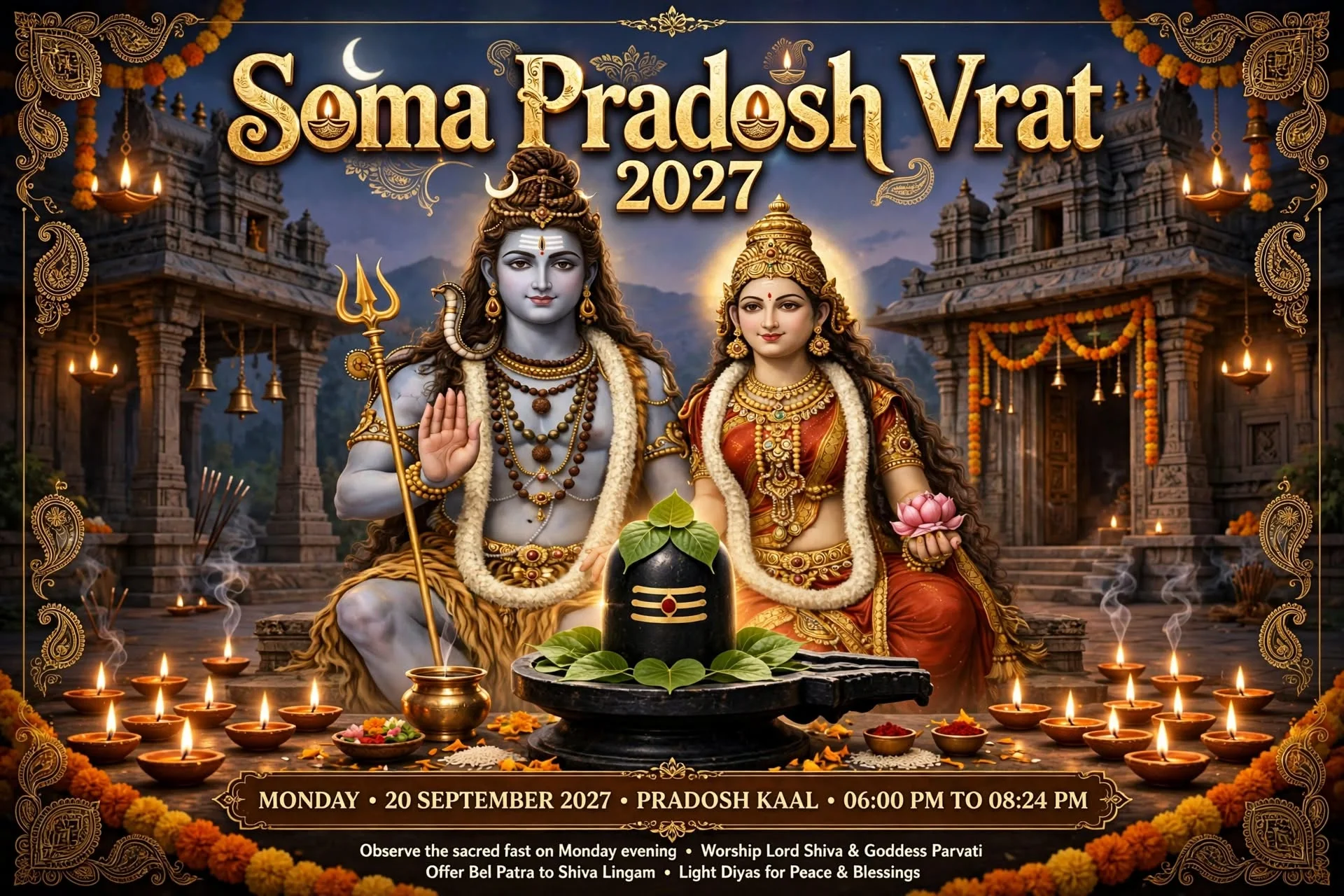
Soma Pradosh Vrat
Soma Pradosh Vrat, also known as Som Pradosh Vrat or Soma Trayodashi, is a Hindu fasting and worship observance dedicated primarily to Lord Shiva. It is observed when Trayodashi, the thirteenth lunar day of either Shukla Paksha or Krishna Paksha, coincides with Monday. Monday is traditionally associated with Lord Shiva, which gives this Pradosh observance its name.
View Festival Guide
Tuesday, May 18, 2027
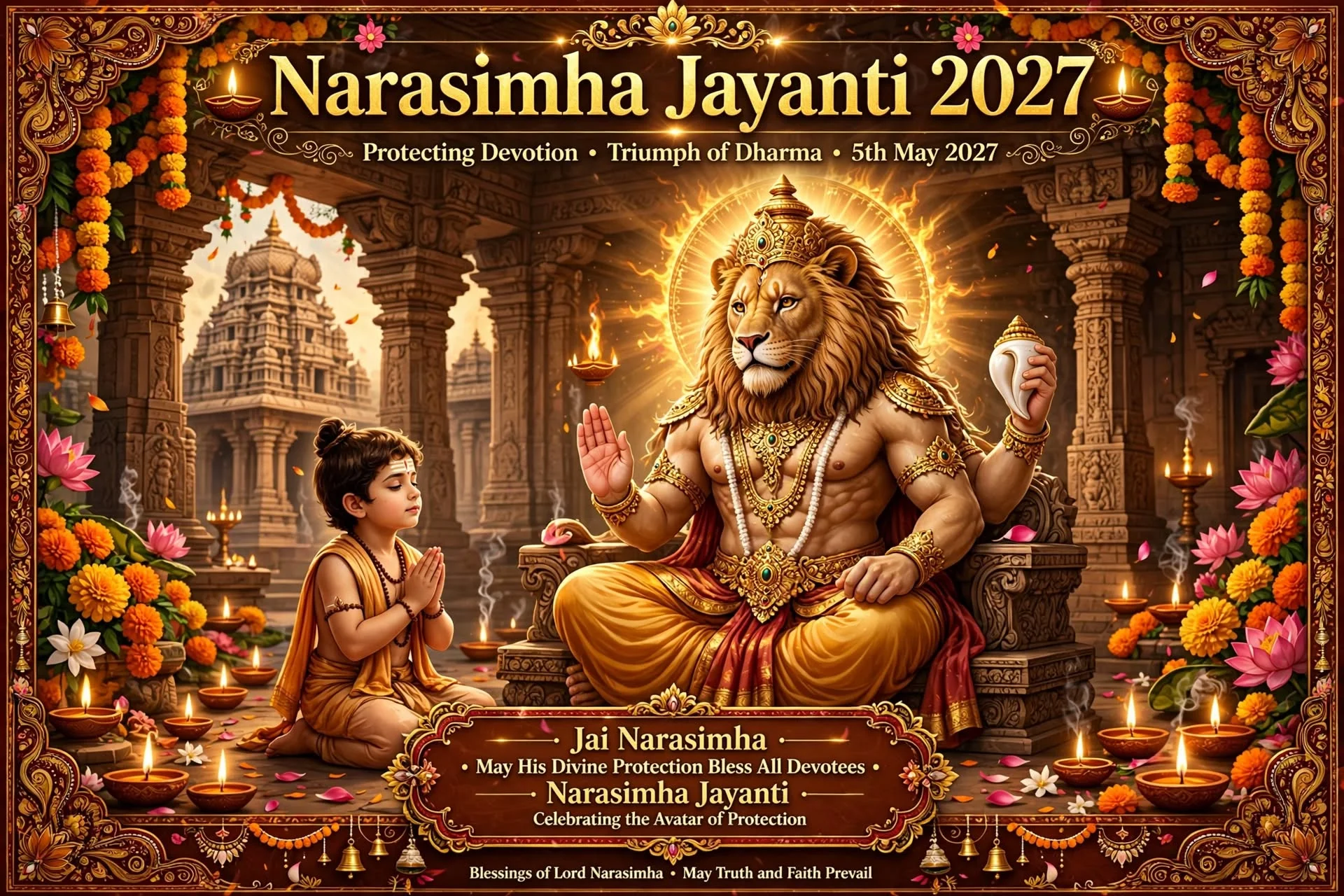
Narasimha Jayanti
Narasimha Jayanti marks the ferocious yet intensely protective divine manifestation of Lord Narasimha—the fourth incarnation (Avatar) of Lord Vishnu—who descended in an extraordinary half-man, half-lion form to vanquish the despotic demon king Hiranyakashipu and protect His unswerving young devotee Bhakta Prahlada. Celebrated on the Shukla Paksha Chaturdashi (fourteenth lunar day) of the holy month of Vaishakha, this festival represents the triumph of innocent devotion over tyrannical power and the omnipresence of God across creation.
View Festival Guide
Wednesday, May 19, 2027
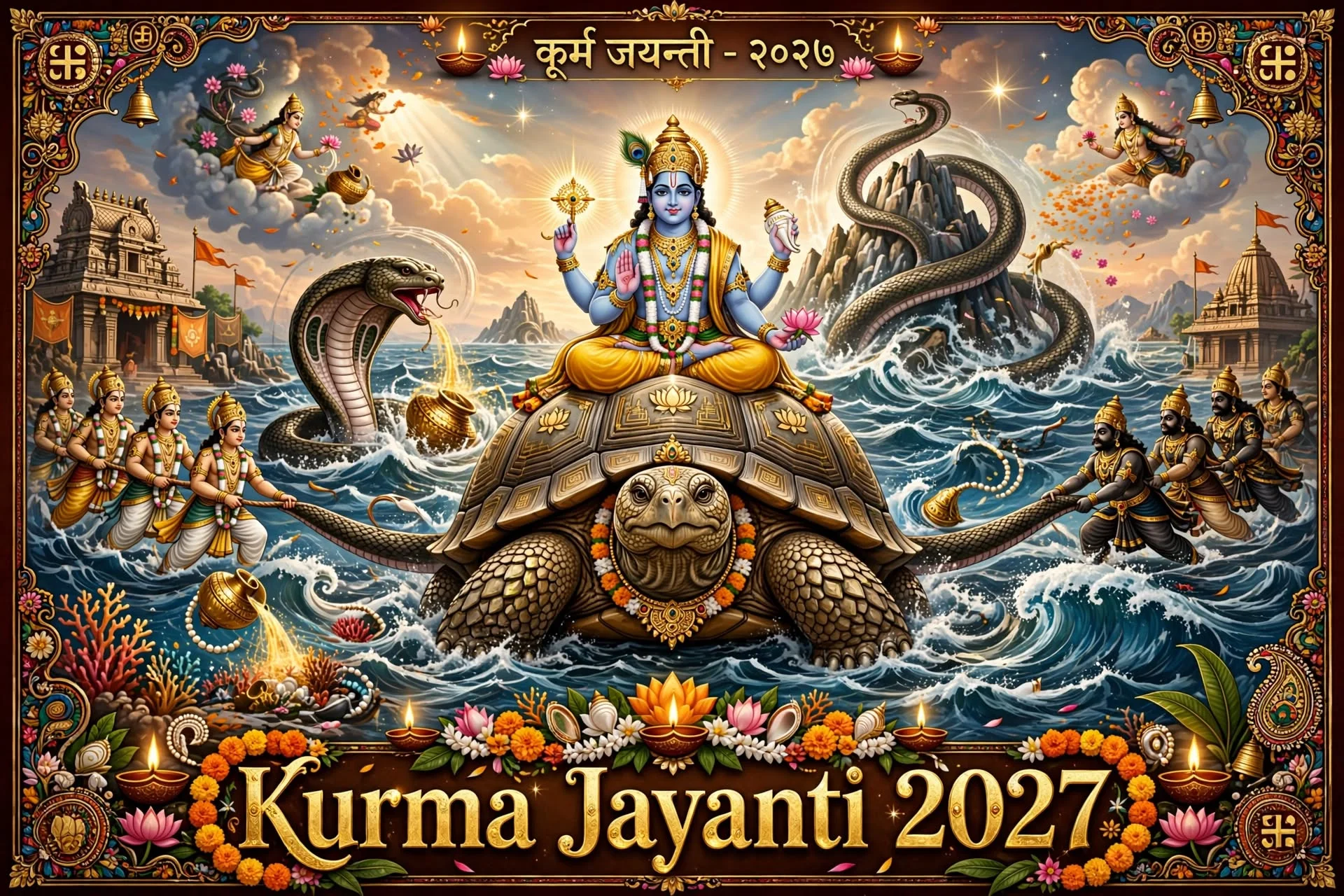
Kurma Jayanti
Kurma Jayanti marks the divine appearance anniversary of Bhagavan Kurma, the second divine incarnation (Avatar) of Lord Vishnu, manifesting in the form of a gigantic tortoise during the Satya Yuga on the auspicious tithi of Vaishakha Shukla Purnima (the full moon day of Vaishakha). Manifesting during the monumental cosmic churning of the celestial ocean (Samudra Manthan), Lord Kurma provided His massive, unyielding shell as the bedrock pivot to support the sinking Mount Mandara, saving the cosmic endeavor and enabling the extraction of the nectar of immortality (Amrita) and Goddess Mahalakshmi.
View Festival Guide

Thursday, May 20, 2027
Anvadhan
Anvadhan (अन्वाधान) is an ancient, highly revered Vedic ritual and spiritual observance in Sanatana Dharma performed on the day immediately preceding the New Moon (Amavasya) or Full Moon (Purnima). Rooted in the pristine traditions of the Shrauta and Grihya Sutras, Anvadhan literally translates to 'the solemn placing and replenishment of sacred fuel wood into the consecrated Vedic fires'. In traditional Vedic ritualism, householders (Grihasthas) and priests who maintain the sacred Agnihotra fires perform Anvadhan to prepare the sacrificial altars for the grand Darsha Yajna (New Moon sacrifice) or Paurnamasa Yajna (Full Moon sacrifice) scheduled for the following day.
View Festival Guide
Thursday, May 20, 2027
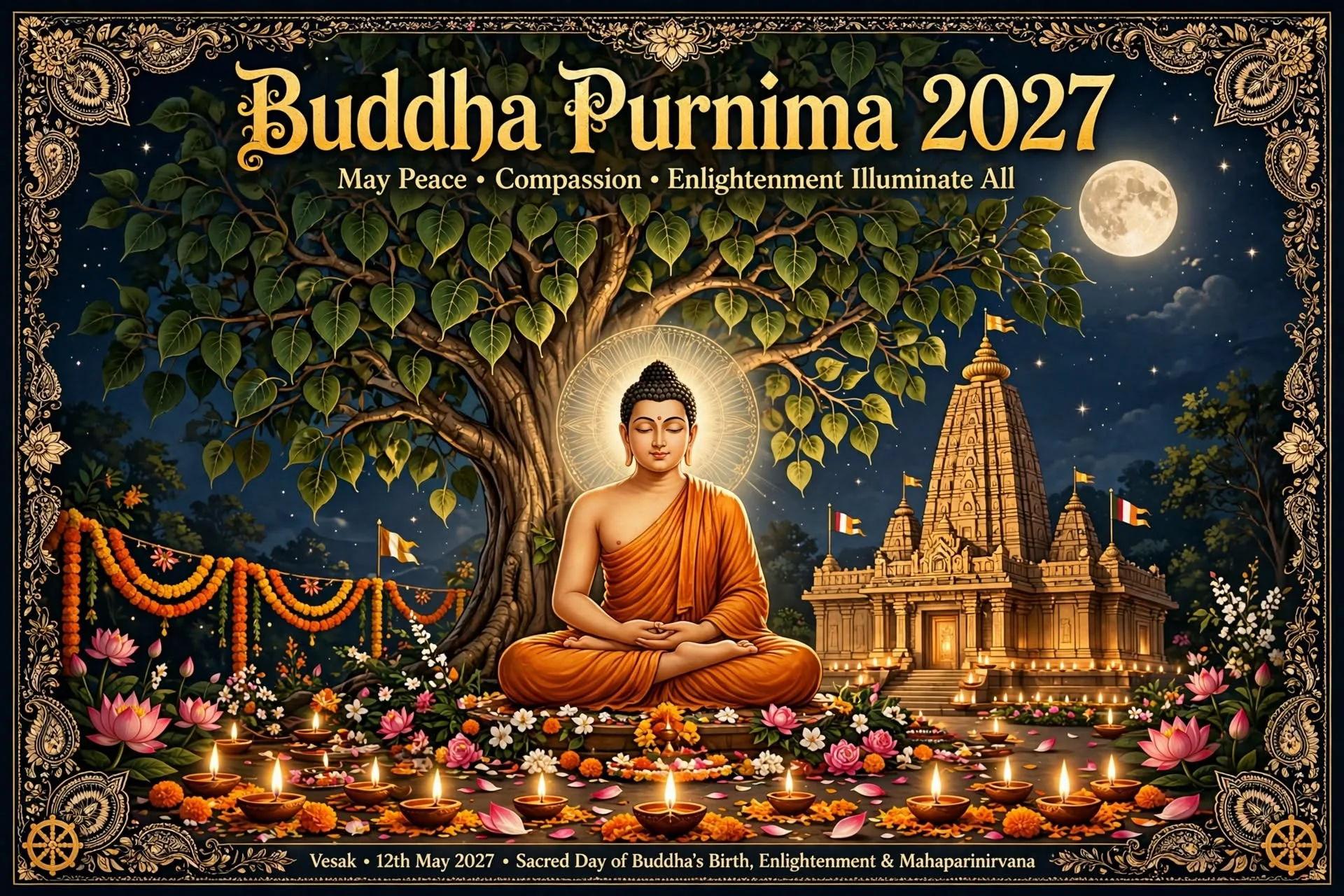
Buddha Purnima
Buddha Purnima, internationally celebrated as Buddha Jayanti or Vesak, is one of the most sublime and universally revered spiritual festivals, falling on the sacred full moon day (Purnima) of the holy month of Vaishakha. This momentous tithi commemorates the thrice-blessed milestone (Thrice-Holy Vesak) in the life of Gautama Buddha: his miraculous birth as Prince Siddhartha in Lumbini, his supreme enlightenment (Bodhi) beneath the Bodhi tree in Bodh Gaya, and his ultimate transition into final liberation (Mahaparinirvana) in Kushinagar.
View Festival Guide
Thursday, May 20, 2027
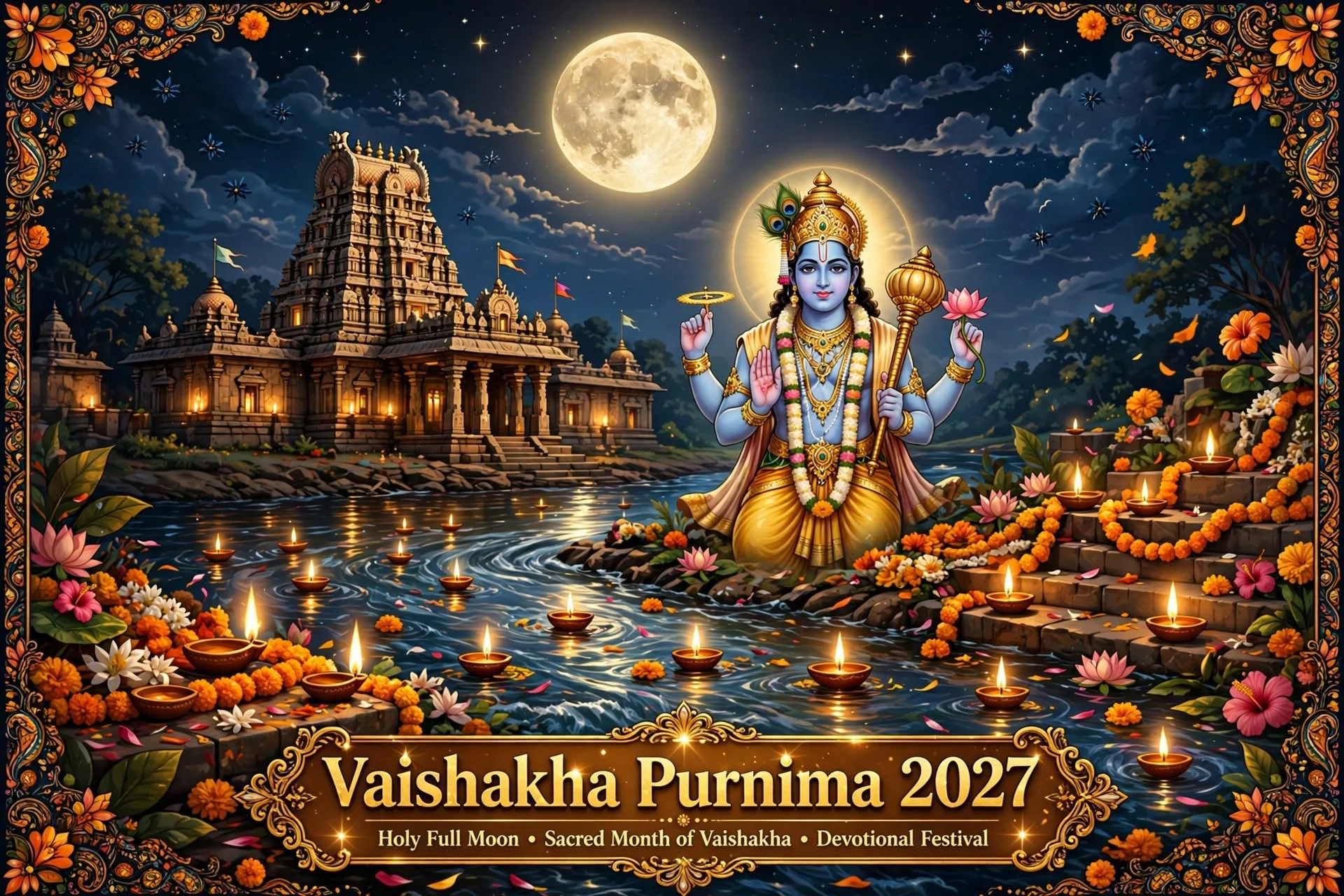
Vaishakha Purnima
Vaishakha Purnima is the sacred full-moon day occurring on the Purnima Tithi of Shukla Paksha in the Hindu lunar month of Vaishakha. It is one of the spiritually significant Purnima observances in the Hindu calendar and is associated with sacred bathing, charity, worship of Lord Vishnu, remembrance of ancestors, and spiritual discipline. The word Purnima refers to the full-moon phase, symbolizing completeness, illumination, and the culmination of the lunar fortnight. Vaishakha is traditionally regarded as a particularly meritorious month for religious observances, making its concluding full moon an important occasion for devotees.
View Festival Guide