




Vrishabha Sankranti, also known as Vrishabha Sankramanam, marks the astronomical transition of the Sun (Surya) from Mesha Rashi (Aries) into Vrishabha Rashi (Taurus) in the sidereal zodiac. This solar ingress marks the beginning of the Vrishabha solar month and is traditionally observed around the middle of May. The Sanskrit word 'Vrishabha' means bull and represents the second sign of the zodiac, associated in Hindu astrological tradition with stability, nourishment, fertility, patience, and material sustenance.
Vrishabha Sankranti 2027: Date, Puja Timings, Rituals & Stories
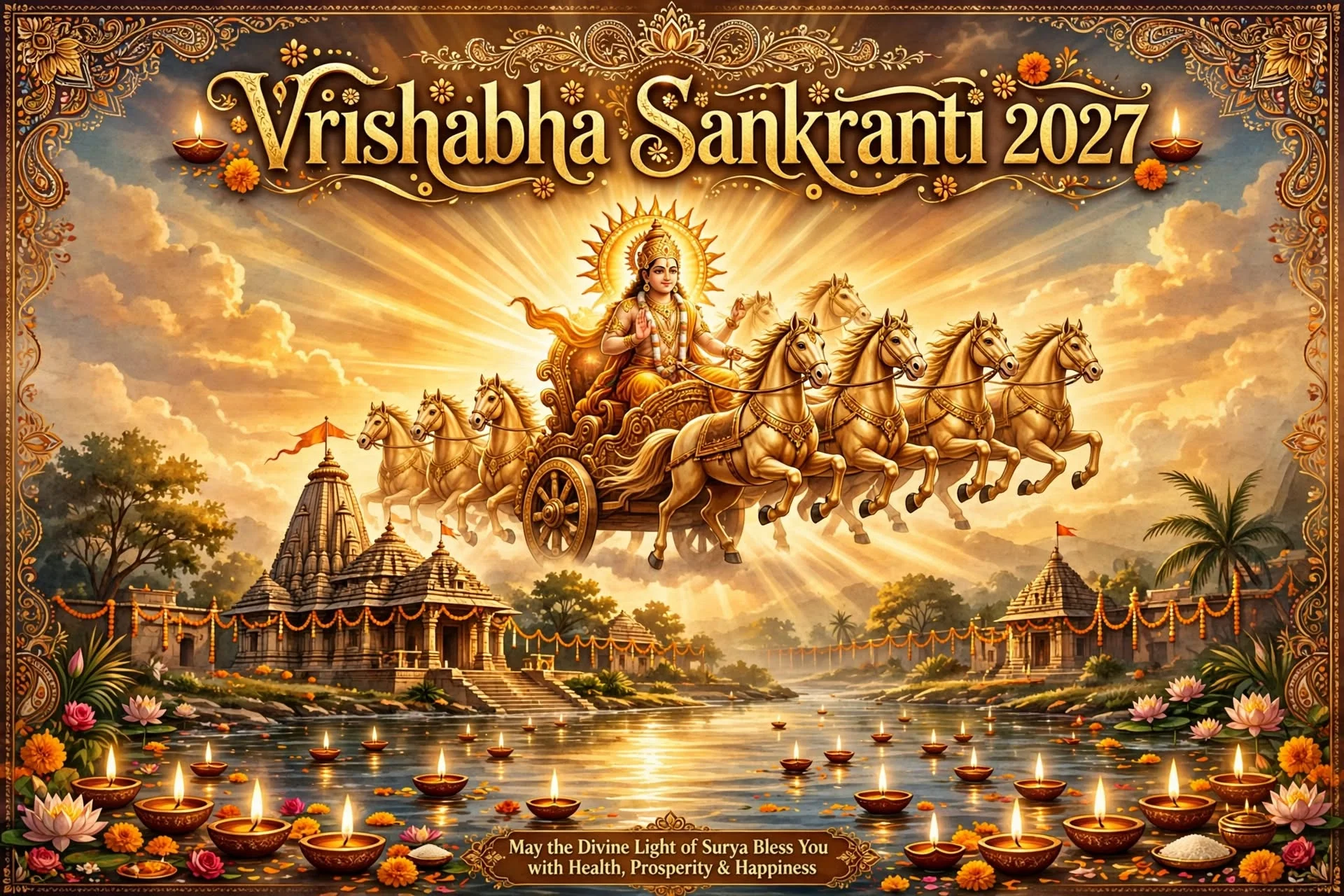
Vrishabha Sankranti Timings & Panchang
Important festival dates and auspicious timings
Usha Arghya (Sunrise)
05:31 am
Sandhya Arghya (Sunset)
07:05 pm
Start Date
Saturday, 15 May 2027
Puja Muhurat
07:39 pm – 06:17 pm
Vrishabha Sankranti
In the Hindu tradition, Sankranti is the sacred moment when the Sun moves from one zodiac sign into another. Each of the twelve annual solar transitions is considered an opportunity for spiritual purification, worship, charity, and remembrance of ancestors. Vrishabha Sankranti is traditionally classified among the Vishnupadi Sankrantis. Its observances emphasize daana (charitable giving), snana (ritual bathing), Surya worship, and acts of compassion toward living beings.
The transition into Vrishabha Rashi also marks an important seasonal and calendrical change in several Indian regional solar calendars. It corresponds with the beginning of Vaikasi in the Tamil calendar, Edavam in the Malayalam calendar, Jyeshtha in the Bengali solar calendar, and Jyeshtha in the Odia solar calendar, although the civil date on which each regional month begins can differ according to local calendrical rules.
A distinctive traditional charitable observance associated with Vrishabha Sankranti is Godana, or the donation of a cow. Traditional Sankranti-dana lists also prescribe gifts according to the particular solar ingress. Charity of food, water, and useful necessities is encouraged, especially during the hot summer season. Devotees worship Lord Surya, perform sacred bathing, offer prayers for the welfare of their families, and dedicate their actions to spiritual merit rather than material reward.
Why is Vrishabha Sankranti Celebrated?
Vrishabha Sankranti is celebrated to mark the Sun's entry into Vrishabha Rashi, the second sign of the sidereal zodiac. This transition establishes a new solar month and is regarded as a spiritually significant moment in the Hindu calendrical system. The Sun is revered as the source of light, energy, vitality, and life, so its movement through the zodiac is observed through worship, ritual bathing, prayer, and charitable activities.
The observance is also connected with the traditional importance of dana during Sankranti. Classical Dharma literature and traditional Sankranti observance manuals prescribe particular charitable gifts for different solar transitions. For Vrishabha Sankranti, Godana, the donation of a cow, is especially emphasized. The cow represents nourishment, generosity, agricultural sustenance, and the nurturing principle in Hindu religious culture. When an actual cow donation is not practical, devotees may perform other forms of charity according to their means and local tradition.
The transition takes place during the hot period of the Indian summer. Consequently, donations that provide relief and nourishment, such as food, water, and other essential supplies, carry practical as well as religious significance. Devotees regard the day as an opportunity to cultivate generosity, discipline, gratitude, and reverence for nature.
- Marks the Sun's transition from Mesha Rashi (Aries) into Vrishabha Rashi (Taurus).
- Begins the Vrishabha solar month and is associated with the Vaikasi and Edavam months in southern Indian calendars.
- Encourages Godana, the traditional charitable donation of a cow.
- Provides an occasion for Surya worship, sacred bathing, prayer, and spiritual purification.
- Emphasizes dana, including food, water, and other useful necessities for people in need.
- Encourages remembrance of ancestors through traditional offerings and Tila Tarpana where prescribed by family custom.
The Sacred Solar Transition and the Tradition of Sankranti
The Astronomical Meaning of Sankranti
The word Sankranti is derived from the Sanskrit expression Sankramana, which refers to movement, passage, or transition. In Hindu astronomy and calendrical practice, a Sankranti occurs when the apparent position of the Sun crosses from one sidereal zodiac sign into the next. The twelve solar transitions divide the solar year into twelve corresponding periods, each associated with a particular Rashi.
Vrishabha Sankranti occurs when the Sun leaves Mesha Rashi and enters Vrishabha Rashi. This transition begins the second solar month in the sequence of zodiacal solar months. Unlike festivals determined by a lunar tithi, Sankranti is determined by the Sun's astronomical ingress. Therefore, its exact moment is calculated through solar longitude rather than the beginning or ending of a lunar day.
Traditional Hindu calendars recognize all twelve Sankrantis as occasions for religious observance. Their relative importance and prescribed rituals vary according to regional traditions, Dharma texts, and the classification of the particular solar transition. Vrishabha Sankranti is commonly included among the Vishnupadi Sankrantis, a group traditionally associated with the fixed zodiac signs.
The Tradition of Godana During Vrishabha Sankranti
Traditional Sankranti-dana prescriptions associate particular charitable gifts with each solar ingress. In the traditional list describing the gifts for the twelve Sankrantis, the donation of a cow is associated with Vrishabha Sankranti. This observance is known as Godana and is regarded as a meritorious act of generosity.
The cow occupies an important place in Hindu religious and agricultural life. It provides milk and other products used in household nourishment and traditional religious practices. It is also associated with prosperity, motherhood, patience, and the sustaining relationship between human communities and the natural world. The donation of a cow therefore represents more than a material gift: it expresses a commitment to nourishment, service, and generosity.
Traditional prescriptions should be understood in their historical and religious context. A devotee who cannot arrange a cow donation may instead support cow shelters, provide fodder, contribute toward animal care, or offer food and other necessities to people in need. Such alternatives should be followed according to family tradition and local religious guidance.
The Spiritual Meaning of Charity, Nourishment, and Solar Worship
Surya as the Source of Life and Consciousness
In Hindu philosophy and religious practice, Surya is revered as the visible form of divine radiance and the source of energy that sustains life. The Sun provides light, warmth, and the conditions necessary for plants, animals, and human communities to flourish. Worshipping Surya during Sankranti expresses gratitude for this life-supporting power.
Vrishabha Sankranti marks the Sun's entry into the sign associated with the bull, an enduring symbol of strength, steadiness, and nourishment. Devotional observances on this day encourage individuals to seek stability in their actions, clarity in their thoughts, and responsibility in the way they use the resources available to them.
Godana and the Spirit of Selfless Giving
Godana is one of the traditional charitable observances associated with Vrishabha Sankranti. In Hindu religious culture, the cow symbolizes nourishment, maternal care, and the sustaining relationship between humans and nature. Donating a cow has traditionally been regarded as an act of generosity that supports the recipient's livelihood and well-being.
The deeper spiritual principle behind Godana is dana: giving without selfish expectation. Charity is understood as a way to reduce attachment, cultivate humility, and recognize the needs of others. Devotees can express this principle through responsible support for animal welfare, food distribution, and assistance to those experiencing hardship.
Snana and Inner Purification
Sacred bathing on Sankranti represents the purification of both body and mind. A ritual bath accompanied by prayer reminds the devotee to release harmful habits, negative thoughts, and accumulated distractions. The physical act of bathing becomes spiritually meaningful when accompanied by sincerity, self-restraint, and a commitment to righteous conduct.
When a pilgrimage to a sacred river is not possible, devotees may perform their morning bath at home and remember the sacred rivers through prayer. The spiritual value of the observance lies in devotion and purity of intention rather than the distance travelled.
Traditional Observances, Surya Worship, and Charitable Activities
Morning Snana and Sankalpa
Devotees traditionally begin Vrishabha Sankranti with an early morning bath. Those living near a sacred river or pilgrimage site may perform a ritual bath there, while others may bathe at home after remembering the sacred rivers. Clean clothes are worn, and the devotee takes a sankalpa to observe the day with devotion, truthfulness, and charitable intention.
The Sankalpa may include a prayer for family welfare, spiritual progress, health, and the well-being of all living beings. The observance should be performed according to the Sankranti timing and local Panchang guidance.
Surya Arghya and Worship
After the morning bath, devotees offer Arghya to Lord Surya using clean water in a copper or other suitable vessel. Red flowers, akshata, and sandalwood may be offered according to household custom. The devotee faces the rising Sun, offers water respectfully, and recites a Surya mantra or the Aditya Hridayam.
Surya worship on Sankranti expresses gratitude for the light and energy that sustain the world. Devotees may also visit a Surya temple or perform a simple prayer at their home altar.
Godana and Other Charitable Donations
Godana is traditionally regarded as a particularly meritorious charitable act on Vrishabha Sankranti. Where feasible, it should be performed responsibly, ensuring that the donated animal will receive proper care, shelter, food, and protection. Supporting a trustworthy goshala or contributing to the welfare of cattle can be a practical way to express the same spirit of compassion.
Other charitable activities may include donating food, water, grains, and essential supplies. During the summer season, providing drinking water to travellers, workers, and animals is a meaningful act of service. Charity should be given within one's means and without humiliation or expectation of reward.
Tila Tarpana and Remembrance of Ancestors
Vrishabha Sankranti Puja Vidhi (Step by Step)
- 1
Check the Sankranti Moment
Consult the local Panchang to identify the exact Vrishabha Sankranti ingress and the prescribed auspicious period for bathing, worship, and charity. Sankranti is based on the Sun's zodiacal transition, not on a lunar tithi.
- 2
Prepare for the Morning Bath
Wake early and prepare for a clean, peaceful observance. Those unable to visit a sacred river may bathe at home after remembering the holy rivers through prayer.
- 3
Wear Clean Clothes
After bathing, wear clean and modest clothing. Prepare a clean place for worship and arrange the required offerings before beginning the puja.
- 4
Take the Sankalpa
Sit peacefully before the deity or in a clean place of worship. Take a sankalpa to observe Vrishabha Sankranti with devotion, self-discipline, charity, and prayers for the welfare of all beings.
- 5
Establish the Surya Worship Area
Place an image or representation of Lord Surya at the worship area, if available. Keep a clean vessel filled with water, flowers, akshata, sandalwood, and a lamp nearby.
Vrishabha Sankranti Puja Samagri List
Surya Worship and Altar Materials
The following articles may be arranged for a simple or traditional worship of Lord Surya on Vrishabha Sankranti.
- Image or representation of Lord Surya
- Clean copper vessel or lota for offering Arghya
- Fresh water
- Red flowers
- Akshata (unbroken rice grains)
- Roli or kumkum
- Sandalwood paste
- Incense sticks
- Cotton wicks and ghee or oil lamp
- Clean cloth for the worship area
Snana and Purification Articles
These items may be used for the morning bath and preparation for worship, according to household custom.
- Clean bathing water
- Gangajal, if available
- Fresh clothes
- Clean towel
- Small vessel for ritual water
- Sesame seeds for traditions that prescribe their use
Godana and Charitable Donation Materials
Mantras and Prayers for Vrishabha Sankranti
Vrishabha Sankranti Vrat Rules and Fasting Guidelines
Spiritual Discipline and Purity
Vrishabha Sankranti observance emphasizes devotion, self-restraint, generosity, and respect for all living beings. Devotees may follow these practices according to their health, capacity, and family tradition.
- Begin the day with a clean and peaceful morning routine.
- Offer prayers to Lord Surya with sincerity and gratitude.
- Speak truthfully and avoid unnecessary arguments.
- Practice kindness toward people, animals, and those in need.
- Perform charity without expecting praise or personal benefit.
- Maintain a disciplined and respectful attitude during worship.
Fasting and Dietary Observance
There is no single universally compulsory fasting menu for Vrishabha Sankranti. Some devotees observe a fast or take simple sattvic food, while others focus primarily on bathing, Surya worship, and charity. The choice should follow family custom and individual health.
- Choose a suitable fast only if health and personal circumstances permit.
- Consume simple vegetarian food if observing dietary restraint.
- Drink sufficient water, particularly during hot weather.
- Avoid excessive eating and intoxicating substances.
- Do not undertake a strict fast if it may adversely affect health.
- Offer food to others as an expression of generosity.
Dos and Don'ts of Vrishabha Sankranti
Good Practices (Do's)
- Check the local Panchang for the exact Sankranti moment and prescribed observance period.
- Begin the day with a clean bath and prayers.
- Offer Arghya to Lord Surya with devotion and gratitude.
- Perform Godana or support responsible cattle welfare according to your capacity.
- Donate food, drinking water, grains, and essential supplies to people in need.
- Follow family customs for Tila Tarpana and ancestral offerings.
Vrishabha Sankranti Across Regions
| Region | Local Name |
|---|---|
| Tamil Nadu | Vaikasi Month Beginning |
| Kerala | Edavam Sankramam |
| West Bengal | Jyeshtha Solar Month |
| Odisha | Jyeshtha Solar Month |
| Northern and Central India | Vrishabha Sankranti |
| Pan-India | Vrishabha Sankramanam |
Vrishabha Sankranti FAQs
What is Vrishabha Sankranti?
Vrishabha Sankranti is the solar transition in which the Sun moves from Mesha Rashi (Aries) into Vrishabha Rashi (Taurus). It marks the beginning of the Vrishabha solar month and is traditionally observed through Surya worship, bathing, charity, and prayer.
When is Vrishabha Sankranti celebrated?
Vrishabha Sankranti generally occurs around 14 or 15 May each year. The exact date and time depend on the Sun's sidereal zodiacal position and the astronomical calculation used by the Panchang.
Why is Vrishabha Sankranti important?
It marks the Sun's entry into Vrishabha Rashi and the beginning of a new solar month. The day is traditionally associated with Surya worship, sacred bathing, charitable donations, and the practice of Godana.
Upcoming Festivals
View All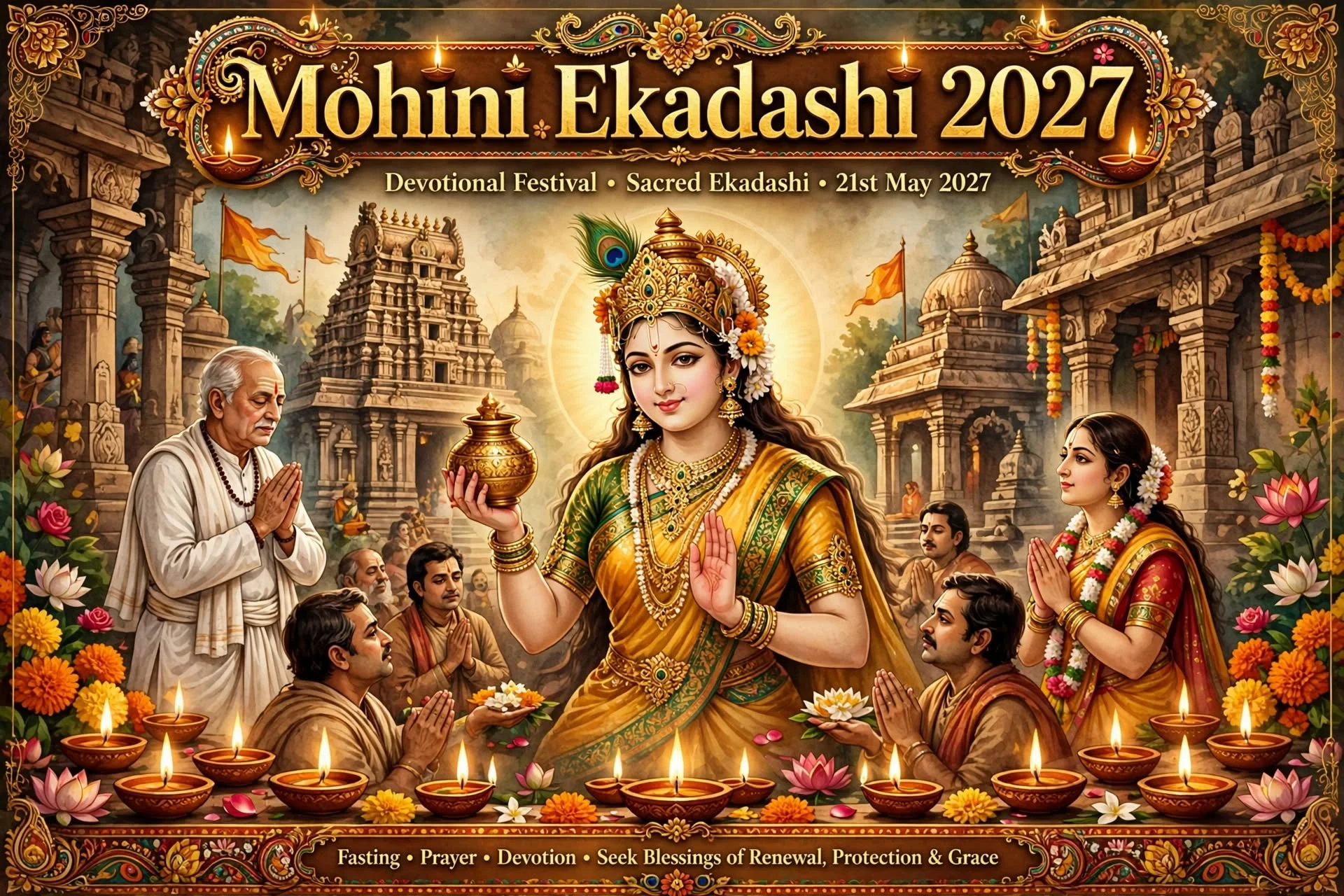
Sunday, May 16, 2027
Mohini Ekadashi
Mohini Ekadashi is an extraordinarily celebrated and sacred fasting observance occurring during the Shukla Paksha (waxing lunar phase) of the auspicious Hindu month of Vaishakha. This holy tithi commemorates the divine manifestation of Lord Vishnu's only female incarnation—the mesmerizing, enchantingly beautiful enchantress Mohini. Manifesting during the cosmic churning of the celestial ocean (Samudra Manthan), Mohini Avatar protected cosmic balance by distributing the nectar of immortality (Amrita) to the benevolent devas while outwitting the aggressive asuras.
View Festival Guide

Monday, May 17, 2027
Soma Pradosh Vrat
Soma Pradosh Vrat, also known as Som Pradosh Vrat or Soma Trayodashi, is a Hindu fasting and worship observance dedicated primarily to Lord Shiva. It is observed when Trayodashi, the thirteenth lunar day of either Shukla Paksha or Krishna Paksha, coincides with Monday. Monday is traditionally associated with Lord Shiva, which gives this Pradosh observance its name.
View Festival Guide
Tuesday, May 18, 2027
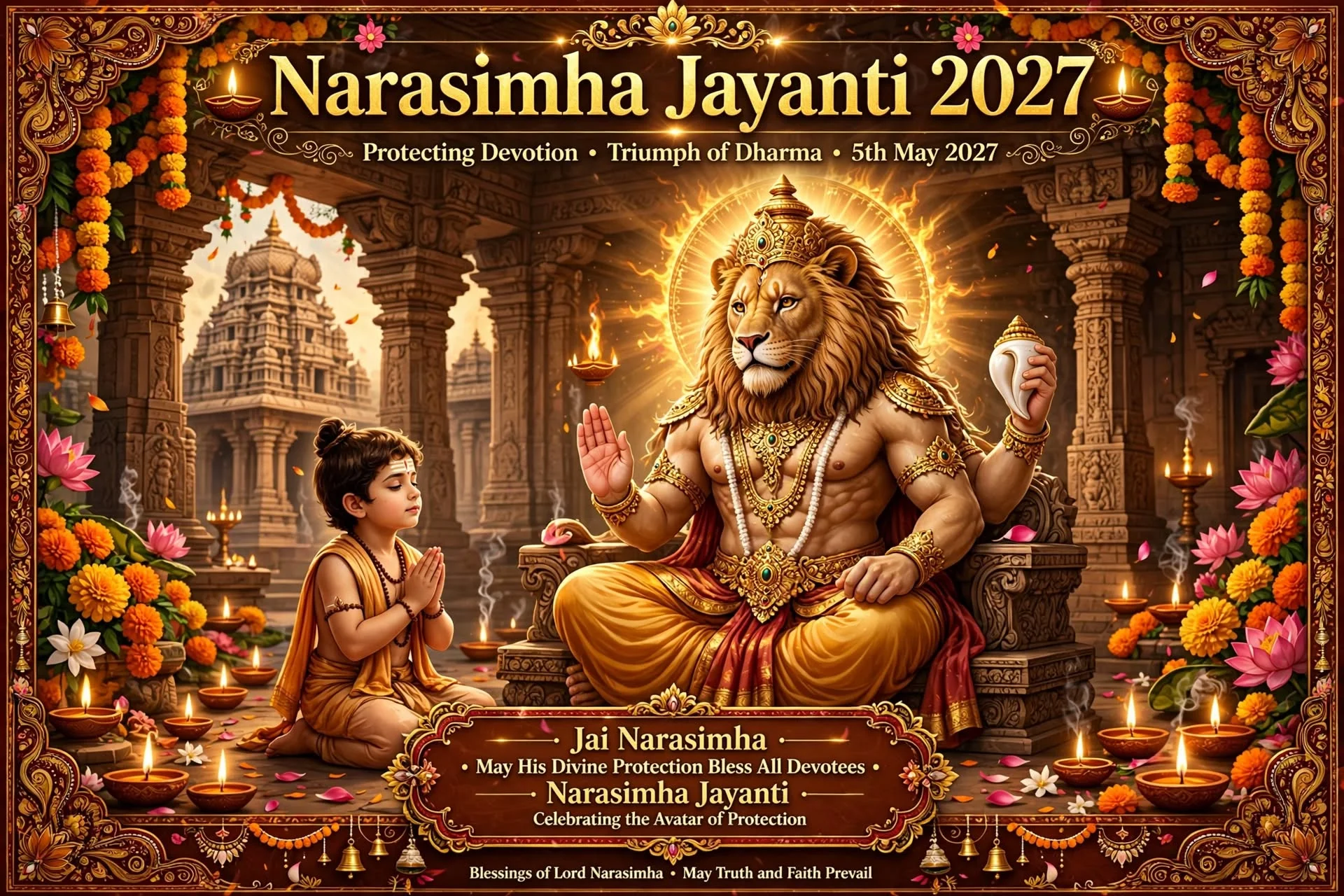
Narasimha Jayanti
Narasimha Jayanti marks the ferocious yet intensely protective divine manifestation of Lord Narasimha—the fourth incarnation (Avatar) of Lord Vishnu—who descended in an extraordinary half-man, half-lion form to vanquish the despotic demon king Hiranyakashipu and protect His unswerving young devotee Bhakta Prahlada. Celebrated on the Shukla Paksha Chaturdashi (fourteenth lunar day) of the holy month of Vaishakha, this festival represents the triumph of innocent devotion over tyrannical power and the omnipresence of God across creation.
View Festival Guide
Wednesday, May 19, 2027
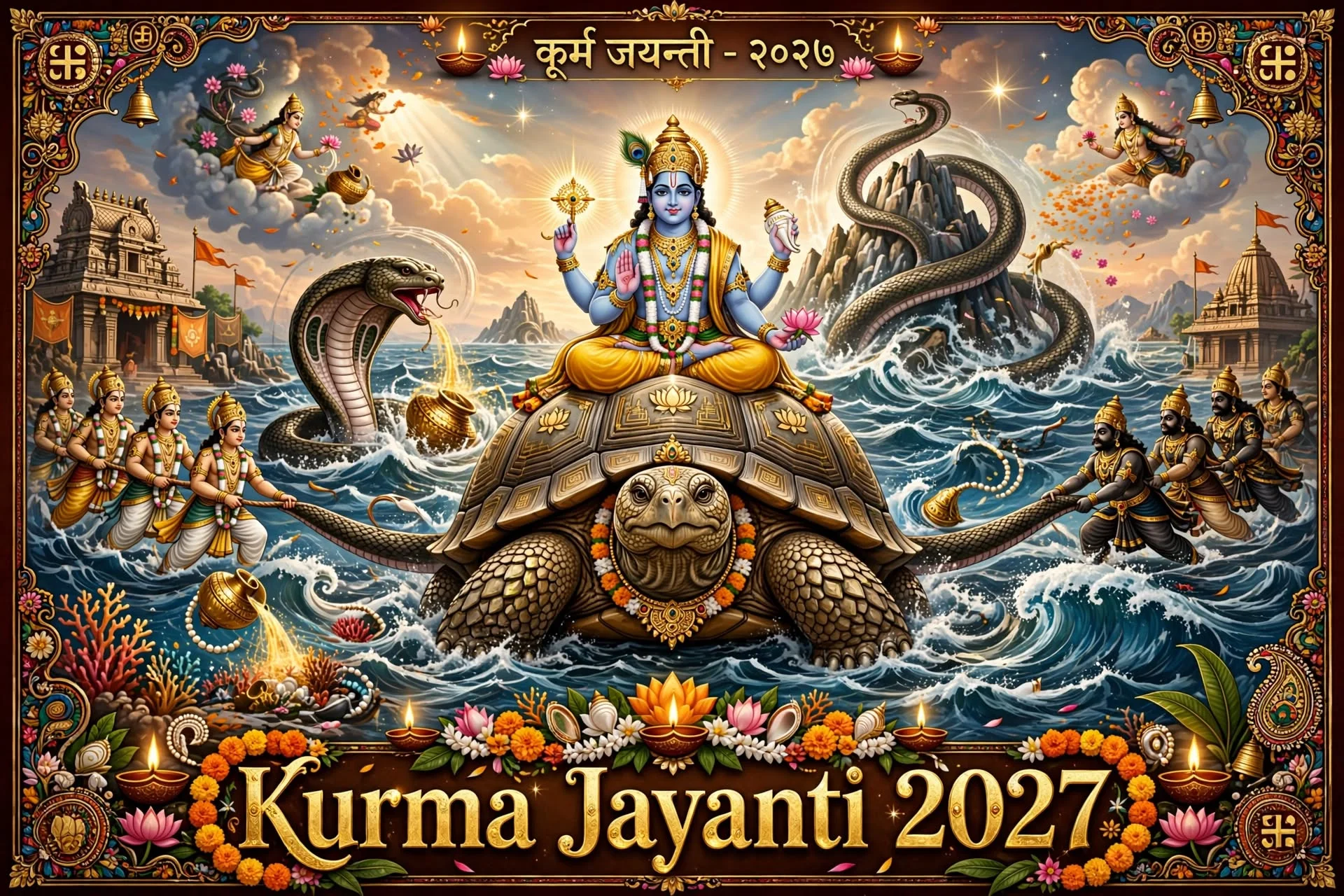
Kurma Jayanti
Kurma Jayanti marks the divine appearance anniversary of Bhagavan Kurma, the second divine incarnation (Avatar) of Lord Vishnu, manifesting in the form of a gigantic tortoise during the Satya Yuga on the auspicious tithi of Vaishakha Shukla Purnima (the full moon day of Vaishakha). Manifesting during the monumental cosmic churning of the celestial ocean (Samudra Manthan), Lord Kurma provided His massive, unyielding shell as the bedrock pivot to support the sinking Mount Mandara, saving the cosmic endeavor and enabling the extraction of the nectar of immortality (Amrita) and Goddess Mahalakshmi.
View Festival Guide

Thursday, May 20, 2027
Buddha Purnima
Buddha Purnima, internationally celebrated as Buddha Jayanti or Vesak, is one of the most sublime and universally revered spiritual festivals, falling on the sacred full moon day (Purnima) of the holy month of Vaishakha. This momentous tithi commemorates the thrice-blessed milestone (Thrice-Holy Vesak) in the life of Gautama Buddha: his miraculous birth as Prince Siddhartha in Lumbini, his supreme enlightenment (Bodhi) beneath the Bodhi tree in Bodh Gaya, and his ultimate transition into final liberation (Mahaparinirvana) in Kushinagar.
View Festival Guide

Thursday, May 20, 2027
Vaishakha Purnima
Vaishakha Purnima is the sacred full-moon day occurring on the Purnima Tithi of Shukla Paksha in the Hindu lunar month of Vaishakha. It is one of the spiritually significant Purnima observances in the Hindu calendar and is associated with sacred bathing, charity, worship of Lord Vishnu, remembrance of ancestors, and spiritual discipline. The word Purnima refers to the full-moon phase, symbolizing completeness, illumination, and the culmination of the lunar fortnight. Vaishakha is traditionally regarded as a particularly meritorious month for religious observances, making its concluding full moon an important occasion for devotees.
View Festival Guide

Thursday, May 20, 2027
Anvadhan
Anvadhan (अन्वाधान) is an ancient, highly revered Vedic ritual and spiritual observance in Sanatana Dharma performed on the day immediately preceding the New Moon (Amavasya) or Full Moon (Purnima). Rooted in the pristine traditions of the Shrauta and Grihya Sutras, Anvadhan literally translates to 'the solemn placing and replenishment of sacred fuel wood into the consecrated Vedic fires'. In traditional Vedic ritualism, householders (Grihasthas) and priests who maintain the sacred Agnihotra fires perform Anvadhan to prepare the sacrificial altars for the grand Darsha Yajna (New Moon sacrifice) or Paurnamasa Yajna (Full Moon sacrifice) scheduled for the following day.
View Festival Guide
Friday, May 21, 2027
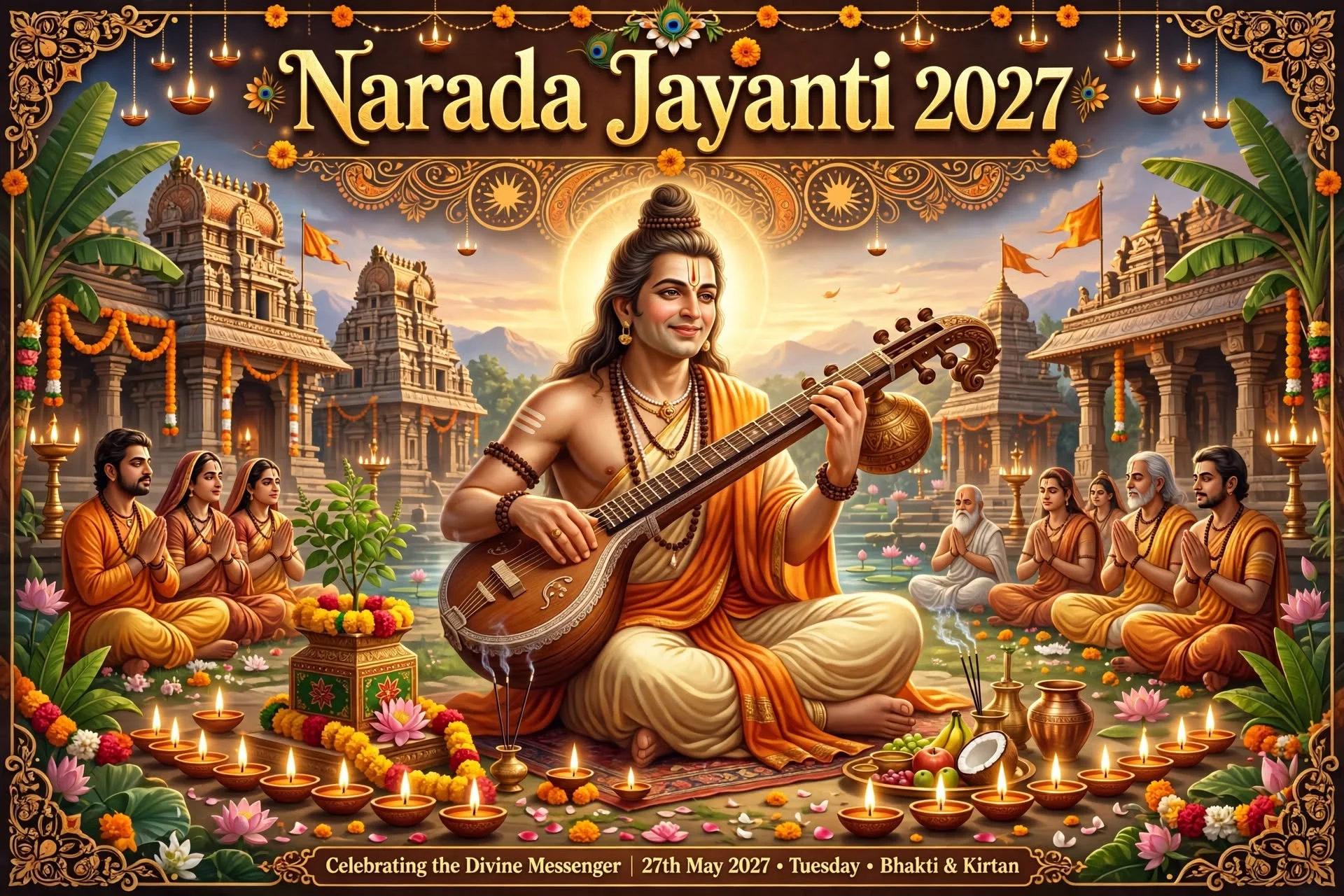
Narada Jayanti
Narada Jayanti marks the appearance anniversary of Devarshi Narada, the supreme celestial sage, divine messenger of the cosmos, master of the Veena, and eternal pioneer of Harinama Sankirtana. Celebrated on the Pratipada tithi (first lunar day) of the Krishna Paksha directly following Vaishakha Purnima (in the month of Jyeshtha in the Purnimanta system, or Vaishakha Krishna Pratipada), this festival commemorates the appearance of the great Manasaputra (mind-born son) of Lord Brahma who traverses the three cosmic worlds unobstructed, singing the praises of Lord Narayana upon his celestial lute, the Mahati Veena.
View Festival Guide