




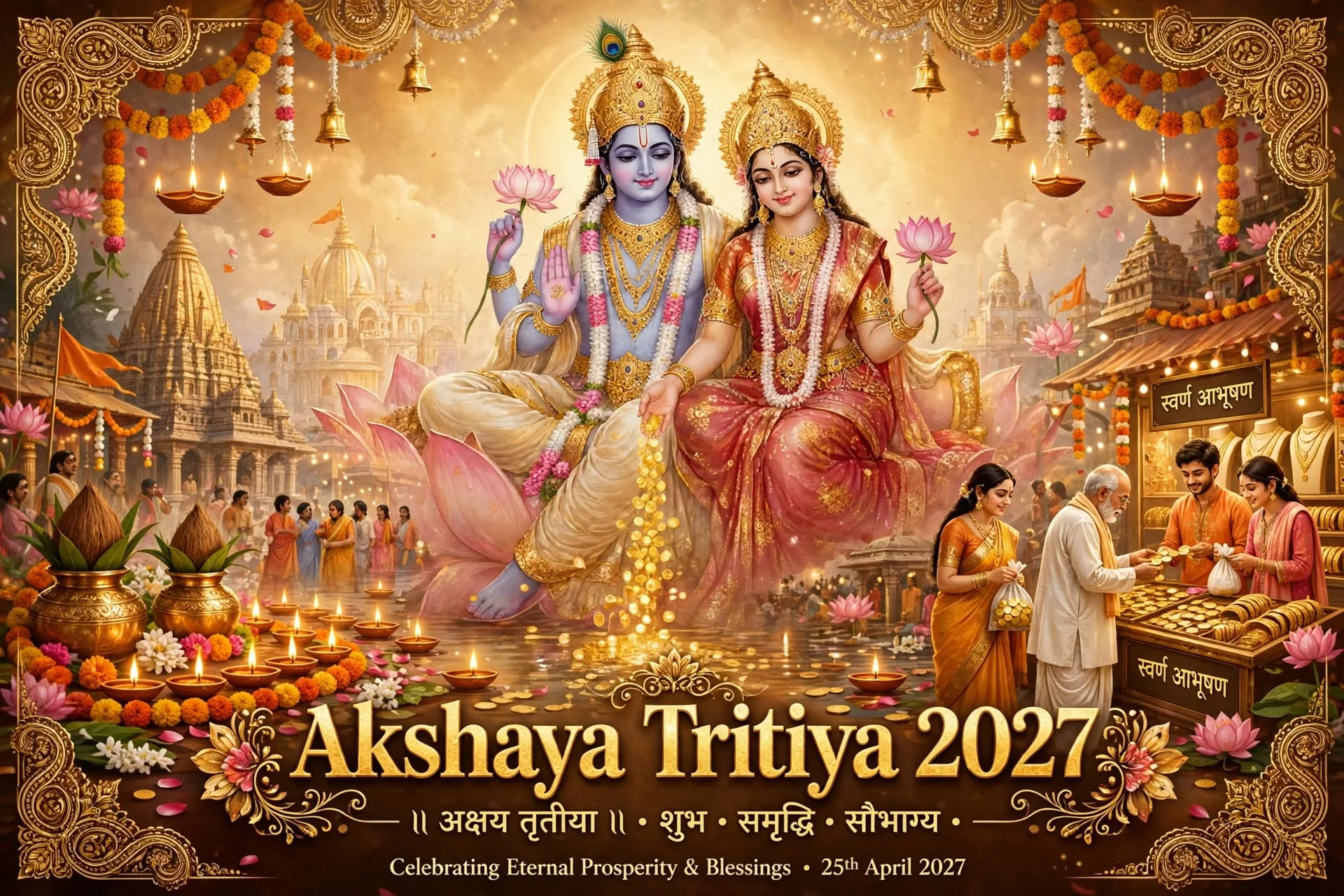
Akshaya Tritiya, also celebrated as Akha Teej, is universally celebrated as one of the four most naturally auspicious and unblemished astrological periods (Sade Teen Muhurat) in the Hindu calendar, occurring on the Shukla Paksha Tritiya (third lunar day) of the holy month of Vaishakha. The Sanskrit word "Akshaya" literally translates to "imperishable", "inexhaustible", or "that which never diminishes", signifying that any sacred action, charity, spiritual penance, or virtuous endeavor undertaken on this sacred tithi multiplies exponentially and bears eternal divine merit.
Akshaya Tritiya 2027: Date, Puja Timings, Rituals & Stories
Akshaya Tritiya Timings & Panchang
Important festival dates and auspicious timings
Usha Arghya (Sunrise)
05:35 am
Sandhya Arghya (Sunset)
07:01 pm
Start Date
Sunday, 9 May 2027
Puja Muhurat
11:43 am – 09:03 am
Akshaya Tritiya
Astrologically, Akshaya Tritiya is marked by the unique planetary alignment wherein both the Sun (Surya) and the Moon (Chandra)—the two luminaries representing soul and mind—are situated simultaneously in their highest astrological signs of exaltation: the Sun in Aries (Mesha) and the Moon in Taurus (Vrishabha). This rare cosmic harmony radiates immense vitalizing energy across the terrestrial sphere, rendering the entire day an "Abujha Muhurat" where no special astrological calculation is needed to commence sacred ventures.
Associated with Goddess Mahalakshmi, Lord Vishnu, and Lord Kubera (the celestial treasurer), the day is celebrated with dawn river baths, charity of water, umbrellas, and food, starting new business ventures, and purchasing gold or assets symbolizing enduring abundance and auspicious prosperity.
Why is Akshaya Tritiya Celebrated?
Akshaya Tritiya is celebrated because it marks multiple miraculous cosmic beginnings across Yugas. According to the Puranas, the Treta Yuga commenced on this day. It is also the historic day when Sage Vedavyasa and Lord Ganesha began transcribing the timeless epic Mahabharata, and when the sacred River Ganga descended to the earthly plane responding to the severe tapasya of King Bhagiratha.
Additionally, it commemorates the divine episode in the Mahabharata where Lord Krishna bestowed the Akshaya Patra (inexhaustible food vessel) upon Draupadi, and when Sudama was blessed with limitless divine opulence after presenting a humble handful of beaten rice (poha) to Sri Krishna.
- Guarantees inexhaustible (Akshaya) merit for all righteous acts of charity, japa, and devotion.
- Marks the cosmic commencement of Treta Yuga and the descent of the holy river Ganga.
- Celebrates the gift of the Akshaya Patra and Lord Krishna's infinite grace upon Sudama.
- Invokes the enduring blessings of Goddess Mahalakshmi, Lord Vishnu, and celestial treasurer Kubera.
Cosmic Milestones and the Tapestry of Timeless Abundance
Sudama's Transformation and the Akshaya Patra
In the Srimad Bhagavatam, the impoverished Brahmin Sudama visited his childhood friend Lord Krishna in Dwaraka, carrying nothing but a small tied cloth containing bruised flattened rice. Too ashamed to offer it in the magnificent palace, he hid it. The omniscient Krishna seized the humble offering with joyous relish and partook of a handful. In that moment of divine grace on Akshaya Tritiya, Sudama's destitute hut was transformed into a golden palace filled with eternal opulence.
Similarly, during the Pandavas' exile in the forest, when they were challenged by the arrival of Sage Durvasa and ten thousand disciples, Draupadi wept in desperation as her cooking pot was bare. Krishna appeared, ate a single grain of rice clinging to the vessel, and declared the entire universe satisfied. He then blessed the vessel as the Akshaya Patra, ensuring it would feed unlimited guests every day until Draupadi concluded her own meal.
Descent of Ganga and Transcription of the Mahabharata
Scriptural chronicles record that it was on Vaishakha Shukla Tritiya that King Bhagiratha's centuries of intense penance bore fruit, and the heavenly Ganga descended upon the locks of Lord Shiva to sanctify the mortal realm. On this very tithi, Bhagavan Vedavyasa invoked Lord Ganesha to write the immortal verses of the Mahabharata, stipulating that Ganesha would write continuously while comprehending every deep philosophical truth.
Source: Mahabharata, Vana Parva & Srimad Bhagavata Purana, Skandha 10
The Law of Inexhaustible Giving and Cosmic Alignment
Charity as the True Source of Abundance
While popular culture associates Akshaya Tritiya with acquiring gold, the profound Vedic scripture establishes that the true "Akshaya" (undiminishing) treasure is generated by what one gives away, not what one hoards. Dana (charity) given on this day becomes an imperishable karmic bank account that shields the soul across lifetimes.
Astrological Harmonization of Mind and Soul
With the Sun exalted in Aries (representing the fiery, radiant Atman or soul) and the Moon exalted in Taurus (representing the peaceful, grounded Manas or mind), the macrocosm and microcosm reach absolute alignment. This cosmic symmetry creates ideal mental clarity for initiating spiritual practices, meditation, and lifelong virtues.
Observance Practices, Temple Rituals, and Auspicious Beginnings
Dawn Snana and Charitable Offerings (Udaka Kumbha Dana)
Devotees begin with early morning holy baths in rivers or home water blessed with Gangajal. A central ritual is "Udaka Kumbha Dana"—donating earthen pots filled with sweet, cool water, soaked raw mangoes, sandalwood, and seasonal fruits to brahmins and travelers to relieve the oppressive summer heat.
Lakshmi-Narayana and Kubera Pujan
Homes and business establishments perform elaborate Lakshmi-Narayana and Kubera pujas with lotus blossoms, gold or silver coins, and reciting the Sri Suktam. The day is widely chosen for opening new accounts, solemnizing agreements, purchasing gold or land, and performing weddings.
Akshaya Tritiya Puja Vidhi (Step by Step)
- 1
Brahma Muhurta Snana
Rise before dawn, perform ceremonial bath with water infused with holy basil and gangajal, wearing fresh yellow or silk clothing.
- 2
Surya Namaskara and Arghya
Offer Arghya to the exalted Sun God in a copper vessel mixed with red sandalwood, akshata, and fresh flowers, chanting the Aditya Hridaya.
- 3
Altar Sanctification and Deepa Sthapana
Prepare a clean wooden altar draped in red and yellow silk, placing images of Lord Vishnu, Goddess Lakshmi, and Lord Kubera with a continuous ghee lamp.
- 4
Sankalpa
Hold sacred water, gold/coin, akshata, and yellow flowers in palm, pledging righteous deeds, charity, and devout worship.
- 5
Lakshmi-Narayana Avahana
Invoke the combined presence of Lord Vishnu and Mahalakshmi with folded hands, welcoming them with fragrant dhyana shlokas.
Akshaya Tritiya Puja Samagri List
Deity Consecration and Altar Articles
Materials required for the ceremonial worship of Lakshmi-Narayana and Sri Yantra.
- Idols of Lord Vishnu and Goddess Lakshmi
- Sri Yantra or gold/silver coin
- Red and yellow silk cloths
- Panchamrita ingredients
- Pure Malayagiri chandan and fragrant kumkum
- Fresh pink lotus blossoms and Tulasi leaves
Udaka Kumbha and Charity Articles
Imperishable summer charity materials prescribed for Akshaya Tritiya.
- Earthen water pot (Matka/Ghata)
- Hand-held fan (Taad-pankha)
- Umbrella and cotton footwear
- Barley (Jau) grains and wheat
- Raw mangoes, melons, and jaggery
- Dakshina (monetary charity)
Lighting and Consecrated Food Offerings
Aromatics, lamps, and naivedya representing abundance.
- Pure cow ghee and long cotton wicks
Mantras and Prayers for Akshaya Tritiya
Akshaya Tritiya Vrat Rules and Fasting Guidelines
Guidelines for Spiritual and Ethical Purity
Observing the Akshaya Tritiya vrata requires maintaining peaceful composure, truthfulness, and generous giving.
- Begin with early morning bath and resolve to speak only truth and gentle words
- Perform charity of food, water, or cooling items according to one's financial capability
- Avoid accumulating assets through dishonest, manipulative, or fraudulent means
Dietary Discipline and Prasadam
Fasting can be observed through daytime austerity or consuming only sattvic meals.
- Partake of meals containing barley (jau), sattu, seasonal fruits, and milk
- Strictly avoid non-vegetarian foods, alcohol, onion, garlic, and leftover stale items
- Share prepared sweets and panakam with family members, neighbors, and the underprivileged
Dos and Don'ts of Akshaya Tritiya
Good Practices (Do's)
- Perform morning holy bath and offer Arghya to the exalted Sun and Moon.
- Donate earthen water pots filled with cool water, hand-fans, and food to the poor.
- Chant the Sri Suktam, Kanakadhara Stotra, and Vishnu Sahasranama.
- Initiate new education, ethical business ventures, or spiritual practices.
- Honor and feed guests, cows, birds, and underprivileged people with love.
Akshaya Tritiya Across Regions
| Region | Local Name |
|---|---|
| Pan-India (Northern, Western & Central India) | Akha Teej / Akshaya Tritiya |
| Odisha (Puri Jagannatha Temple) | Chandan Yatra & Ratha Nirmana Arambha |
| Southern India (Tamil Nadu, Karnataka, Andhra Pradesh) | Akshaya Thadige / Akshaya Tritiya |
Akshaya Tritiya FAQs
Why is buying gold on Akshaya Tritiya so popular?
Gold symbolizes Goddess Mahalakshmi, permanence, and enduring purity. Acquiring gold on Akshaya Tritiya is believed to symbolize that wealth and auspiciousness will never diminish in the household.
What is the significance of donating an earthen water pot (Udaka Kumbha)?
In the intense heat of the month of Vaishakha, donating a pot filled with sweet, cool water quenches the thirst of travelers and birds, which scriptures declare as the highest and most meritorious form of charity.
Why is Akshaya Tritiya called an "Abujha Muhurat"?
Both the Sun and Moon are in their highest astrological signs of exaltation simultaneously, creating natural cosmic harmony where the entire day is auspicious without needing specific muhurat calculations.
Upcoming Festivals
View All
Wednesday, May 12, 2027
Ganga Saptami
Ganga Saptami, also revered as Ganga Pujan or Ganga Jayanti, is a sacred festival celebrated on the Shukla Paksha Saptami (seventh lunar day) of the holy month of Vaishakha. While Ganga Dussehra (in the subsequent month of Jyeshtha) commemorates the original descent of the heavenly river from the celestial realm onto Lord Shiva's matted locks and subsequently to the earth, Ganga Saptami specifically celebrates the rebirth or re-emergence of Mother Ganga from the ear of the revered Sage Jahnu, earning her the illustrious title "Jahnavi".
View Festival Guide
Friday, May 14, 2027
Sita Navami
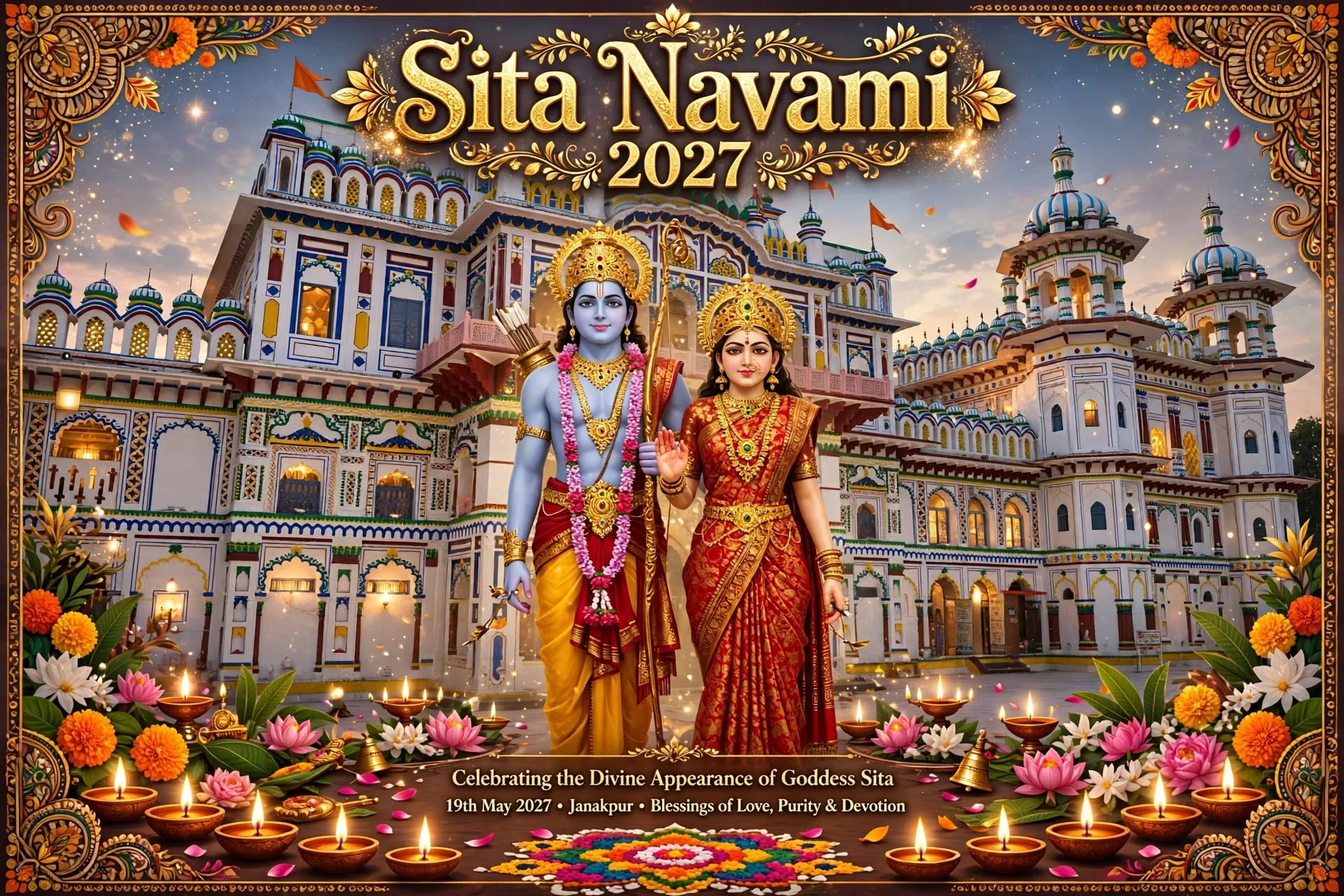
Sita Navami, widely celebrated as Janaki Jayanti, marks the sacred appearance anniversary of Goddess Sita, the divine consort of Lord Rama and the supreme embodiment of devotion, sacrifice, moral fortitude, and dharmic grace. Falling on the Shukla Paksha Navami (ninth lunar day) of the holy month of Vaishakha, this auspicious tithi occurs exactly one month after Rama Navami (Chaitra Shukla Navami), symbolizing the cosmic unity and balance of Sri Rama and Mata Sita.
View Festival Guide
Saturday, May 15, 2027
Vrishabha Sankranti
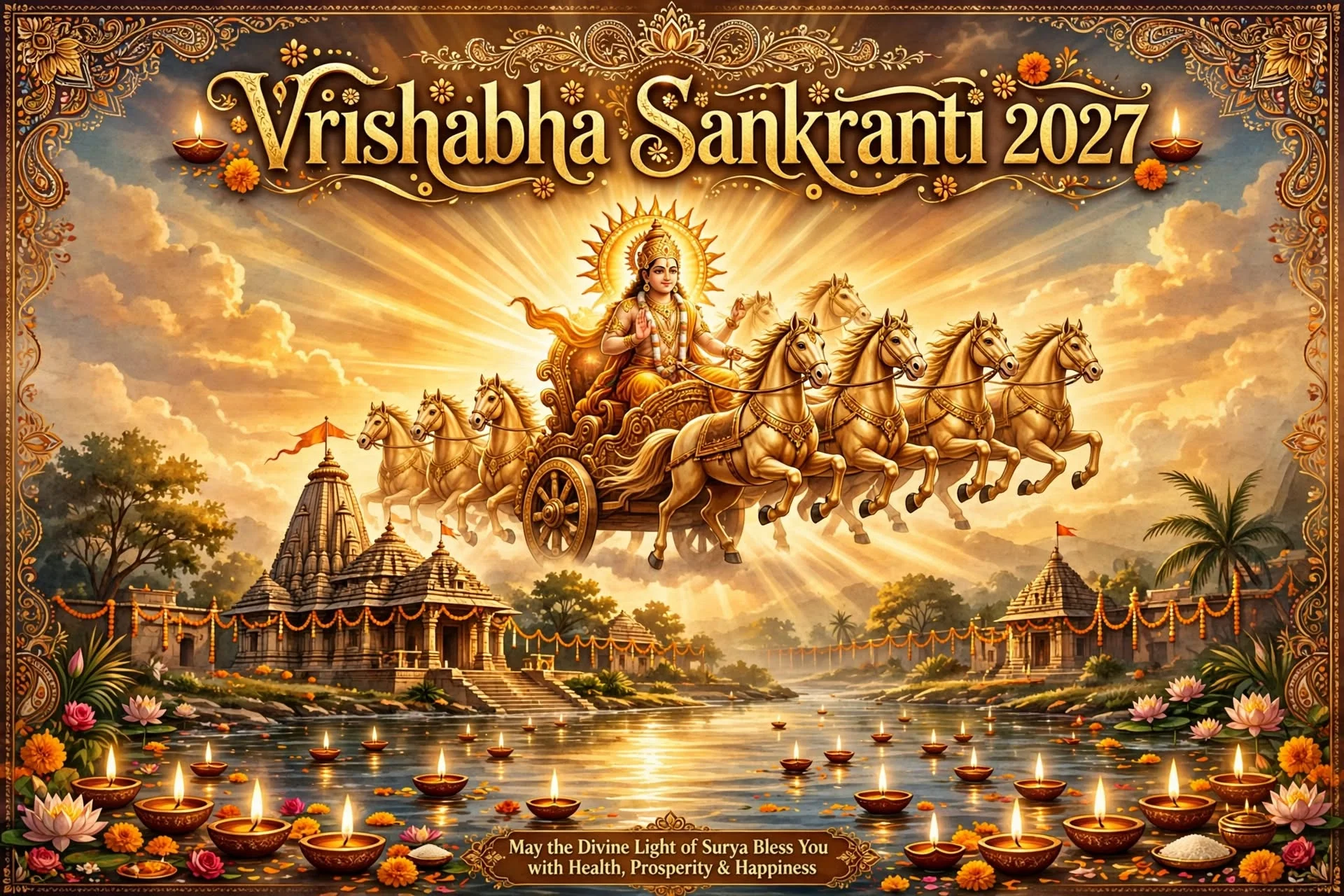
Vrishabha Sankranti, also known as Vrishabha Sankramanam, marks the astronomical transition of the Sun (Surya) from Mesha Rashi (Aries) into Vrishabha Rashi (Taurus) in the sidereal zodiac. This solar ingress marks the beginning of the Vrishabha solar month and is traditionally observed around the middle of May. The Sanskrit word 'Vrishabha' means bull and represents the second sign of the zodiac, associated in Hindu astrological tradition with stability, nourishment, fertility, patience, and material sustenance.
View Festival Guide
Sunday, May 16, 2027
Mohini Ekadashi
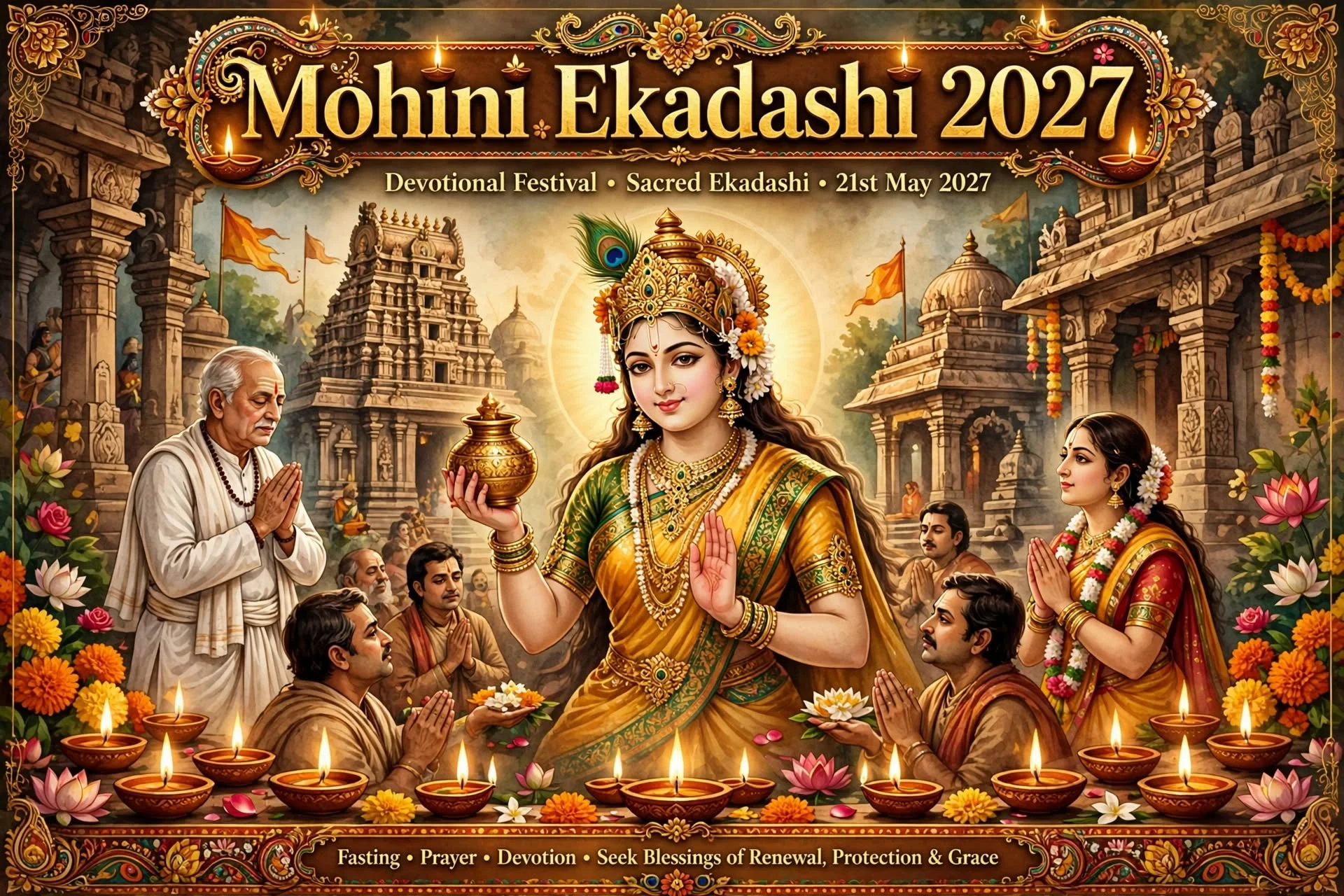
Mohini Ekadashi is an extraordinarily celebrated and sacred fasting observance occurring during the Shukla Paksha (waxing lunar phase) of the auspicious Hindu month of Vaishakha. This holy tithi commemorates the divine manifestation of Lord Vishnu's only female incarnation—the mesmerizing, enchantingly beautiful enchantress Mohini. Manifesting during the cosmic churning of the celestial ocean (Samudra Manthan), Mohini Avatar protected cosmic balance by distributing the nectar of immortality (Amrita) to the benevolent devas while outwitting the aggressive asuras.
View Festival Guide
Monday, May 17, 2027
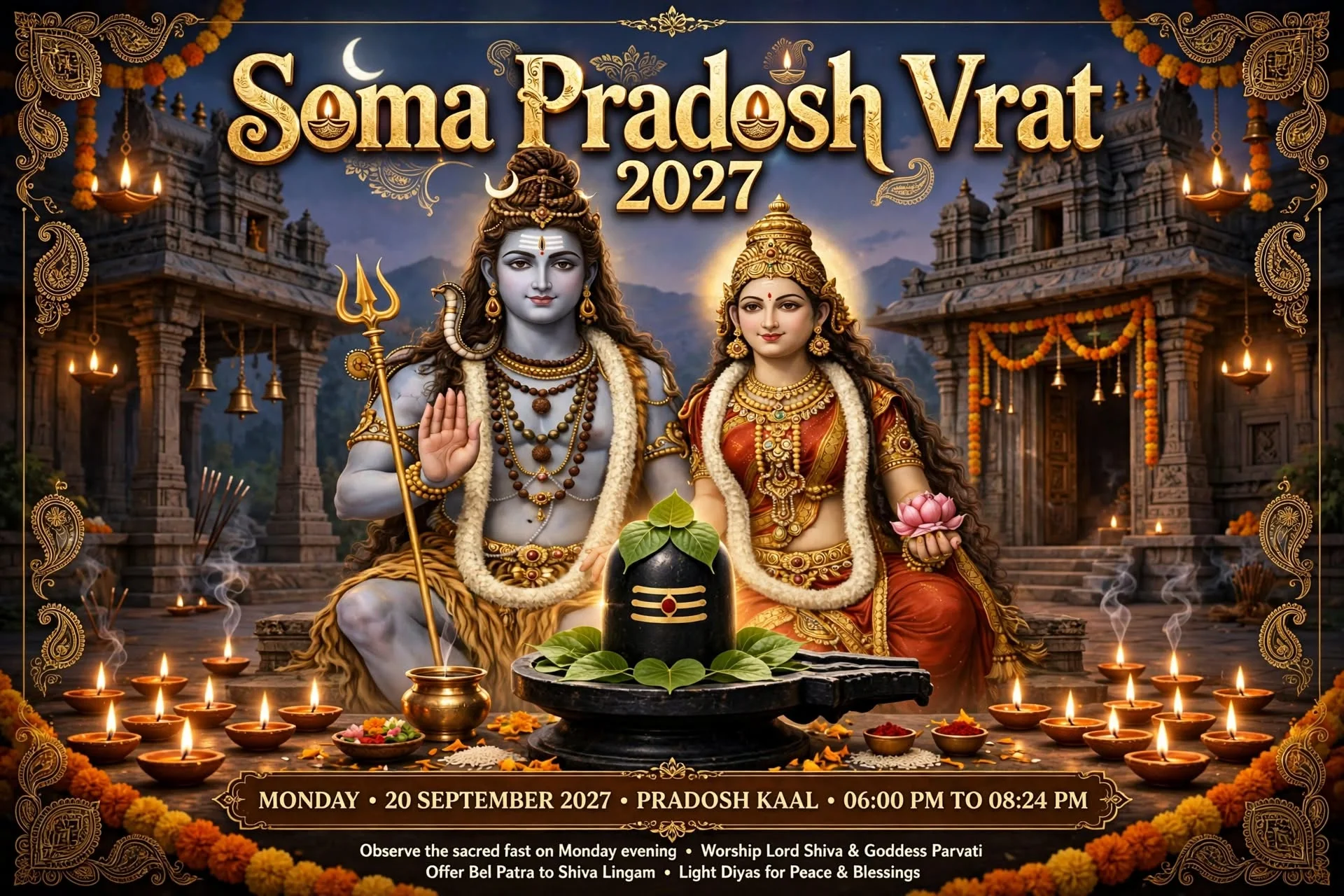
Soma Pradosh Vrat
Soma Pradosh Vrat, also known as Som Pradosh Vrat or Soma Trayodashi, is a Hindu fasting and worship observance dedicated primarily to Lord Shiva. It is observed when Trayodashi, the thirteenth lunar day of either Shukla Paksha or Krishna Paksha, coincides with Monday. Monday is traditionally associated with Lord Shiva, which gives this Pradosh observance its name.
View Festival Guide
Tuesday, May 18, 2027
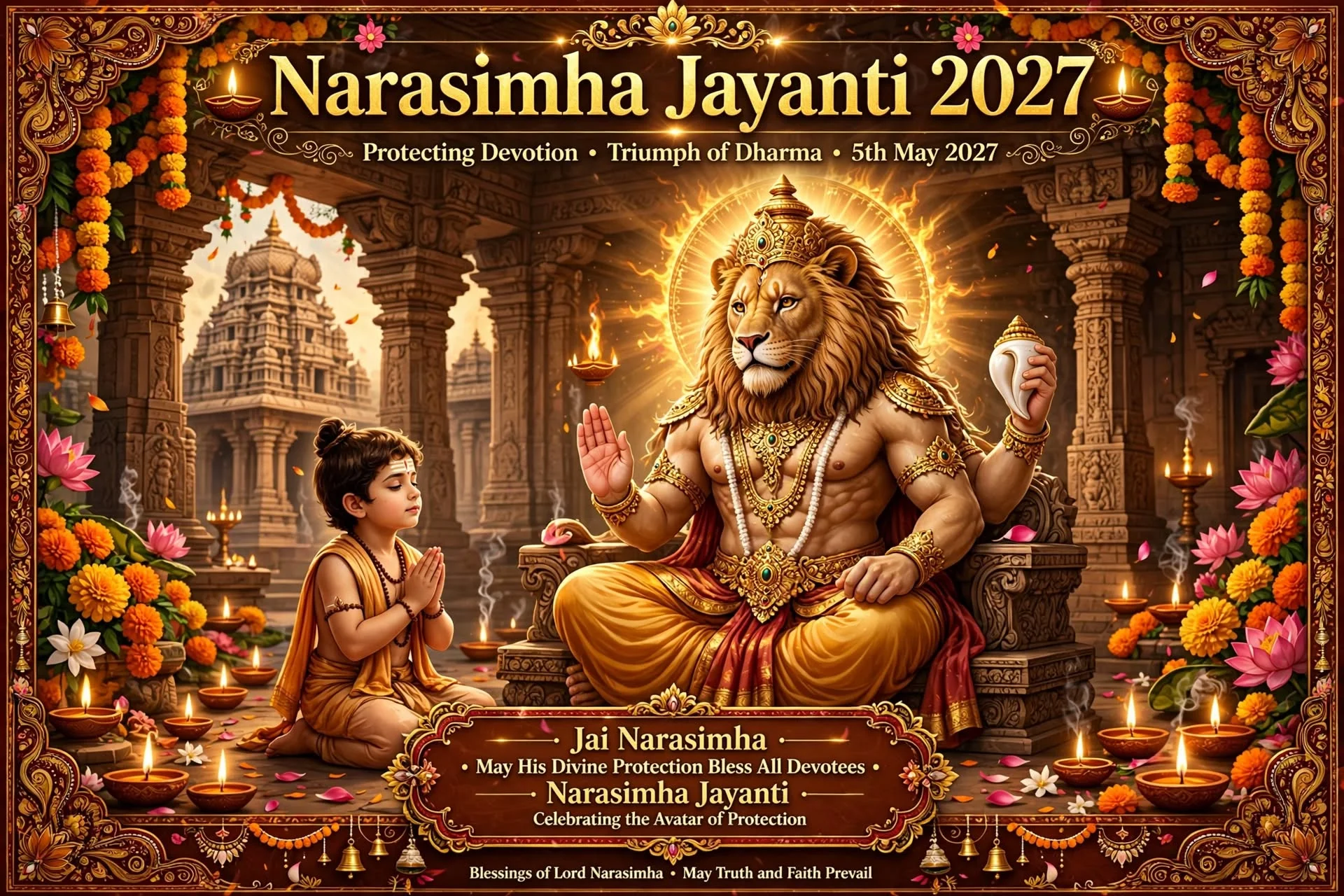
Narasimha Jayanti
Narasimha Jayanti marks the ferocious yet intensely protective divine manifestation of Lord Narasimha—the fourth incarnation (Avatar) of Lord Vishnu—who descended in an extraordinary half-man, half-lion form to vanquish the despotic demon king Hiranyakashipu and protect His unswerving young devotee Bhakta Prahlada. Celebrated on the Shukla Paksha Chaturdashi (fourteenth lunar day) of the holy month of Vaishakha, this festival represents the triumph of innocent devotion over tyrannical power and the omnipresence of God across creation.
View Festival Guide
Wednesday, May 19, 2027
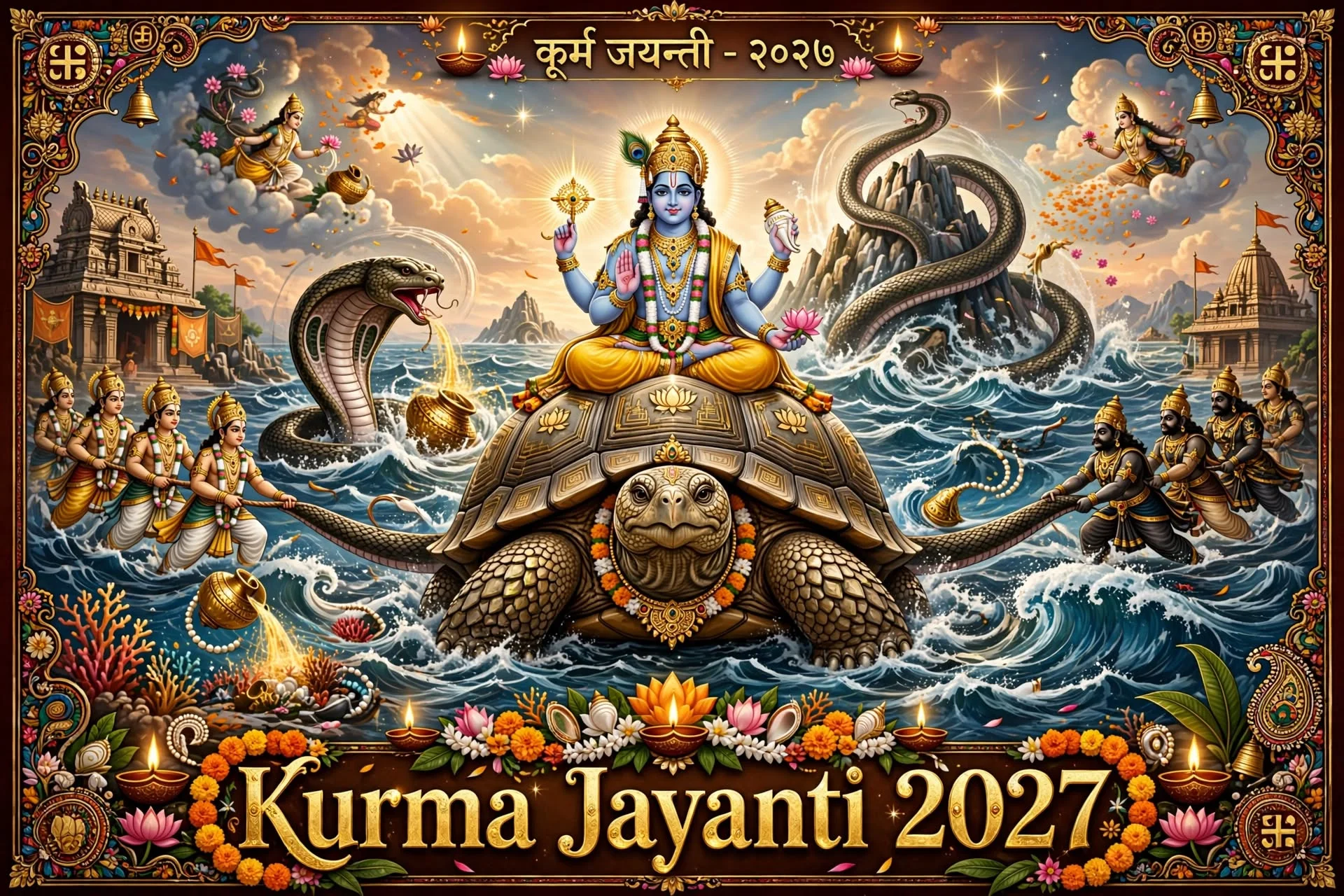
Kurma Jayanti
Kurma Jayanti marks the divine appearance anniversary of Bhagavan Kurma, the second divine incarnation (Avatar) of Lord Vishnu, manifesting in the form of a gigantic tortoise during the Satya Yuga on the auspicious tithi of Vaishakha Shukla Purnima (the full moon day of Vaishakha). Manifesting during the monumental cosmic churning of the celestial ocean (Samudra Manthan), Lord Kurma provided His massive, unyielding shell as the bedrock pivot to support the sinking Mount Mandara, saving the cosmic endeavor and enabling the extraction of the nectar of immortality (Amrita) and Goddess Mahalakshmi.
View Festival Guide
Thursday, May 20, 2027
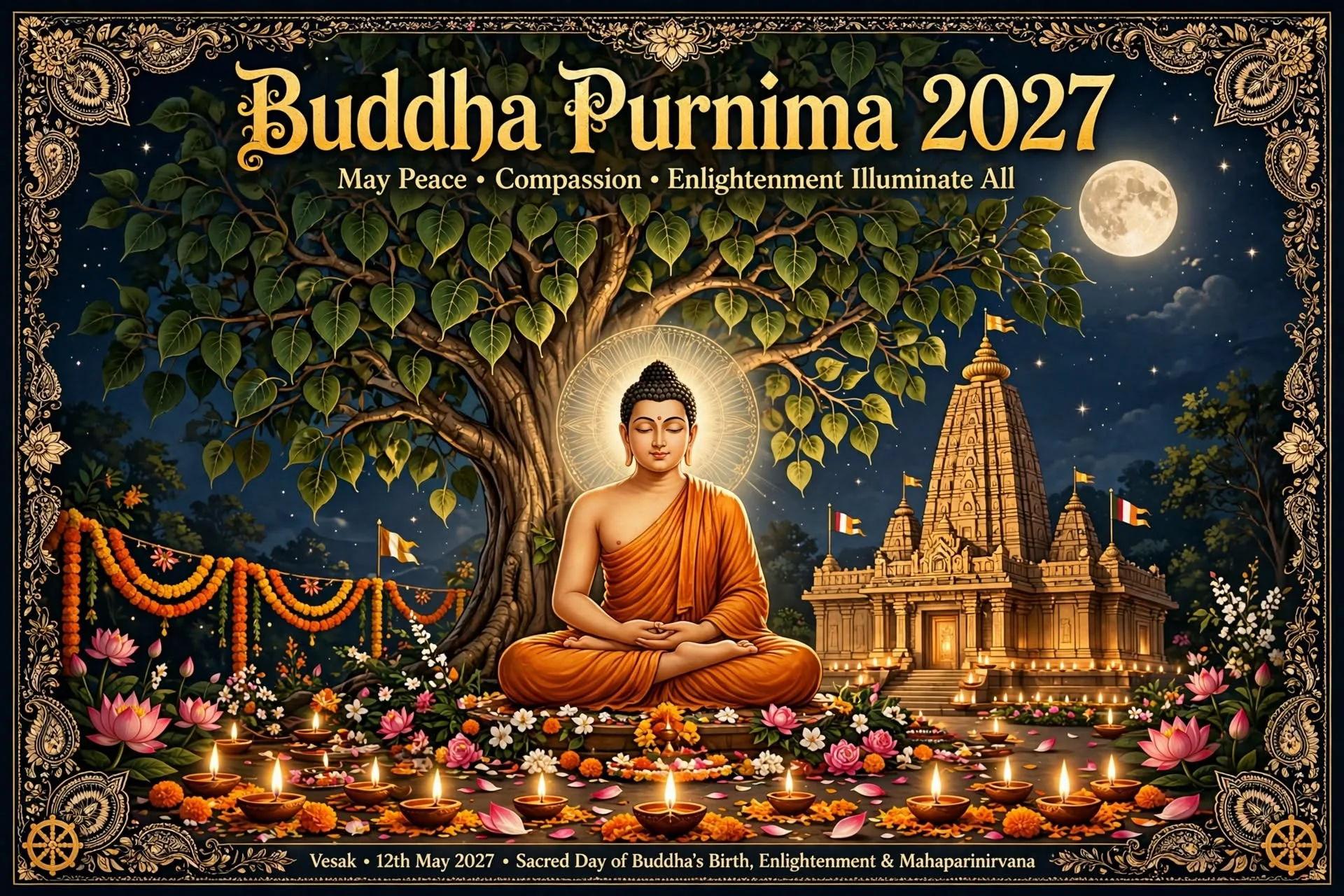
Buddha Purnima
Buddha Purnima, internationally celebrated as Buddha Jayanti or Vesak, is one of the most sublime and universally revered spiritual festivals, falling on the sacred full moon day (Purnima) of the holy month of Vaishakha. This momentous tithi commemorates the thrice-blessed milestone (Thrice-Holy Vesak) in the life of Gautama Buddha: his miraculous birth as Prince Siddhartha in Lumbini, his supreme enlightenment (Bodhi) beneath the Bodhi tree in Bodh Gaya, and his ultimate transition into final liberation (Mahaparinirvana) in Kushinagar.
View Festival Guide