




Dattatreya Jayanti, observed with profound esoteric reverence, ascetic contemplation, and devotional splendor across India, celebrates the auspicious divine advent of Lord Sri Dattatreya—the unified, primordial incarnation of the Hindu Supreme Trinity (Brahma, Vishnu, and Shiva). Occurring on the full moon day (Purnima tithi) of the sacred month of Margashirsha (November–December) under the radiant celestial influence of the Mrigashirsha nakshatra, this sacred festival commemorates the transcendental moment when the supreme archetypes of Creation (Brahma), Preservation (Vishnu), and Dissolution (Shiva) merged harmoniously into a singular transcendental form. Revering Dattatreya as the Adi Guru (the Primordial World Teacher), the Avadhuta of supreme renunciation, and the lord of all yogic wisdom, seekers celebrate this holy day to awaken inner discrimination, transcend the duality of earthly existence, and attain direct spiritual illumination.
Dattatreya Jayanti 2026: Date, Puja Timings, Rituals & Stories
Dattatreya Jayanti Timings & Panchang
Important festival dates and auspicious timings
07:11 am
05:30 pm
Wednesday, 23 Dec 2026
02:24 pm – 10:47 am
Dattatreya Jayanti
The divine scriptural origin of Lord Dattatreya is chronicled in the Srimad Bhagavatam, the Markandeya Purana, the Brahma Purana, and the sacred Dattatreya Charitra. In ancient eras, the great Vedic patriarch Sage Atri and his fiercely chaste wife, Mother Anasuya, performed intense spiritual penance (Tapas) on the holy peaks of the Rishyamukha and Chitrakoot mountains, praying for an offspring who would embody the full cosmic glory of the Supreme Absolute. Moved by Anasuya's peerless chastity and spiritual purity, the consorts of the Trinity—Saraswati, Lakshmi, and Parvati—tested her steadfastness by sending Brahma, Vishnu, and Shiva disguised as wandering mendicants. Arriving at Atri's hermitage while the sage was away, the mendicants demanded alms under a formidable condition: Anasuya must serve them food completely unclothed (Digambara). Remaining totally free from fear, lust, or confusion, Mother Anasuya recognized the mendicants as the divine Trinity. Through the power of her Pativrata virtue, she sprinkled sacred water over them, instantly transforming the cosmic gods into three innocent infants, whom she lovingly cradled and fed from her maternal breast.
When the Trinity did not return, their divine consorts hurried in distress to Anasuya's hermitage, repented for their doubt, and pleaded for the restoration of their husbands. Gracious and compassionate, Anasuya complied, and the three deities united their divine potencies to manifest as a single child with three heads, six arms, and a celestial form radiating infinite peace. Because He was gifted (Datta) by the Trinity to the sonless sage Atri ('Atri-ja' or 'Atraye'), the cosmic infant became renowned as Dattatreya. Lord Dattatreya represents the supreme synthesizer of Sanatana Dharma, uniting the creative dynamism of Brahma, the protective sustenance of Vishnu, and the transformative asceticism of Shiva into an integrated path of non-dual realization (Advaita Vedanta).
Why is Dattatreya Jayanti Celebrated?
Dattatreya Jayanti is celebrated on Margashirsha Purnima to commemorate the divine advent of Lord Dattatreya, the unified incarnation of Lord Brahma, Lord Vishnu, and Lord Shiva, born to Sage Atri and Mother Anasuya.
According to the Srimad Bhagavatam and Markandeya Purana, it marks the triumph of unblemished chastity, maternal devotion, and spiritual purity embodied by Mother Anasuya, who transformed the testing Trinity into innocent infants through her Pativrata power.
It honors Lord Dattatreya as the Adi Guru (the First and Primordial Master) and supreme Avadhuta, who founded the ancient Nath sampradaya and synthesis of Yoga, Tantra, and Advaita Vedanta.
The festival commemorates the revelation of the twenty-four Gurus of nature in the Uddhava Gita (Srimad Bhagavatam Canto 11), teaching humanity that divine wisdom can be perceived in every natural element and living creature.
Devotees observe this sacred day to seek liberation from ignorance, eliminate past ancestral karmas, attain mastery over the senses, and receive the eternal guidance of the Guru who protects whenever remembered ('Smarana Matra Santushtaya').
- Commemorating the auspicious advent of the Trimurti Avatara (Brahma, Vishnu, and Shiva in one form).
- Celebrating the triumph of Mother Anasuya's supreme maternal purity and steadfast spiritual fidelity.
- Honoring the Primordial Guru (Adi Guru) of all yogis, sannyasis, avadhutas, and truth-seekers.
- Reflecting upon the profound teachings of the twenty-four Gurus of nature expounded in the Avadhuta Gita and Srimad Bhagavatam.
- Purifying the mind, neutralizing negative planetary influences, and burning karmic impurities through Sri Gurucharitra Parayana.
- Receiving the unconditional blessings of Lord Dattatreya for fearlessness, self-knowledge, and spiritual liberation.
The Historical and Scriptural Chronicle of Lord Dattatreya: From Atri's Tapasya to the Advent of the Trimurti
The Penance of Sage Atri and Mother Anasuya
In the golden age of creation, the great mind-born son of Lord Brahma, Sage Atri, accompanied by his chaste consort Anasuya (the daughter of Prajapati Kardama and Devahuti), embarked on a severe penance on Mount Kula. Standing on one leg, subsisting only upon air and pranayama for a hundred celestial years, Sage Atri controlled his senses and offered his mind exclusively to the Supreme Lord who governs creation, maintenance, and destruction. He prayed: 'May the Lord who sustains the cosmos become my son!'
Simultaneously, Mother Anasuya practiced matching austerity through silent devotion, unshakeable virtue, and universal compassion. Such was the radiance of her penance that the scorching heat of worldly suffering could not touch her hermitage; even ferocious wild beasts lived together peacefully in her presence. Her purity aroused awe across the celestial realms, earning her the name Anasuya—she who is completely devoid of envy, jealousy, or malicious intent.
The Test of the Divine Trinity
As Anasuya's spiritual fame spread through heaven, the three supreme goddesses—Saraswati, Lakshmi, and Parvati—heard celestial sages praising her as the most virtuous woman in existence. Desiring to test whether Anasuya's chastity was truly unshakeable, the goddesses urged their consorts—Brahma, Vishnu, and Shiva—to descend to the mortal realm and test her integrity. Assuming the forms of wandering brahmana ascetics with matted hair and begging bowls, the three gods arrived at the ashrama of Sage Atri while he was away performing his mid-day prayers at the river.
Standing at the threshold, the mendicants called out: 'Bhavati bhiksham dehi!' (Mother, grant us alms!). Anasuya immediately emerged with fresh fruits, grains, and water to honor the holy guests. However, the mendicants refused the offering, declaring: 'O chaste lady, we have undertaken a strict vow. We shall only accept food from your hands if you serve us completely unclothed, without a single thread of garment upon your body. If you refuse, we shall depart hungry, and the sin of turning away guests will destroy your household!'
The Miracle of Maternal Transformation
Metaphysical Wisdom: The Non-Dual Harmony of the Trinity, the Guru Tattva, and Universal Perception
The Trimurti Synthesis: Non-Duality in Cosmic Function
Lord Dattatreya is the ultimate living embodiment of Advaita (non-duality) in action. In conventional religious practice, human beings frequently divide the Divine into sectarian categories: Vaishnavas worship Vishnu as supreme, Shaivas worship Shiva, and Smartas revere Brahma and the solar energies. Lord Dattatreya dissolves all sectarian fragmentation by combining the creative power of Brahma (Rajas), the sustaining grace of Vishnu (Sattva), and the transformative dissolution of Shiva (Tamas) in a single unified consciousness.
This synthesis reveals that creation, preservation, and destruction are not competing forces, but harmonious rhythms of a singular cosmic consciousness. The spiritual seeker worshipping Dattatreya learns to integrate all aspects of life: initiating noble endeavors (Brahma), sustaining righteous relationships and duties (Vishnu), and discarding obsolete ego-habits, attachments, and dogmas (Shiva) to attain indestructible inner freedom.
The Esoteric Symbolism of Dattatreya's Form
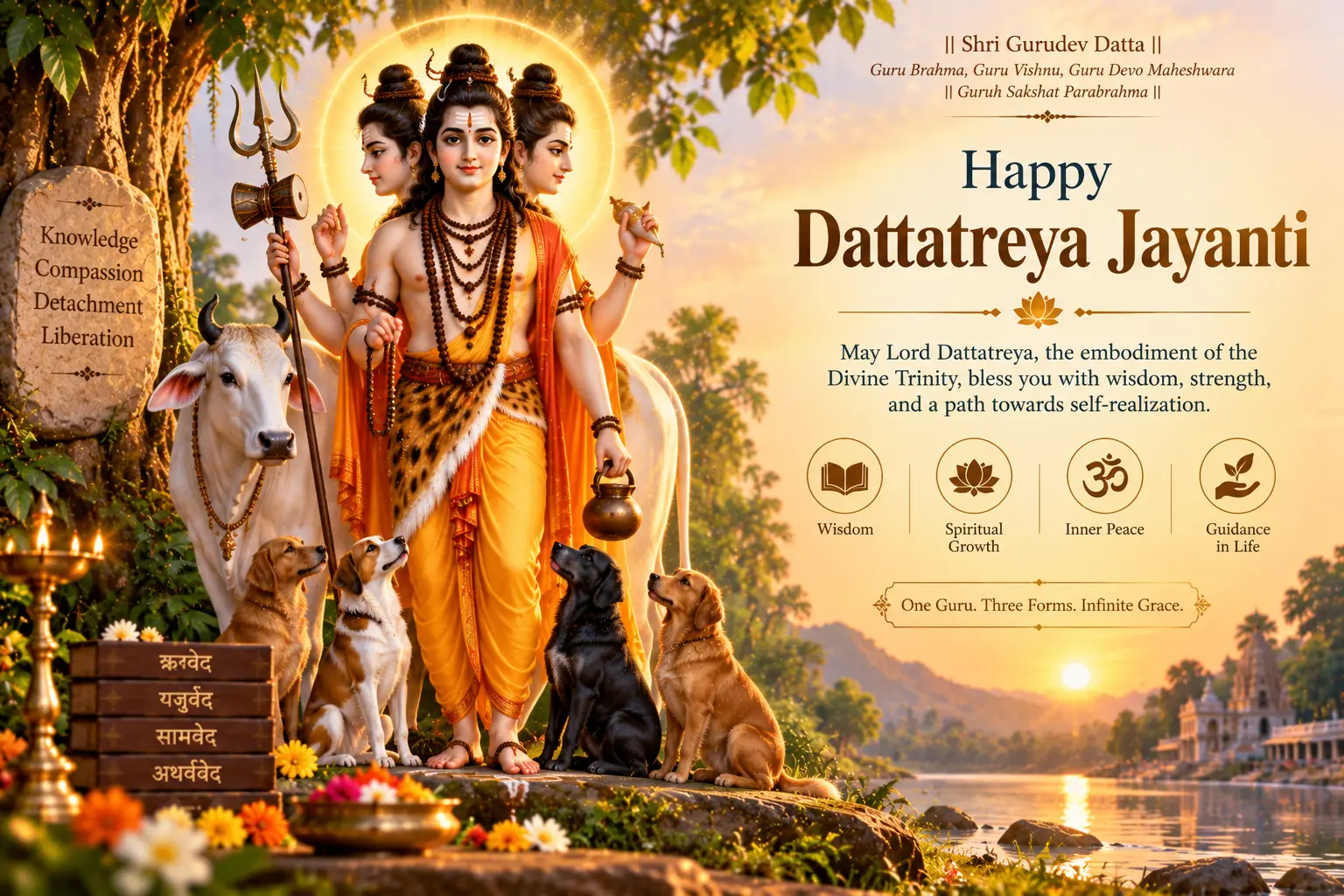
Every element in the traditional iconography of Lord Dattatreya carries profound metaphysical meaning. His three heads represent the three states of consciousness—Jagrat (waking), Swapna (dreaming), and Sushupti (deep sleep)—which dissolve into the fourth transcendent state of Turiya. His six arms wield sacred emblems: the rosary (Akshamala) and water pot (Kamandalu) signify disciplined meditation and pure lifestyle; the conch (Shankha) and discus (Chakra) signify the primordial sound of truth and the destruction of karmic ignorance; the trident (Trishula) and drum (Damaru) signify the mastery over the three Gunas and the rhythm of cosmic time.
The four dogs sitting at His feet represent the four sacred Vedas—Rig, Yajur, Sama, and Atharva—symbolizing that scripture is not an intellectual burden, but a faithful companion that follows an enlightened mind. The holy cow (Kamadhenu) standing behind Him represents Mother Earth, universal nourishment, and the fulfillment of genuine spiritual aspiration. Standing beneath the Audumbara tree, Dattatreya radiates the eternal nectar of immortality (Amrita) to all seekers.
Ritual Protocols: Sri Gurucharitra Parayana, Paduka Puja, and Margashirsha Purnima Observances
Seven-Day or Single-Day Sri Gurucharitra Parayana
The most auspicious and spiritually transformative practice associated with Dattatreya Jayanti is the Parayana (systematic recitation) of the Sri Gurucharitra—the sacred Marathi text composed by Saraswati Gangadhar chronicling the divine life, miracles, and philosophy of Lord Dattatreya and His historical incarnations.
Devotees undertake a disciplined Saptaha (seven-day recitation) concluding on the evening of Margashirsha Purnima, or perform a dedicated one-day reading of key chapters. The reciter observes strict celibacy, consumes single-meal sattvic food, sleeps on a floor mat, and maintains silence (Mauna) outside the reading period. Chanting the verses purifies the home, dispels ancestral curses (Pitru Dosha), and establishes profound mental peace.
Paduka Puja and Maha Abhishekam
In the Datta tradition, the lotus feet and the sacred wooden sandals (Padukas) of the Guru are considered more sacred than the physical form itself, as they represent the direct transmission of spiritual energy (Shaktipat). On Dattatreya Jayanti, the silver, brass, or wooden Padukas are bathed with Panchamrita, rose water, and pure Ganga water scented with fragrant attar.
Fresh fragrant white flowers, bilva leaves, and Tulasi leaves are offered while chanting the 108 names of Lord Dattatreya. Fragrant yellow chandan and ashtagandha are gently applied to the Padukas, and sweet offerings such as peda, kheer, and dry fruits are presented as Naivedya.
Palkhi Sohala (Grand Palanquin Procession) and Annadan
At major pilgrim centers—such as Ganagapur, Narsobawadi, Audumbar, Mahur, and Girnar—the highlight of Dattatreya Jayanti is the magnificent evening Palkhi Sohala. The consecrated silver palanquin bearing the holy Padukas is carried by devotees through the streets amidst thunderous chants of 'Digambara Digambara Sripada Vallabha Digambara' and the rhythmic beating of traditional drums (dhol-tasha).
A cornerstone of the festival is Annadan (the sacred distribution of food). Lord Dattatreya is known to wander in disguise as a hungry ascetic, an outcaste, a wandering monk, or an animal to receive alms from devotees. Feeding hungry human beings, stray cows, and dogs on this day is considered the highest form of worship, directly pleasing Lord Dattatreya.
Dattatreya Jayanti Puja Vidhi (Step by Step)
- 1
Brahma Muhurta Snanam and Sankalpa
Awaken during the sacred Brahma Muhurta (roughly ninety minutes before sunrise). Cleanse the body thoroughly using pure water, ideally invoking sacred rivers. Wear fresh, clean, unstitched white or saffron-yellow garments. Face east or north before the family altar, light a pure cow ghee lamp, and solemnly take the Sankalpa (sacred vow): 'O Supreme Adi Guru Lord Dattatreya! On this auspicious day of Your divine advent, I dedicate my mind, speech, and actions to Your lotus feet. Cleanse my intellect of ignorance and grant me true devotion, discrimination, and spiritual peace.'
- 2
Altar Cleansing and Sanctification (Bhumi Shuddhi)
Thoroughly clean the home mandir. Sprinkle consecrated water mixed with Ganga jal and cow urine (Gomutra) or chandan while chanting the purification mantra: 'Om Apavitrah Pavitro Va Sarvavastham Gato'pi Va, Yah Smaret Pundarikaksham Sa Bahyabhyantarah Shuchih'. Spread a fresh, clean saffron or yellow silk cloth over the wooden chauki.
- 3
Sthapana of Lord Dattatreya and Sacred Padukas
Install a consecrated idol or framed portrait of Lord Dattatreya (depicting the three heads, six arms, four dogs, and the cow) upon the decorated altar. In front of the image, place the sacred wooden or silver Padukas upon a fresh betel leaf or silver plate.
- 4
Deepa and Dhoopa Prajvalana
Dattatreya Jayanti Puja Samagri List
Idols, Padukas, and Altar Sacred Equipment
- Conch shell (Shankha) and brass ritual ringing bell (Ghanta)
- Pure copper, brass, or silver puja plate, tumblers, and spoon (Panchapatra and Achamani)
- Decorated wooden dais (Chauki or Bajot) and saffron or yellow silk altar cloth
- Consecrated metallic idol or framed portrait of Lord Dattatreya
- Sacred wooden or silver Padukas (sandals) of the Guru
- An authentic edition of the Sri Gurucharitra and wooden book-stand
Sacred Bathing, Tilaka, and Fragrant Offerings
- Ganga jal (holy water) and clean spring water
- Panchamrita ingredients: pure cow milk, fresh curd, pure cow ghee, honey, and jaggery water
- Pure yellow sandalwood powder and Malayaja Chandana paste
- Kumkum (vermilion), pure camphor (Bhimseni Kapur), and Ashtagandha paste
- Natural herbal incense sticks (Dhoop/Agarbatti) of sandalwood, lotus, or guggul
- Pure cow ghee or sesame oil with clean cotton wicks (Vatti) for the lamps
Floral Offerings and Sacred Foliage
- Fresh fragrant white flowers (jasmine, datura) and yellow marigold garlands
Mantras and Prayers for Dattatreya Jayanti
Dattatreya Jayanti Vrat Rules and Fasting Guidelines
Strict Celibacy and Sensory Equanimity
The observer of Dattatreya Jayanti must maintain strict celibacy (Brahmacharya) and mental tranquility throughout the festival period. Anger, harsh words, deceit, malice, and frivolous entertainment should be consciously discarded. Devotees cultivate the Avadhuta mindset of equanimity (Samatvam), viewing all living beings with kindness and respecting every creature as a manifestation of the Divine.
Fasting and Dietary Purity
Devotees observe a disciplined fast from sunrise to moonrise or throughout the full twenty-four hours of Margashirsha Purnima. Pious seekers observe a Nirjala (waterless) or Phalahari fast (consuming only fresh fruits, cow milk, and nuts). Cereal grains, rice, wheat, onions, garlic, non-vegetarian food, and intoxicating substances are strictly prohibited. The fast is concluded in the evening after viewing the full moon and offering Aarti to Lord Dattatreya.
Continuous Scriptural Study and Japa
The day should be dedicated to Swadhyaya (self-study) and continuous mantra chanting. Devotees chant the sacred Dattatreya Gayatri Mantra or the divine name 'Digambara Digambara Sripada Vallabha Digambara' at least 108 or 1008 times using a sacred rudraksha or tulasi mala. Reading the holy Sri Gurucharitra or the Avadhuta Gita with reverent concentration elevates the spiritual consciousness.
Mandatory Charity and Animal Compassion
A fundamental vrata rule in the Datta sampradaya is feeding sentient creatures (Bhoota Yajna). The fast and worship remain incomplete unless the devotee feeds cows (Kamadhenu) and dogs (the four Vedas), followed by serving food to wandering ascetics, mendicants, and the underprivileged. Never turn away a beggar or wandering stranger from your door on Dattatreya Jayanti, as the Lord frequently tests devotees in disguised forms.
Dos and Don'ts of Dattatreya Jayanti
Good Practices (Do's)
- Wake up early during Brahma Muhurta, take a holy bath, and meditate upon the divine lotus feet of Lord Dattatreya and the Guru.
- Chant the miraculous Dattatreya mantra 'Digambara Digambara Sripada Vallabha Digambara' throughout the sacred day.
- Bathe and worship the sacred Padukas of the Guru with pure Panchamrita, fragrant sandalwood, bilva, and fresh flowers.
- Read or listen to selected chapters of the holy Sri Gurucharitra or the sublime verses of the Avadhuta Gita.
- Feed cows with fresh green grass and jaggery, and feed stray dogs with milk and bread before taking personal meals.
Dattatreya Jayanti Across Regions
| Region | Local Name |
|---|---|
| Maharashtra (Ganagapur, Narsobawadi, Mahur, Audumbar) | Datta Jayanti Utsav / Palkhi Sohala |
| Karnataka (Ganagapur, Kuravpur, Maniknagar) | Dattatreya Jayanthi / Nirguna Paduka Utsava |
| Gujarat (Mount Girnar, Junagadh, Bharuch) | Datta Jayanti / Girnar Parikrama |
| Andhra Pradesh and Telangana (Pithapuram, Kuravpur) | Dattatreya Jayanthi / Sripada Srivallabha Utsavam |
| North India (Varanasi, Chitrakoot, Haridwar) | Dattatreya Jayanti Vrat |
Dattatreya Jayanti FAQs
What is the primary spiritual significance of Dattatreya Jayanti?
Dattatreya Jayanti celebrates the divine advent of Lord Dattatreya—the unified incarnation of Brahma, Vishnu, and Shiva born to Sage Atri and Mother Anasuya on Margashirsha Purnima. He is revered as the Adi Guru, the supreme Avadhuta, and the embodiment of non-dual spiritual realization.
Why does Lord Dattatreya have three heads and six arms?
The three heads represent the Hindu Trinity—Lord Brahma (creation), Lord Vishnu (preservation), and Lord Shiva (dissolution)—as well as the three states of consciousness (waking, dreaming, and deep sleep). The six arms hold the sacred implements of all three deities, showing their essential cosmic unity.
What do the four dogs and the cow accompanying Lord Dattatreya symbolize?
The four faithful dogs represent the four sacred Vedas (Rig, Yajur, Sama, and Atharva), symbolizing that spiritual knowledge faithfully follows an enlightened mind. The holy cow represents Kamadhenu, symbolizing Mother Earth, cosmic nourishment, and all sentient life.
Upcoming Festivals
View All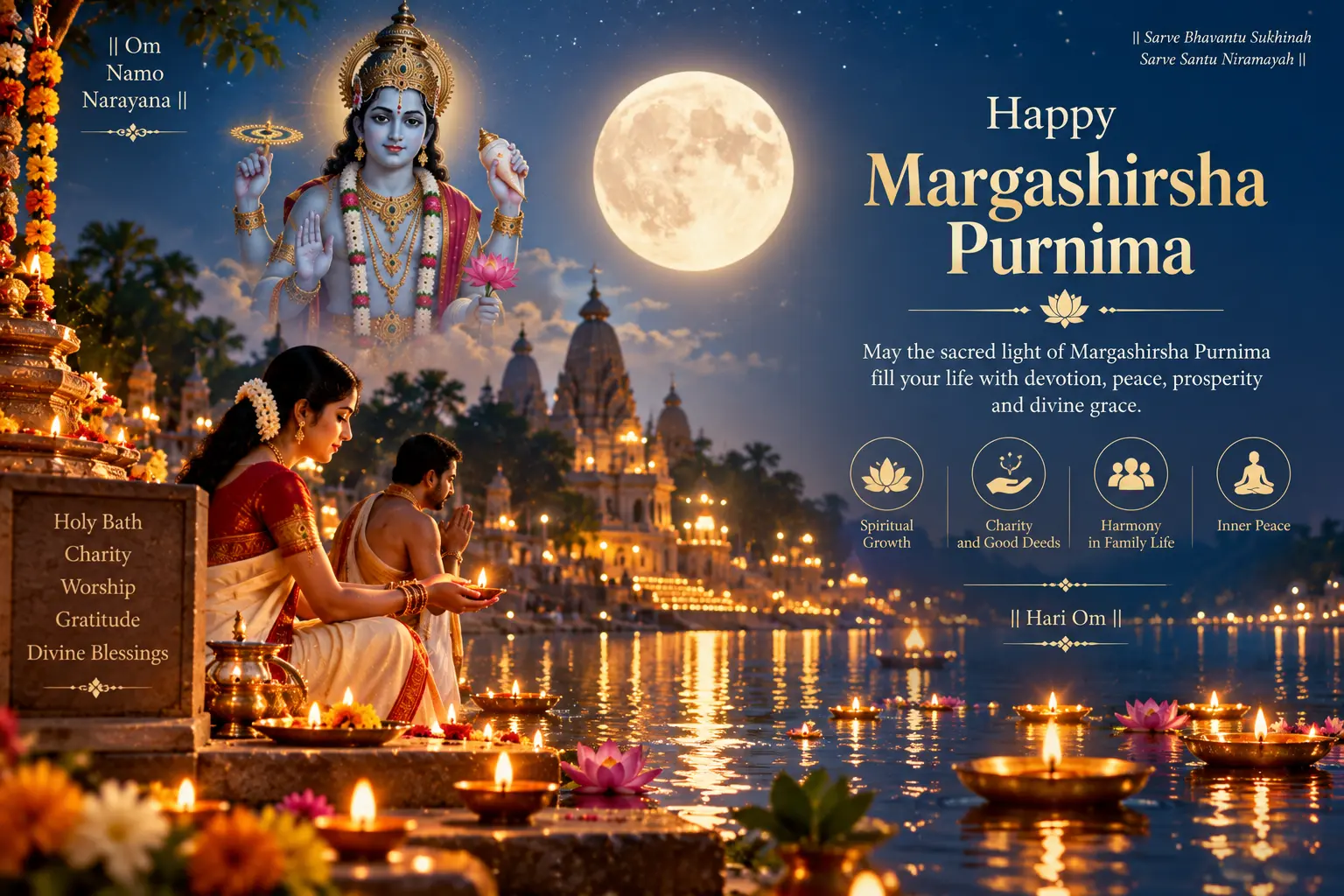
Margashirsha Purnima
Margashirsha Purnima, celebrated on the full moon day of the sacred month of Margashirsha (Agrahayana), is one of the most spiritually illuminating and astrologically auspicious full moon festivals in Sanatana Dharma. Occurring when the full moon shines in the constellation of Mrigashirsha (the celestial deer's head ruled by the planet Mars and presided over by Soma, the Moon God), this holy tithi marks the supreme spiritual culmination of the month that Lord Sri Krishna Himself declared to be His own transcendental self in the Bhagavad Gita ('Masanang Margashirsho'ham'). Popularly known in various regional cultures as Battisi Purnima, Moksha Purnima, and Korvai Deepam, this sacred day unites the worship of Lord Sri Satyanarayan, the divine advent of Lord Dattatreya, the celestial Cosmic Dance of Lord Nataraja (Arudra Darshan), and ancient river-bathing rites.
Saphala Ekadashi Vrat
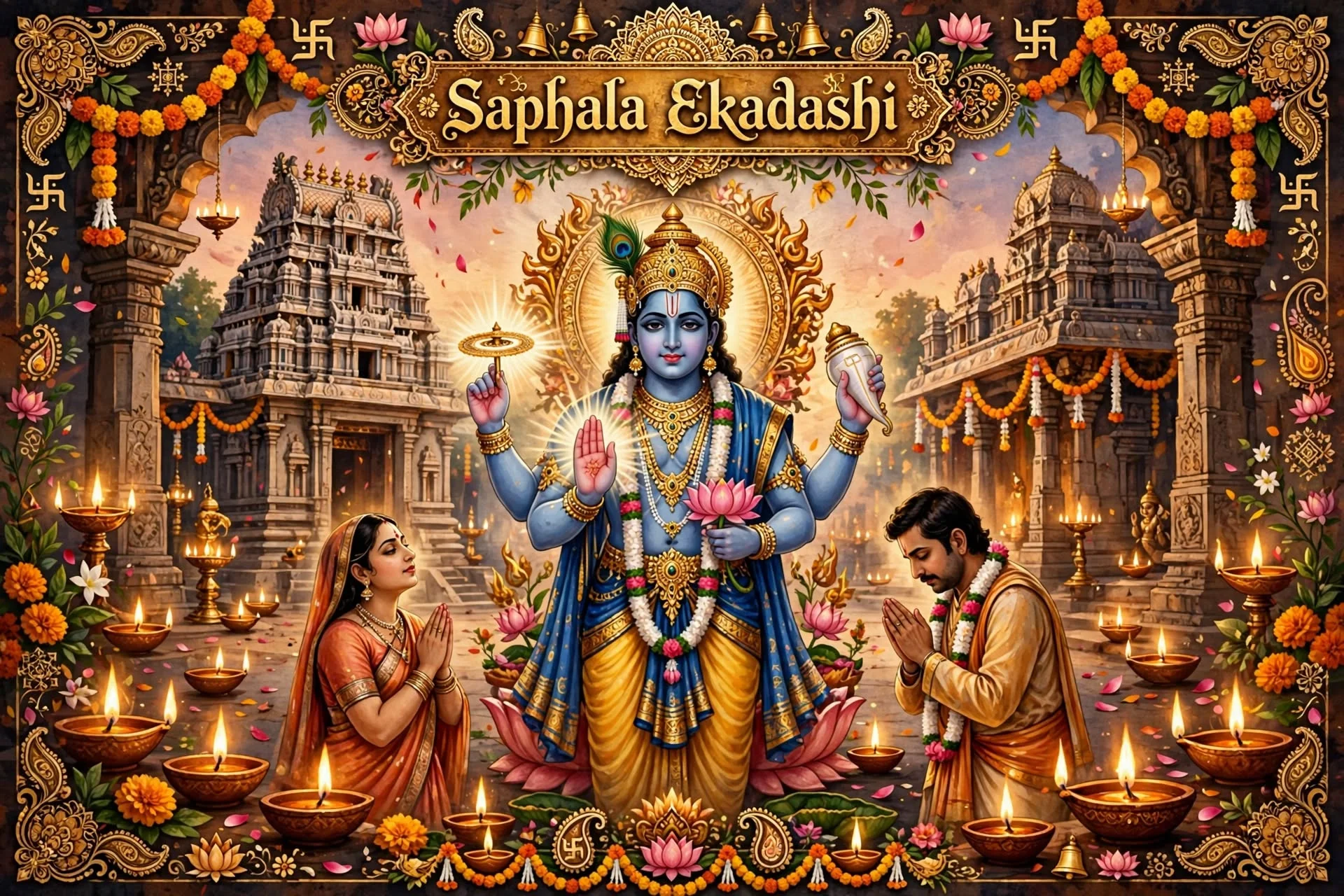
Saphala Ekadashi, also known as Safala Ekadashi, is an important Hindu fasting day dedicated to Lord Vishnu. It is observed on the Ekadashi Tithi of Krishna Paksha in the month of Pausha according to the Purnimanta calendar. In the Amanta calendar, it falls in the Krishna Paksha of Margashirsha.
Krishna Pradosh Vrat
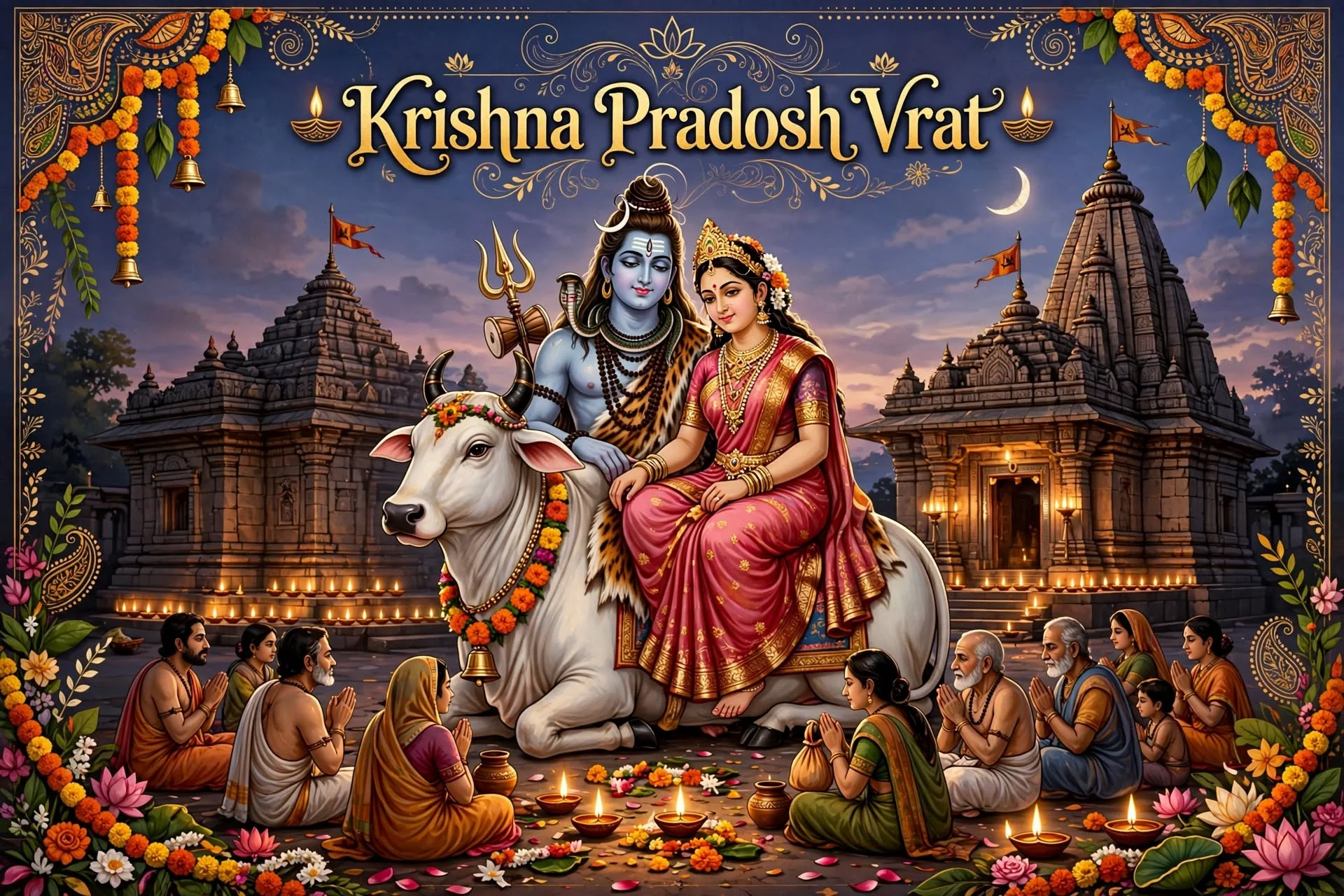
Masik Shivaratri is a monthly Hindu observance dedicated to Lord Shiva. It is observed on the Chaturdashi Tithi of Krishna Paksha, the fourteenth lunar day during the waning phase of the Moon. Devotees worship Lord Shiva with faith, observe a fast and perform night-time prayers to seek spiritual strength, peace and divine blessings.
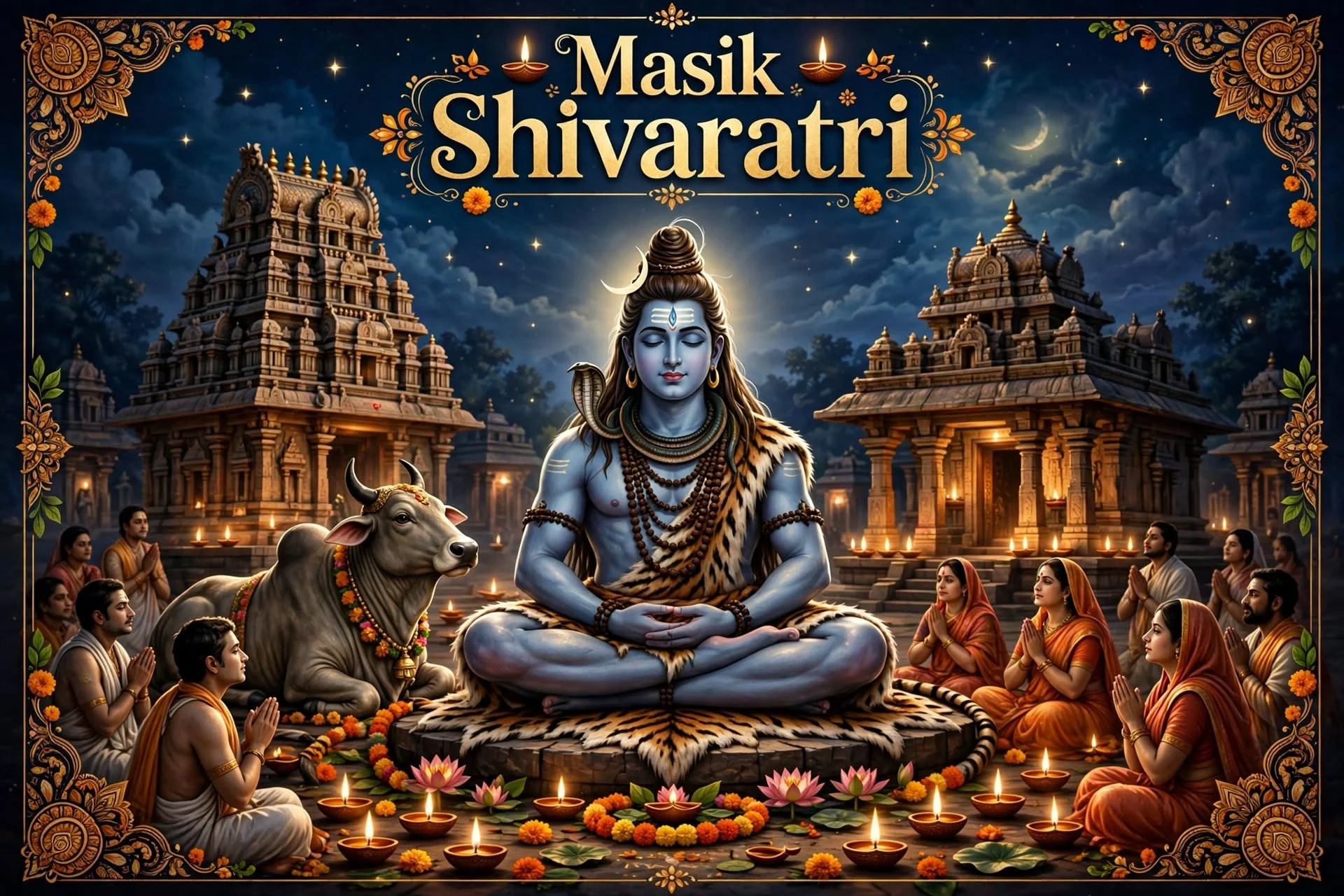
Masik Shivaratri
Masik Shivaratri, also known as Monthly Shivaratri or Masa Shivaratri, is a sacred Hindu observance dedicated to Lord Shiva. It is observed every lunar month on Krishna Paksha Chaturdashi, the fourteenth lunar day of the waning fortnight. Devotees worship Lord Shiva and Goddess Parvati, observe a vrat, perform Shiva Lingam Abhishek, chant sacred mantras and remain engaged in prayer during the night.
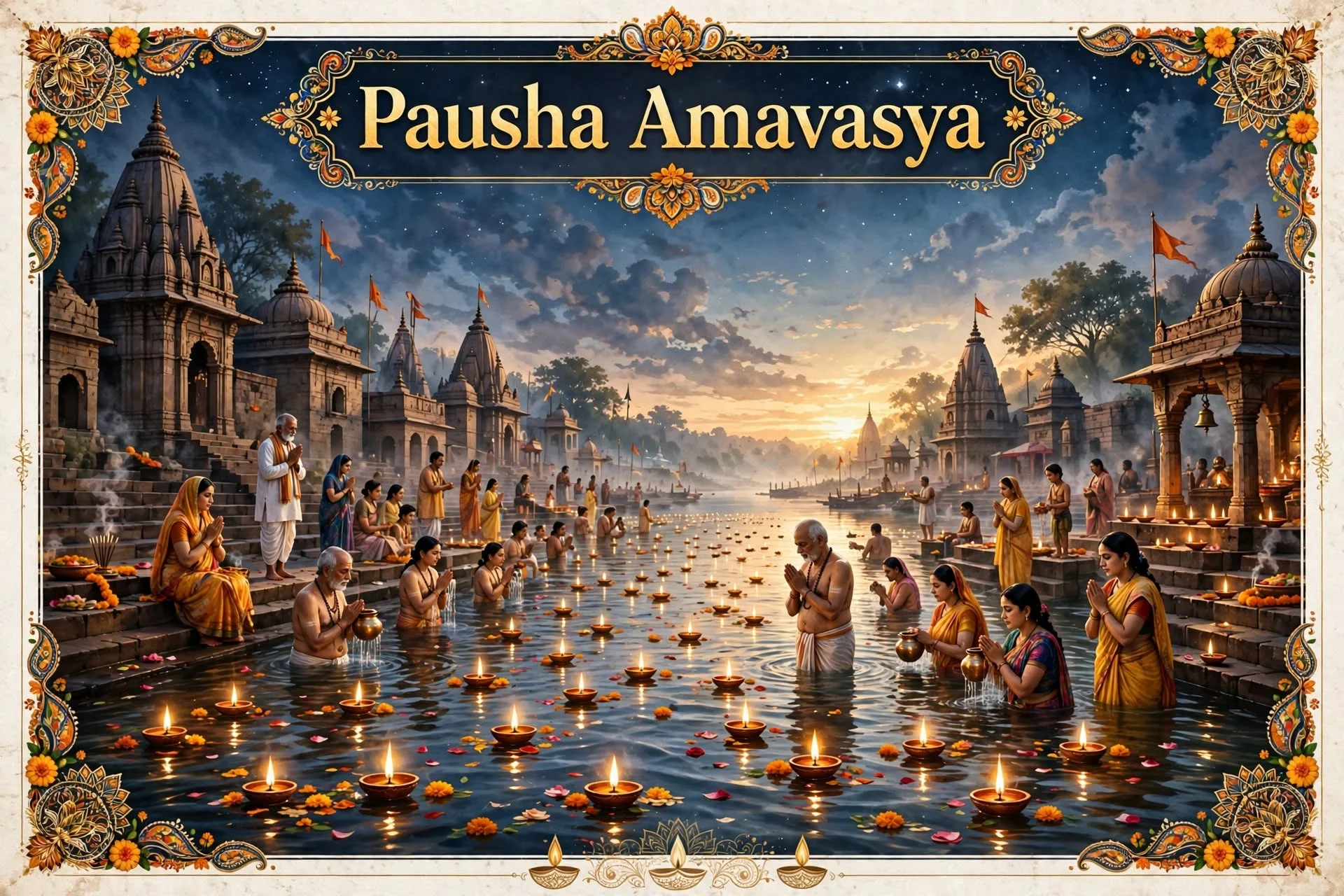
Pausha Amavasya
Pausha Amavasya is an important Hindu observance dedicated to remembering and honouring departed ancestors, known as Pitru. It falls on the Amavasya Tithi, or new-moon day, of the Hindu lunar month of Pausha. Devotees observe this day through sacred bathing, Pitru Tarpan, Shraddha, prayers, charity and acts of service. It is regarded as an appropriate occasion to express gratitude towards ancestors and seek their blessings for the wellbeing of the family.
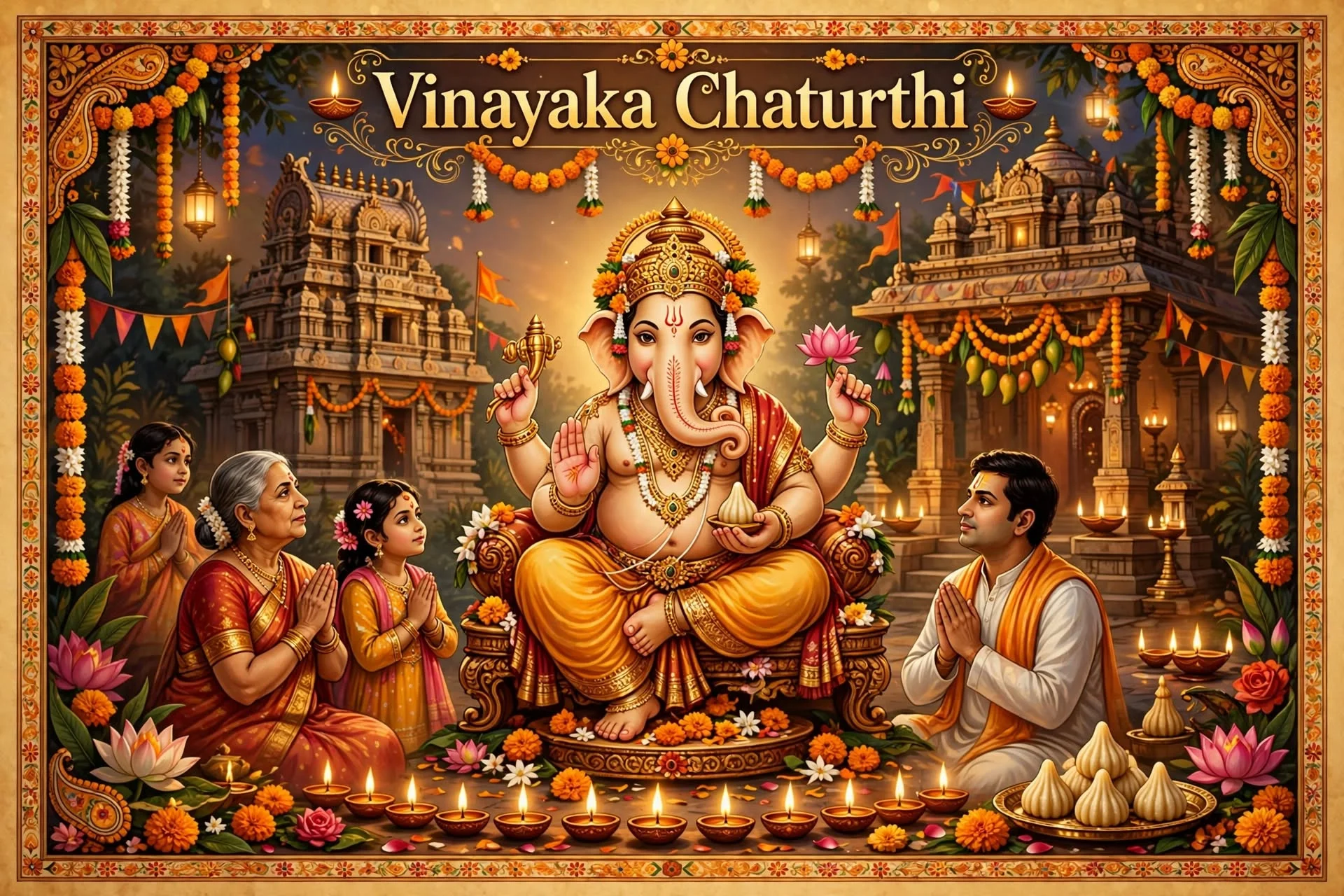
Vinayaka Chaturthi
Vinayaka Chaturthi is a Hindu religious observance dedicated to Lord Ganesha, the remover of obstacles, the deity of wisdom, knowledge and auspicious beginnings. It is observed on Shukla Paksha Chaturthi, the fourth lunar day of the waxing fortnight, in each Hindu lunar month. Devotees worship Lord Ganesha through prayers, fasting, mantra chanting, offerings and meditation to seek his blessings for success, prosperity, wisdom and the removal of difficulties.
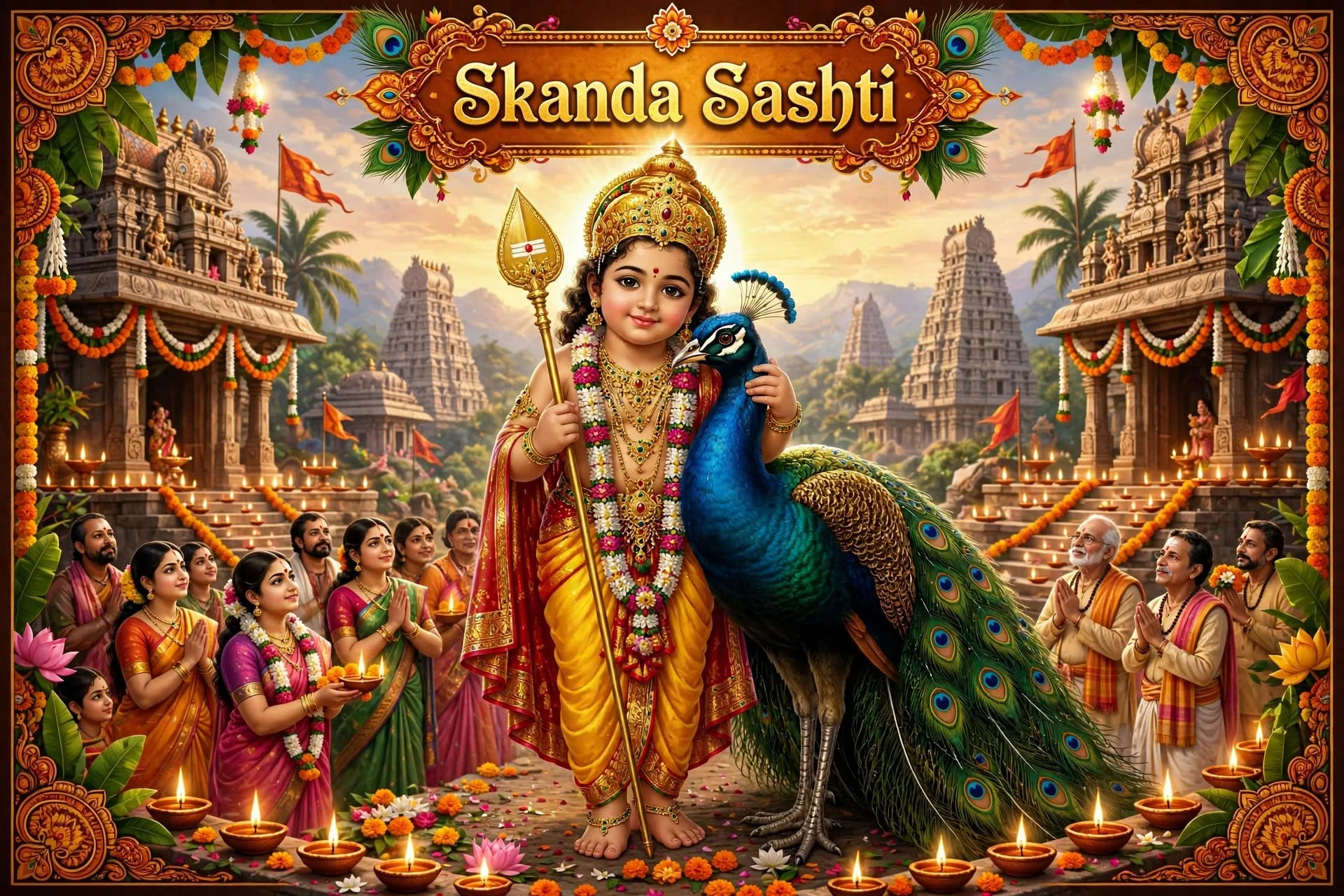
Skanda Sashti
Skanda Sashti, also known as Kanda Sashti or Skanda Shashthi, is an important Hindu festival dedicated to Lord Skanda, who is worshipped as Murugan, Kartikeya, Subramanya, Shanmukha and Kumara. The festival commemorates the victory of Lord Murugan over the demon Surapadman and the restoration of peace and righteousness. It is especially celebrated by devotees in Tamil Nadu and Tamil communities around the world.
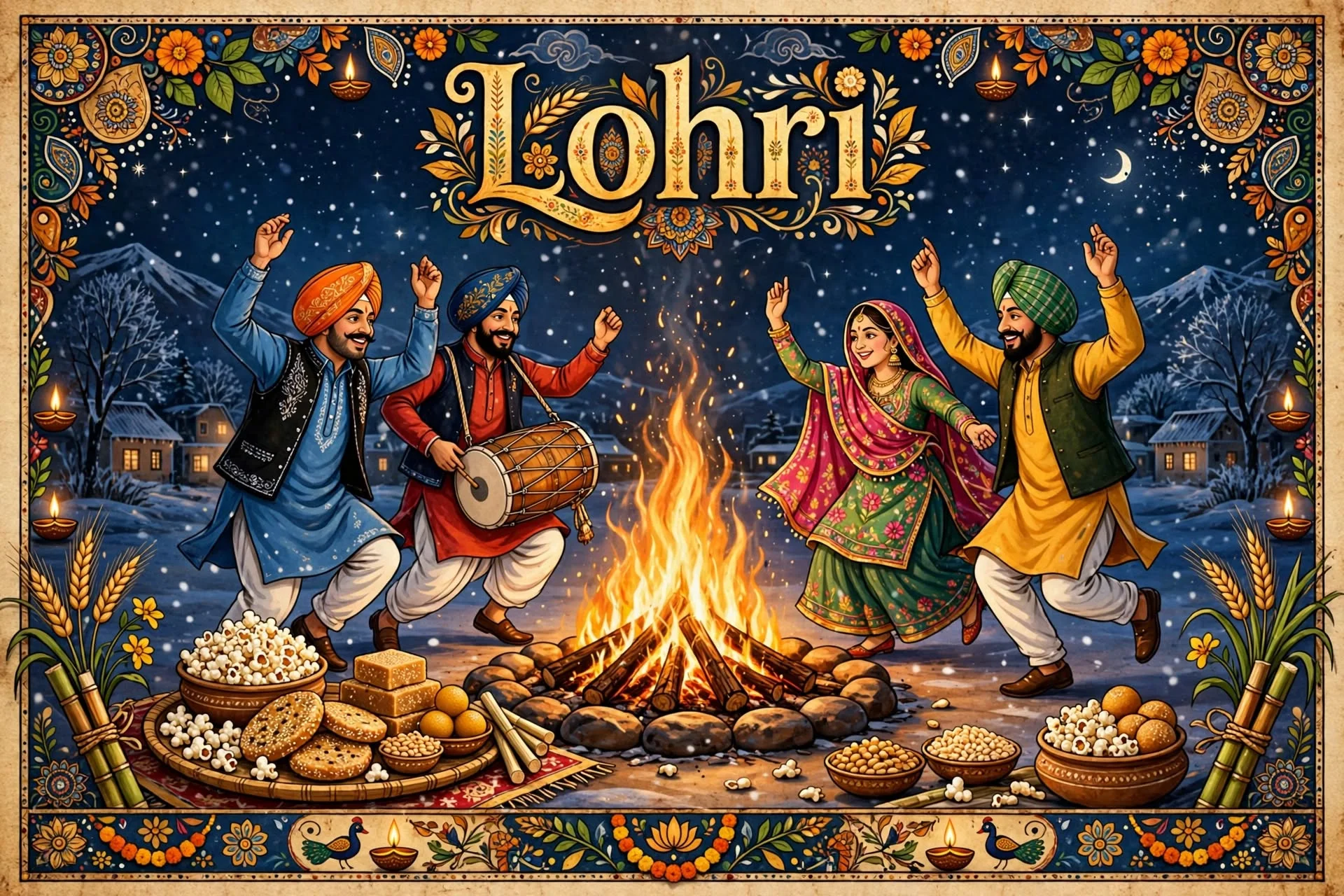
Lohri
Lohri is a popular winter folk festival celebrated with great enthusiasm in Punjab and other parts of northern India. It is especially associated with the Punjabi community and is observed by people of different religious backgrounds as a celebration of warmth, harvest, family, and community life.