




Vinayaka Chaturthi is a Hindu religious observance dedicated to Lord Ganesha, the remover of obstacles, the deity of wisdom, knowledge and auspicious beginnings. It is observed on Shukla Paksha Chaturthi, the fourth lunar day of the waxing fortnight, in each Hindu lunar month. Devotees worship Lord Ganesha through prayers, fasting, mantra chanting, offerings and meditation to seek his blessings for success, prosperity, wisdom and the removal of difficulties.
Vinayaka Chaturthi 2027: Date, Puja Timings, Rituals & Stories
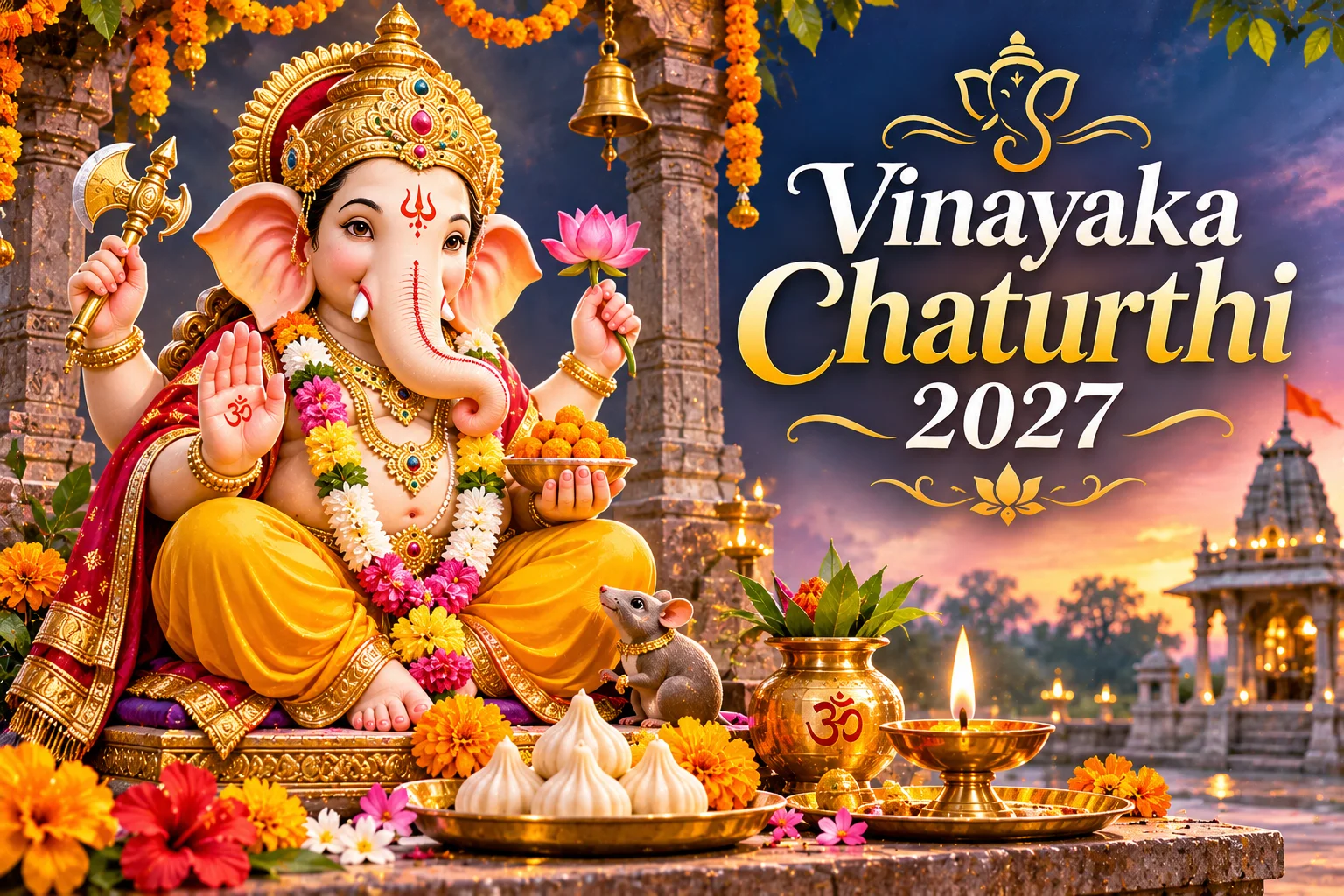
Vinayaka Chaturthi Timings & Panchang
Important festival dates and auspicious timings
Usha Arghya (Sunrise)
06:01 am
Sandhya Arghya (Sunset)
06:40 pm
Start Date
Saturday, 4 Sept 2027
Puja Muhurat
02:19 pm – 12:26 pm
Vinayaka Chaturthi
The name Vinayaka refers to Lord Ganesha, who is also known as Ganapati, Vighnaharta, Gajanana, Ekadanta and Siddhivinayaka. Chaturthi means the fourth lunar day. The observance is therefore known as Vinayaka Chaturthi because it is dedicated to the worship of Vinayaka on Shukla Chaturthi.
Vinayaka Chaturthi is a recurring monthly vrat. It should be distinguished from Sankashti Chaturthi, which falls on Krishna Paksha Chaturthi, the fourth day of the waning fortnight. While both observances are dedicated to Lord Ganesha, their ritual timings and fasting practices differ. Vinayaka Chaturthi worship is traditionally associated with the Madhyahna period, whereas Sankashti Chaturthi worship is generally performed after moonrise.
The Shukla Chaturthi falling in the Bhadrapada lunar month is especially celebrated as Ganesh Chaturthi or Ganeshotsav. It is the major annual public and household festival associated with the appearance or birth of Lord Ganesha. The monthly Vinayaka Chaturthi observance is generally simpler and may be performed at home with a small puja, fasting and devotional prayers.
Devotees commonly offer Durva grass, red flowers, sandalwood, incense, lamps, fruits and Modak to Lord Ganesha. Modak is especially associated with Ganesha and symbolises the sweetness of spiritual knowledge and devotion. The worship may include the recitation of Ganesha mantras, Ganesh Atharvashirsha, Ganesh Chalisa or devotional hymns.
The central message of Vinayaka Chaturthi is to begin every activity with wisdom, humility and devotion. By worshipping Lord Ganesha, devotees seek the strength to overcome difficulties, make thoughtful decisions and progress towards their personal, family and spiritual goals.
Why is Vinayaka Chaturthi Celebrated?
Vinayaka Chaturthi is observed to worship Lord Ganesha and seek his blessings for the removal of obstacles. In Hindu tradition, Ganesha is worshipped before the beginning of important religious ceremonies, journeys, educational activities, business ventures and other auspicious undertakings. His worship represents the importance of beginning every task with wisdom, clarity and a positive intention.
The monthly vrat gives devotees an opportunity to renew their devotion to Ganesha throughout the year. It encourages discipline, prayer, self-control and remembrance of the divine. Devotees may observe a fast, perform Madhyahna Puja, offer Durva grass and Modak, and recite sacred Ganesha mantras.
Lord Ganesha is also worshipped as the deity of intellect, learning and discernment. Students pray for concentration and knowledge, professionals seek guidance in their work, and families pray for harmony and prosperity. The observance reminds devotees that overcoming obstacles requires both divine grace and sincere personal effort.
- To worship Lord Ganesha and seek his blessings.
- To pray for the removal of obstacles and difficulties.
- To develop wisdom, intelligence and good judgement.
- To seek success in education, business, career and personal responsibilities.
- To cultivate patience, discipline and devotion through fasting.
- To begin new activities with auspicious intentions and spiritual awareness.
- To promote peace, prosperity and harmony within the family.
- To strengthen faith through regular mantra chanting and devotional practices.
History and Mythological Background of Vinayaka Chaturthi
The birth of Lord Ganesha
One of the most widely known stories about Lord Ganesha appears in Hindu Puranic traditions. According to a popular account, Goddess Parvati created a child from the sacred substance of her body and instructed him to guard the entrance while she was bathing.
When Lord Shiva returned, the child did not recognise him and prevented him from entering. A conflict followed, during which Shiva severed the child's head. When Goddess Parvati discovered what had happened, she was overcome with grief and anger.
To console Parvati and restore the child to life, Lord Shiva instructed his attendants to bring the head of the first suitable living being they encountered facing the prescribed direction. They returned with the head of an elephant, which Shiva placed upon the child's body. The child was restored to life and blessed with a prominent place among the deities.
Lord Shiva declared that Ganesha would be worshipped before the beginning of important religious ceremonies and auspicious activities. This story explains Ganesha's elephant head and his position as the remover of obstacles and the first deity invoked in many Hindu rituals. Versions of the narrative differ across Puranic texts and regional traditions.
The significance of Ganesha as Vighnaharta
Lord Ganesha is widely known as Vighnaharta, meaning the remover of obstacles. Hindu devotional traditions describe him as the deity who helps devotees overcome difficulties and proceed towards their goals with wisdom and determination.
His worship before important ceremonies reflects the belief that a successful beginning requires clarity, discipline and divine blessings. The monthly Vinayaka Chaturthi vrat provides a recurring opportunity to remember this principle.
The story of the Syamantaka jewel
A well-known story associated with the major Bhadrapada Ganesh Chaturthi observance concerns Lord Krishna and the Syamantaka jewel. According to the traditional narrative, Lord Krishna was once falsely accused of taking the precious jewel. The misunderstanding was connected with the belief that seeing the Moon on the Chaturthi Tithi could lead to Mithya Dosha, or a false accusation.
Spiritual Significance of Vinayaka Chaturthi
Lord Ganesha as the remover of obstacles
The central spiritual significance of Vinayaka Chaturthi is the worship of Lord Ganesha as Vighnaharta. Devotees seek his blessings to overcome difficulties, remove confusion and move forward with confidence. His worship represents the belief that obstacles can be approached with wisdom, patience and determination.
The observance encourages devotees to begin their activities with prayer and thoughtful preparation. It reminds them that devotion should be accompanied by sincere effort and responsible action.
The symbolism of the elephant head
The elephant head of Lord Ganesha carries several symbolic meanings in Hindu devotional interpretation. The elephant is associated with strength, intelligence, memory and the ability to move through difficult terrain. Ganesha's form therefore represents wisdom combined with strength and patience.
His large ears are commonly interpreted as a reminder to listen carefully, while his small eyes symbolise concentration. His trunk represents adaptability and efficiency, and his large head is associated with broad thinking and knowledge.
Spiritual meaning of the Modak
Modak is one of the most recognised offerings associated with Lord Ganesha. It is traditionally considered a favourite food of the deity and is offered as Naivedya during Ganesha Puja.
In devotional interpretation, the sweetness of Modak represents the joy and fulfilment associated with spiritual knowledge. Its outer covering and sweet filling may also be understood as a symbolic reminder that deeper wisdom is discovered through sincere effort and inner discipline.
Significance of Durva grass
Durva grass is among the most important traditional offerings made to Lord Ganesha. Devotees offer fresh Durva during the puja while chanting Ganesha's names or mantras.
How to Celebrate Vinayaka Chaturthi
Morning preparation
Devotees begin the day by waking up early, bathing and wearing clean clothes. The home shrine or puja area is cleaned and prepared. A picture or idol of Lord Ganesha is placed on a clean platform, and the required puja materials are arranged.
Sankalp and fasting
After preparing for worship, devotees take a Sankalp to observe the vrat with devotion. Some observe a full-day fast, while others follow a fruit-based or partial fast. The fasting practice depends on family tradition and personal capacity.
Madhyahna Ganesha Puja
Madhyahna is the preferred period for Vinayaka Chaturthi worship. Devotees invoke Lord Ganesha, offer water, flowers, Durva grass, sandalwood, incense, lamps and Naivedya. A Shodashopachara Puja may be performed by those following the full sixteen-step ritual.
Offer Modak and Durva
Offer Modak or another suitable sweet as Naivedya. Fresh Durva grass and red flowers are also commonly offered to Lord Ganesha. The offerings should be prepared and presented with cleanliness and devotion.
Mantra chanting and devotional reading
Recite Om Gan Ganapataye Namah, the Ganesh Atharvashirsha, Ganesh Chalisa or other Ganesha prayers. Devotees may also read the monthly Vinayaka Chaturthi vrat katha associated with the relevant lunar month.
Aarti and Prasad distribution
Conclude the main worship with Ganesha Aarti. Offer the prepared Naivedya and distribute Prasad among family members and guests. Devotees may also donate food or useful items to people in need.
Concluding the fast
Vinayaka Chaturthi Puja Vidhi (Step by Step)
- 1
Wake Up Early and Take a Bath
Wake up early in the morning, take a bath and wear clean clothes. Maintain a peaceful and devotional mindset while preparing for the observance.
- 2
Clean the Puja Area
Clean the home shrine or designated worship space. Place a clean cloth on a platform and arrange the idol or image of Lord Ganesha respectfully.
- 3
Arrange the Puja Samagri
Arrange flowers, Durva grass, sandalwood paste, Akshat, incense, a diya, fruits, Modak and clean water. Keep all offerings ready before beginning the main puja.
- 4
Take the Vrat Sankalp
Sit before Lord Ganesha and take a Sankalp to observe Vinayaka Chaturthi with devotion. Pray for wisdom, the removal of obstacles and the strength to complete the observance sincerely.
- 5
Light the Diya
Light a ghee or oil lamp and incense before Lord Ganesha. Ring the bell if it is part of the household worship tradition.
Vinayaka Chaturthi Puja Samagri List
Ganesha Worship Essentials
- Idol or image of Lord Ganesha
- Clean platform or chowki
- Red or yellow cloth
- Puja thali
- Kalash
- Clean water
- Panchpatra
- Akshat (unbroken rice)
- Sandalwood paste
- Kumkum
- Haldi
Flowers and Sacred Offerings
- Fresh Durva grass
- Red flowers
- Marigold flowers
- Garland
- Sandalwood paste
- Akshat
- Betel leaves
- Betel nuts
- Coconut
Durva grass is one of the most important traditional offerings to Lord Ganesha. Fresh and clean grass should be used according to the household or temple tradition.
Mantras and Prayers for Vinayaka Chaturthi
Vinayaka Chaturthi Vrat Rules and Fasting Guidelines
Take a Sankalp
Begin the observance with a sincere Sankalp to worship Lord Ganesha and follow the chosen fasting practice. Pray for wisdom, self-discipline and the removal of obstacles.
Maintain Cleanliness
Maintain personal cleanliness and keep the puja area clean. Use fresh flowers, clean water and suitable offerings during the worship.
Fasting Practices
Devotees follow different fasting practices on Vinayaka Chaturthi. Some observe a full-day fast, while others consume fruits, milk or permitted vrat food. Follow the fasting tradition appropriate to your health and family customs.
- Choose a fasting practice according to your physical capacity.
- Avoid overeating before or after the vrat.
- Drink sufficient water if your fasting practice permits it.
- Do not undertake a strict fast if it may harm your health.
- People with medical conditions, those taking regular medication and pregnant people should seek medical advice before fasting.
Perform Madhyahna Puja
Madhyahna is traditionally preferred for Vinayaka Chaturthi Puja. The exact local puja period depends on the Panchang and the presence of Chaturthi Tithi during the prescribed period. For an actual observance, consult a location-specific Panchang.
Offer Durva and Modak
Offer fresh Durva grass and suitable Naivedya such as Modak. These are traditional offerings associated with Lord Ganesha. Follow the customs of the family or temple when deciding the number and arrangement of offerings.
Dos and Don'ts of Vinayaka Chaturthi
Good Practices (Do's)
- Begin the observance with a sincere Sankalp.
- Take a bath and wear clean clothes before worship.
- Keep the puja area clean and organised.
- Perform Ganesha Puja during the prescribed Madhyahna period.
- Offer fresh Durva grass and flowers.
- Offer Modak or suitable Naivedya.
Vinayaka Chaturthi Across Regions
| Region | Local Name |
|---|---|
| Maharashtra | |
| Karnataka | |
| Andhra Pradesh | Vinayaka Chavithi |
| Telangana | Vinayaka Chavithi |
| Tamil Nadu | Vinayagar Chaturthi |
| Kerala | |
| Gujarat | |
| Rajasthan | |
| Uttar Pradesh | |
| Madhya Pradesh | |
| Goa |
Vinayaka Chaturthi FAQs
What is Vinayaka Chaturthi?
Vinayaka Chaturthi is a Hindu observance dedicated to Lord Ganesha. It falls on Shukla Paksha Chaturthi, the fourth lunar day of the waxing fortnight, and is observed through worship, fasting, mantra chanting and offerings.
Which deity is worshipped on Vinayaka Chaturthi?
Lord Ganesha, also known as Vinayaka, Ganapati and Vighnaharta, is worshipped on this day.
How many times is Vinayaka Chaturthi observed?
Vinayaka Chaturthi is observed on Shukla Paksha Chaturthi in each lunar month. The number of observances in a calendar year can vary because Hindu lunar months and intercalary months do not align exactly with the Gregorian calendar.
Upcoming Festivals
View All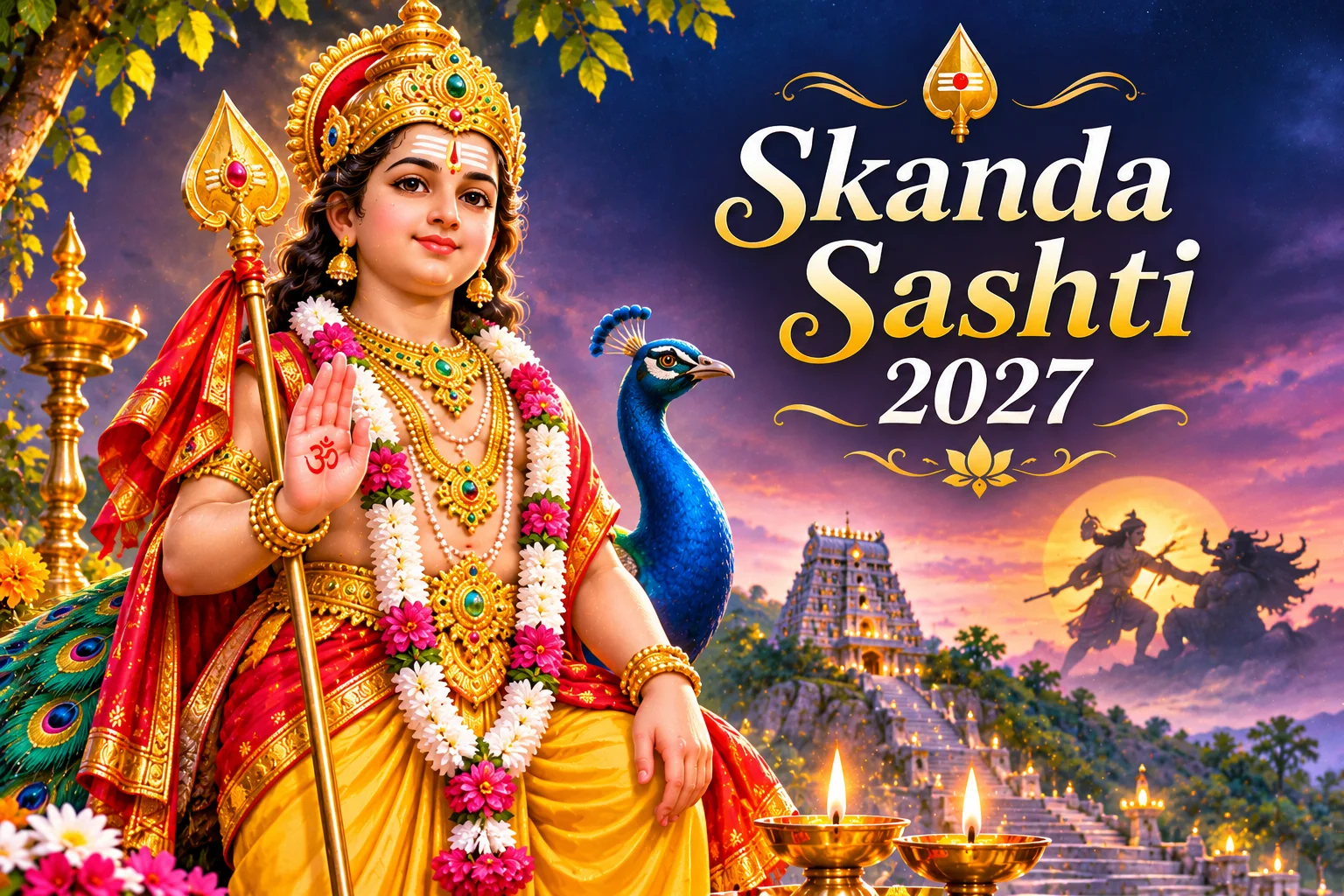
Wednesday, Jan 13, 2027
Skanda Sashti
Skanda Sashti, also known as Kanda Sashti or Skanda Shashthi, is an important Hindu festival dedicated to Lord Skanda, who is worshipped as Murugan, Kartikeya, Subramanya, Shanmukha and Kumara. The festival commemorates the victory of Lord Murugan over the demon Surapadman and the restoration of peace and righteousness. It is especially celebrated by devotees in Tamil Nadu and Tamil communities around the world.
View Festival Guide
Thursday, Jan 14, 2027
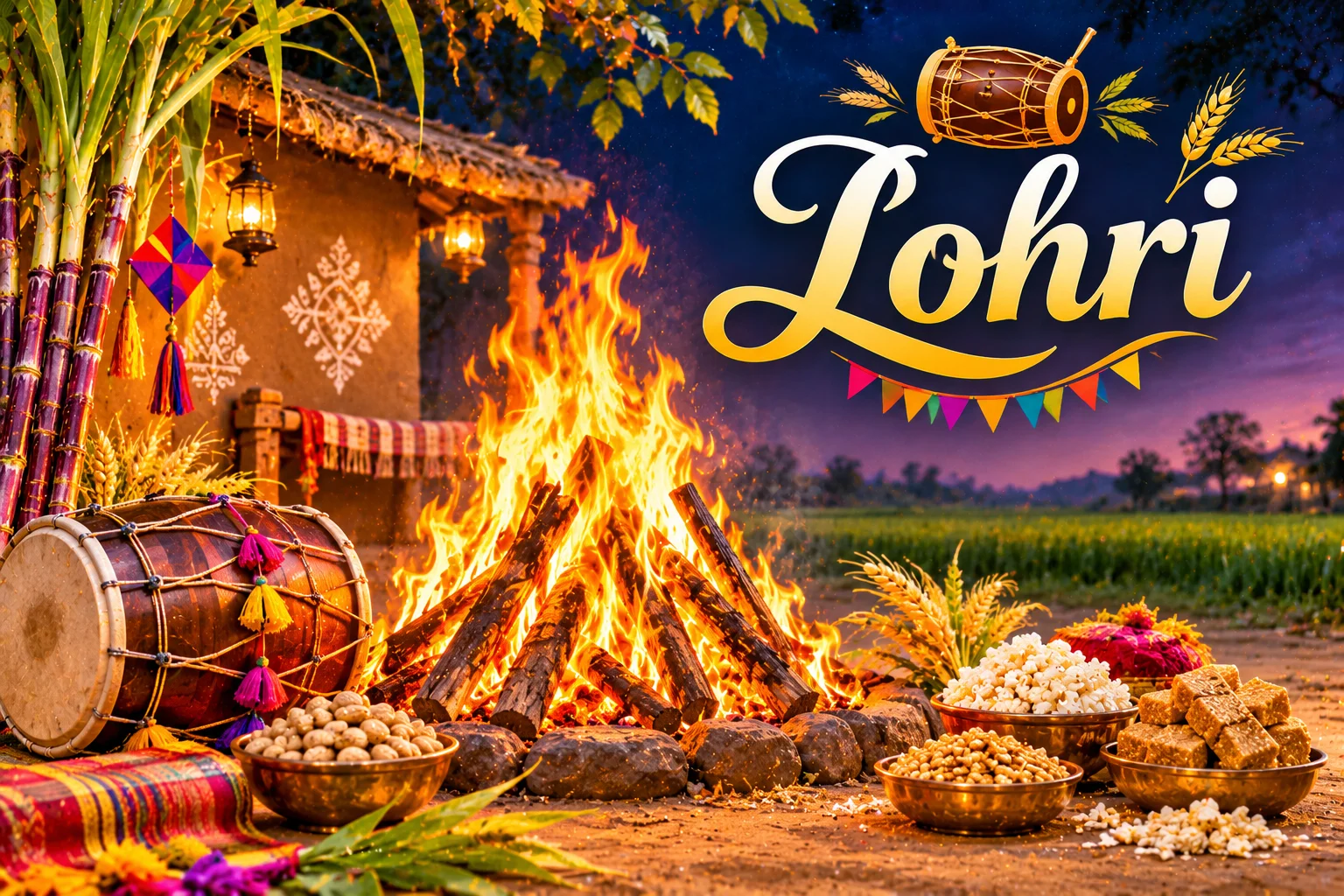
Lohri
Lohri is a popular winter folk festival celebrated with great enthusiasm in Punjab and other parts of northern India. It is especially associated with the Punjabi community and is observed by people of different religious backgrounds as a celebration of warmth, harvest, family, and community life.
View Festival Guide
Thursday, Jan 14, 2027
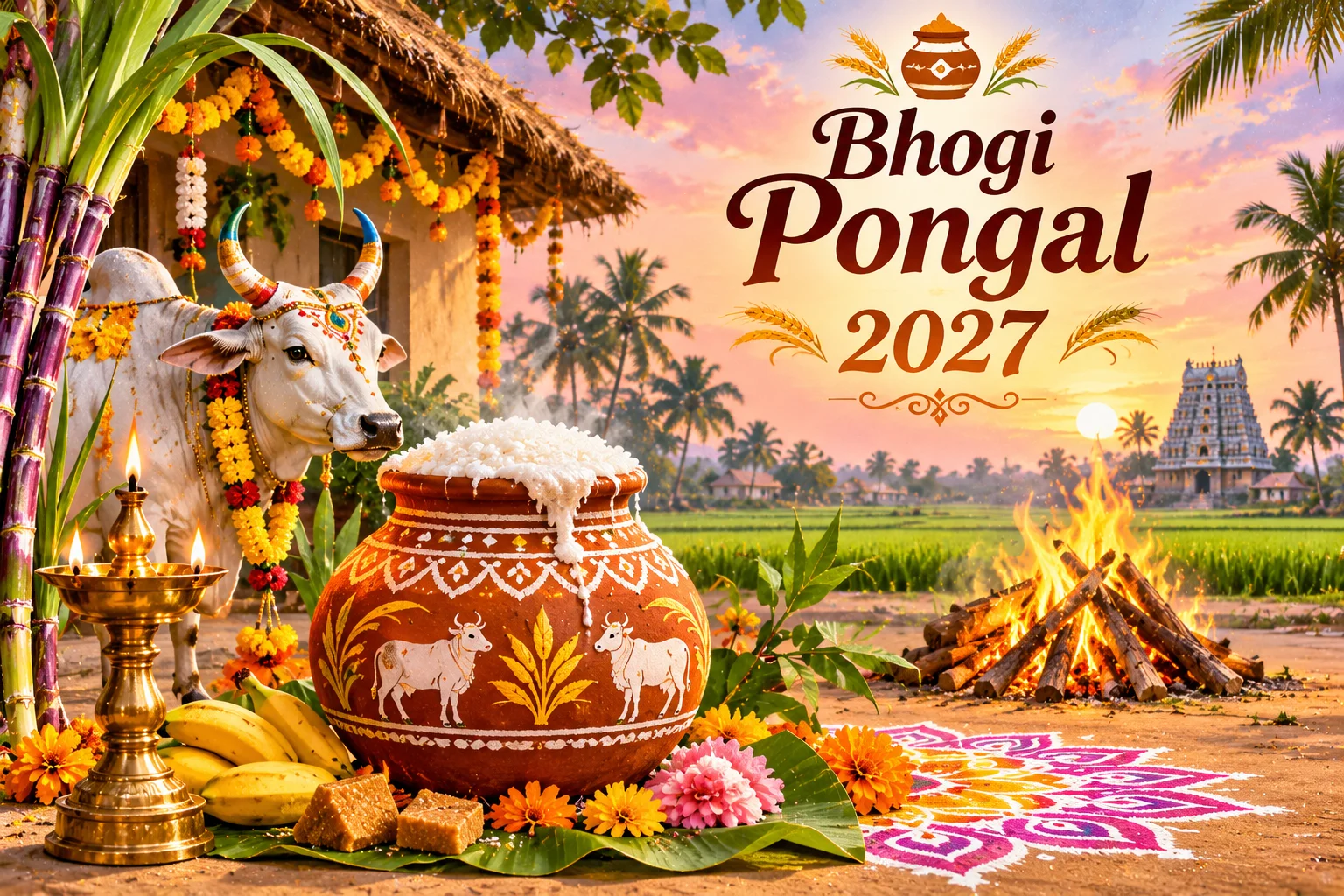
Bhogi Pongal
Bhogi Pongal, also known as Bhogi Pandigai or Bhogi, is the first day of the traditional four-day Pongal harvest festival celebrated mainly in Tamil Nadu and by Tamil communities across the world. It marks the final day of the Tamil month of Margazhi and welcomes the beginning of the auspicious month of Thai. The festival represents renewal, gratitude, prosperity and the transition from the old to the new.
View Festival Guide
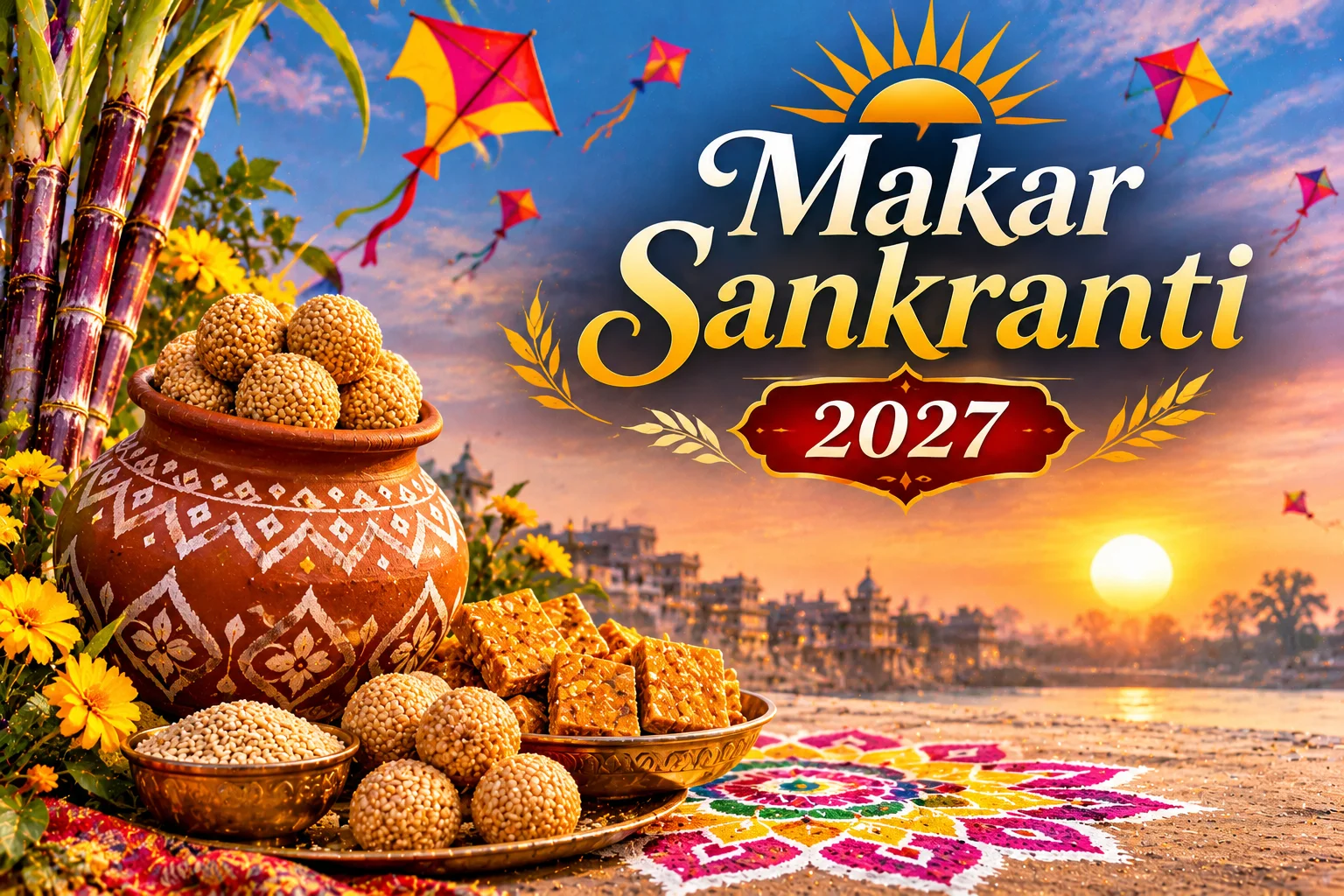
Friday, Jan 15, 2027
Makar Sankranti (Uttarayana / Pongal)
Makar Sankranti is one of the most widely celebrated Hindu festivals in India. It marks the transition of the Sun into Makara Rashi, the zodiac sign of Capricorn, according to the traditional sidereal solar calendar. The word Sankranti refers to the movement of the Sun from one zodiac sign to another, while Makara refers to Capricorn.
View Festival Guide
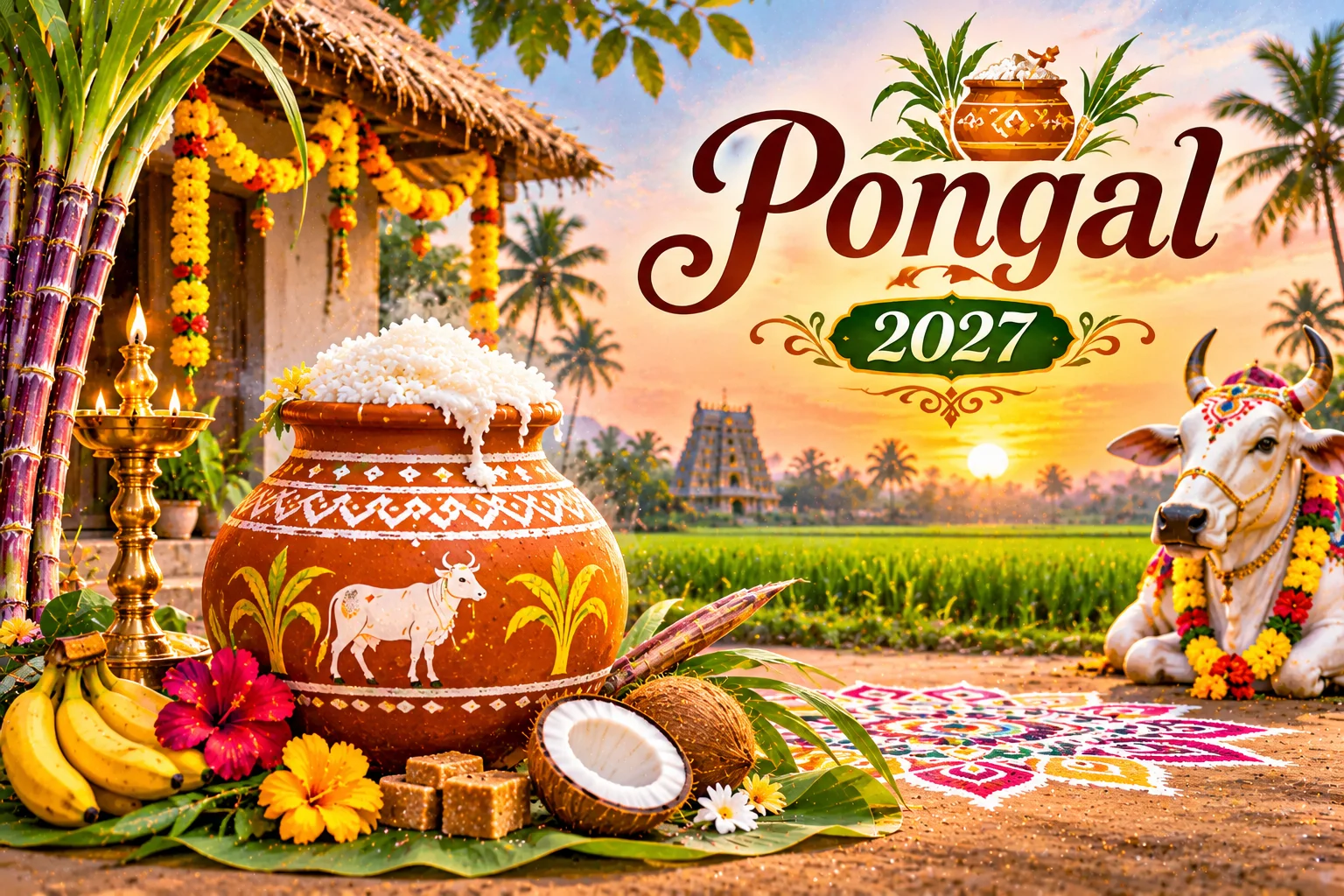
Friday, Jan 15, 2027
Pongal
Pongal is one of the most important traditional harvest festivals of Tamil Nadu. Celebrated with devotion and enthusiasm by Tamil communities in India and around the world, it is a festival of thanksgiving dedicated to the Sun, Mother Nature, agricultural abundance, and the cattle that support farming.
View Festival Guide
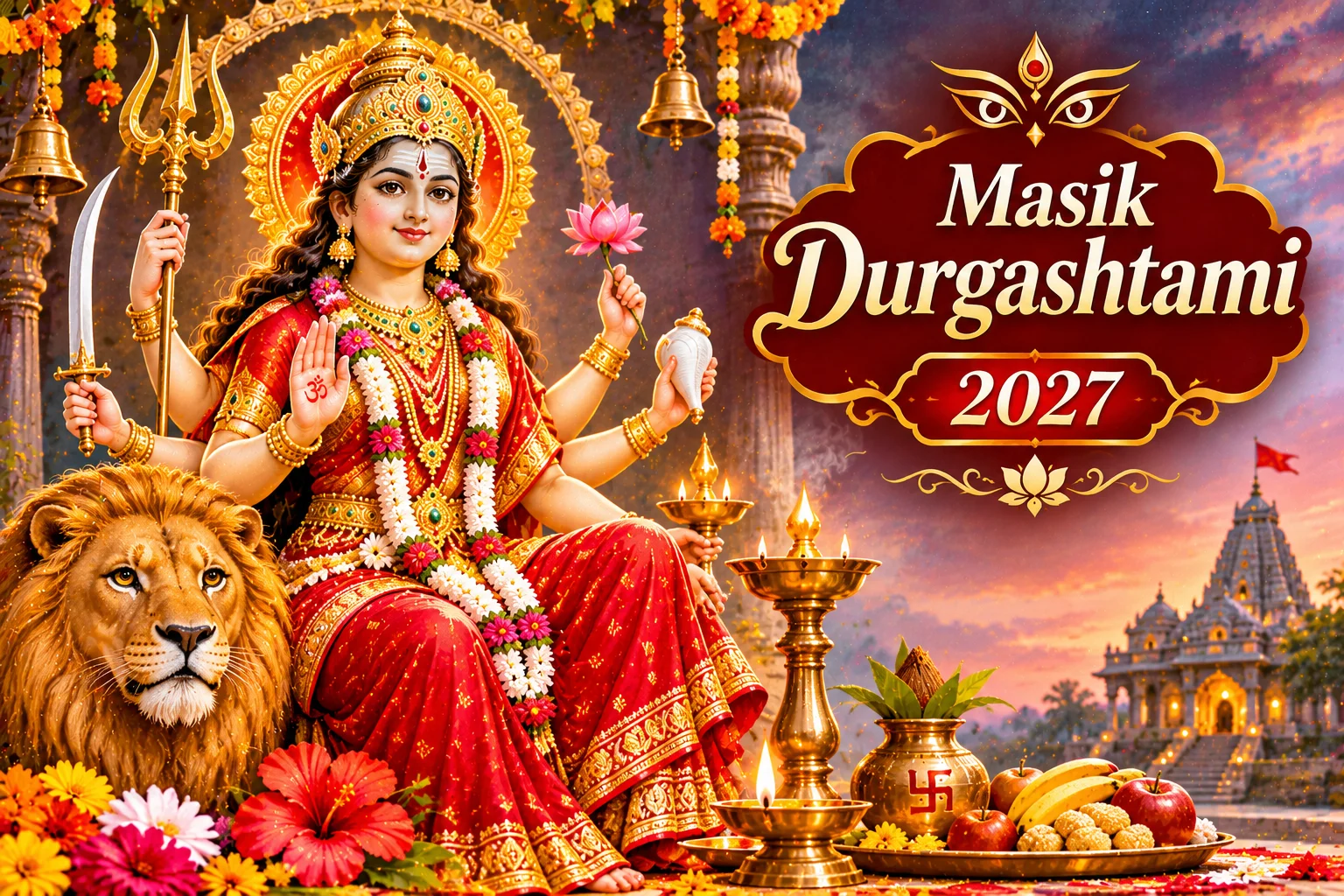
Saturday, Jan 16, 2027
Masik Durgashtami
Masik Durgashtami, also known as Maas Durgashtami or Monthly Durga Ashtami, is a Hindu monthly vrata dedicated to Goddess Durga. It is observed on the Ashtami Tithi, the eighth lunar day of Shukla Paksha, during every Hindu lunar month.
View Festival Guide
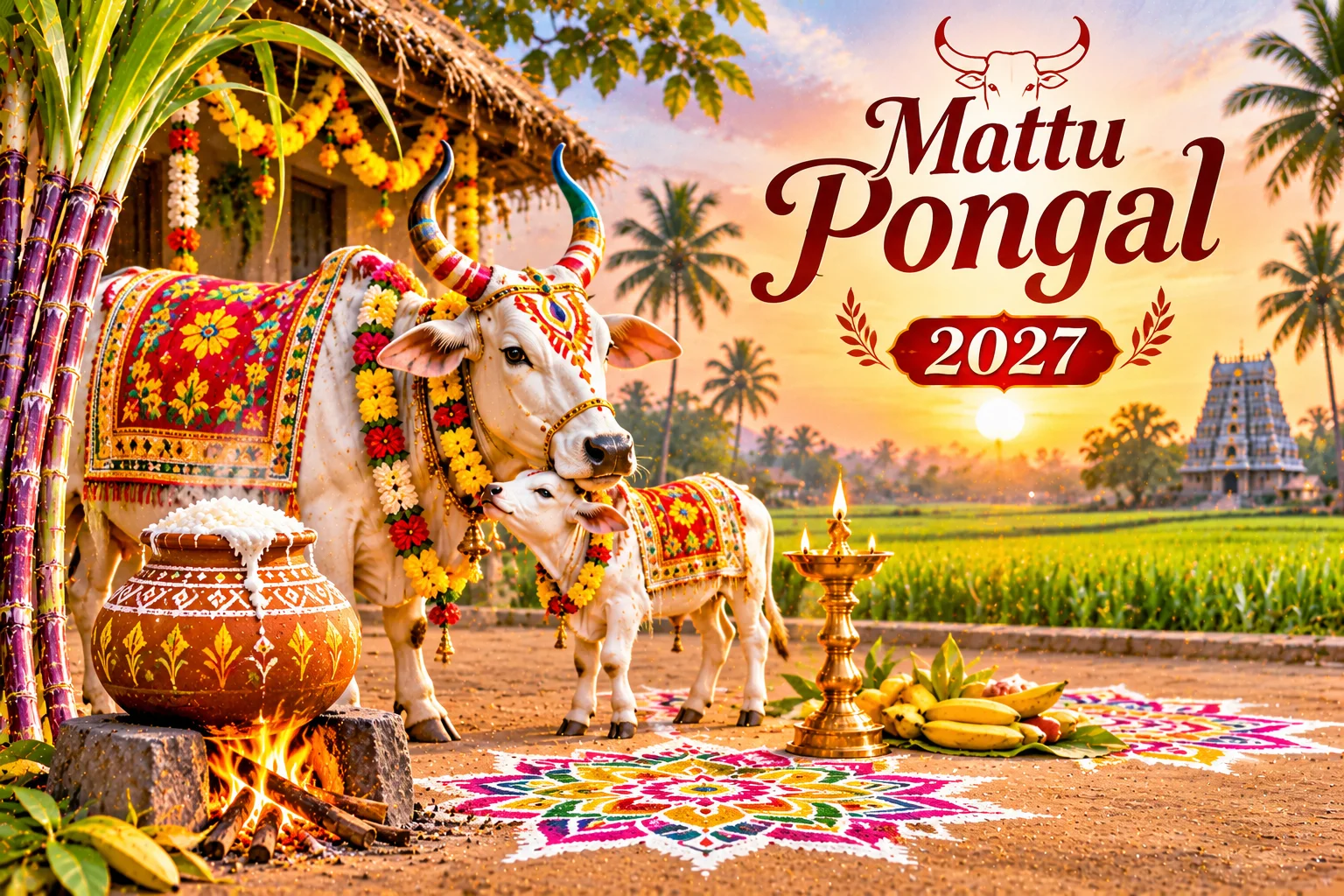
Saturday, Jan 16, 2027
Mattu Pongal
Mattu Pongal is the third day of the traditional four-day Pongal harvest festival celebrated primarily in Tamil Nadu. The word Mattu means cattle in Tamil, and the day is dedicated to honouring cows, bulls, oxen, and other cattle for their valuable contribution to agriculture and rural life.
View Festival Guide
Sunday, Jan 17, 2027
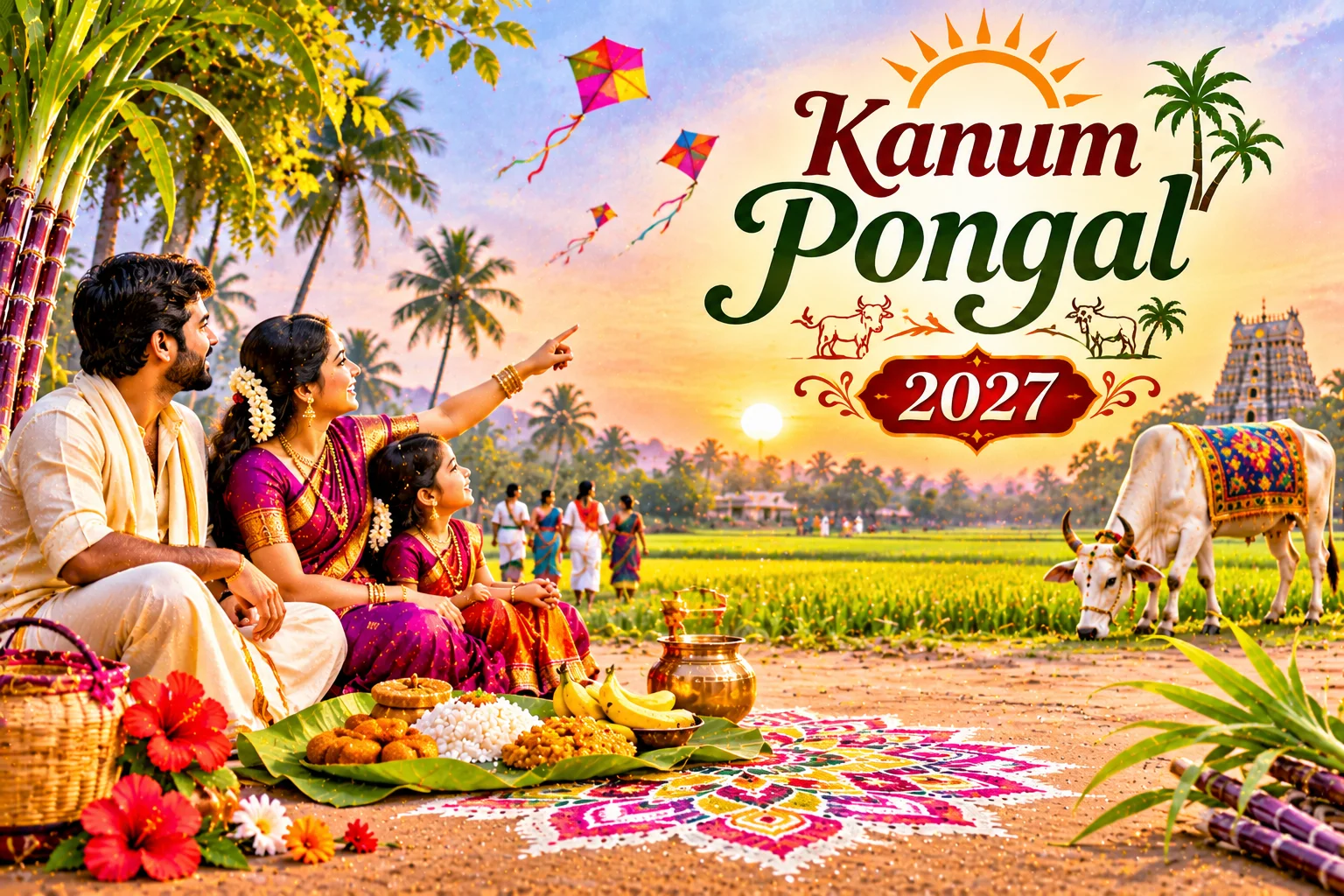
Kanum Pongal
Kanum Pongal, also known as Kaanum Pongal or Kannum Pongal, is the fourth and final day of the traditional four-day Tamil Pongal harvest festival. It is primarily associated with family reunions, visiting relatives, receiving blessings from elders, community gatherings, and spending time with loved ones.
View Festival Guide