




Margashirsha Purnima, celebrated on the full moon day of the sacred month of Margashirsha (Agrahayana), is one of the most spiritually illuminating and astrologically auspicious full moon festivals in Sanatana Dharma. Occurring when the full moon shines in the constellation of Mrigashirsha (the celestial deer's head ruled by the planet Mars and presided over by Soma, the Moon God), this holy tithi marks the supreme spiritual culmination of the month that Lord Sri Krishna Himself declared to be His own transcendental self in the Bhagavad Gita ('Masanang Margashirsho'ham'). Popularly known in various regional cultures as Battisi Purnima, Moksha Purnima, and Korvai Deepam, this sacred day unites the worship of Lord Sri Satyanarayan, the divine advent of Lord Dattatreya, the celestial Cosmic Dance of Lord Nataraja (Arudra Darshan), and ancient river-bathing rites.
Margashirsha Purnima 2026: Date, Puja Timings, Rituals & Stories
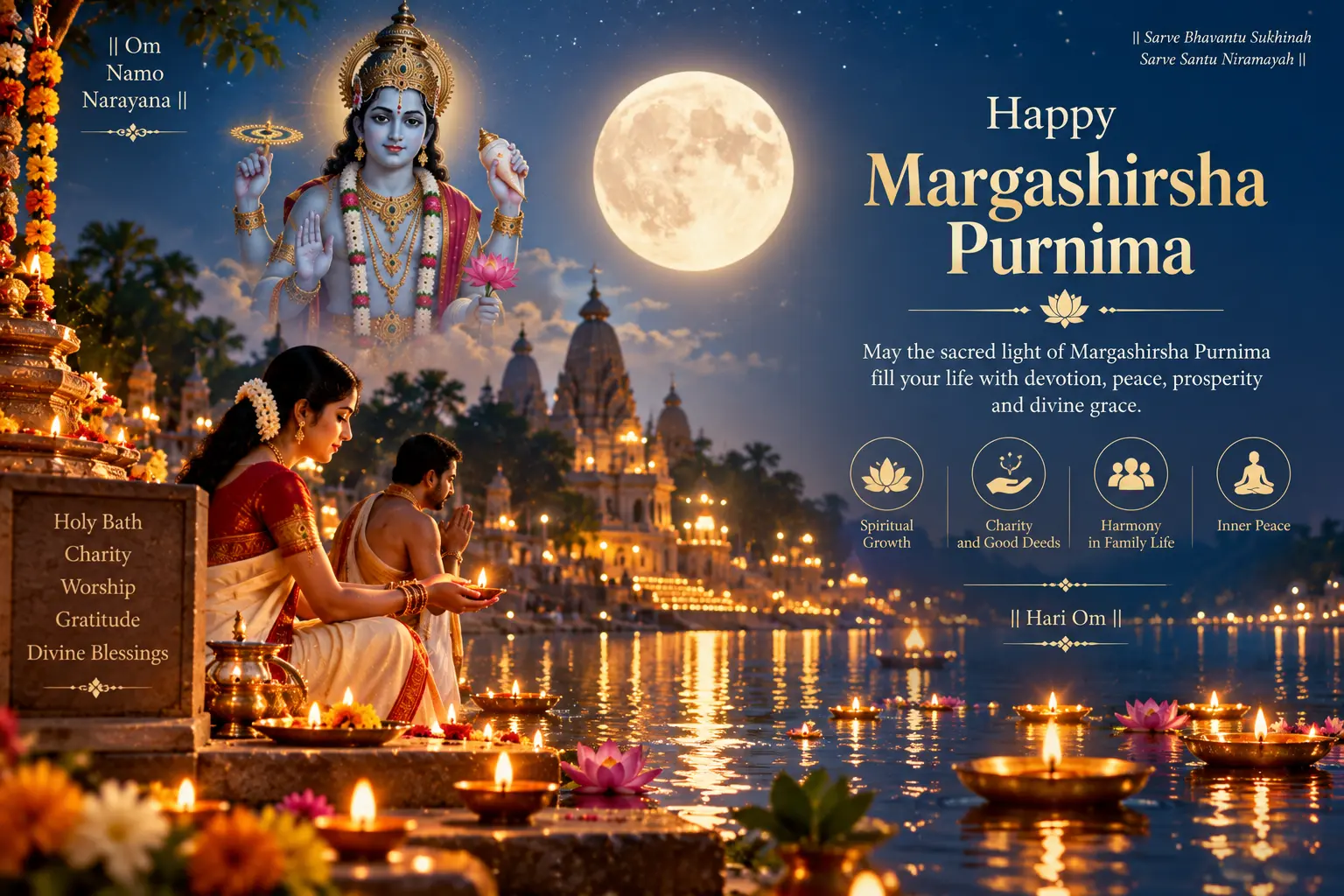
Margashirsha Purnima Timings & Panchang
Important festival dates and auspicious timings
07:11 am
05:30 pm
Wednesday, 23 Dec 2026
02:24 pm – 10:47 am
Margashirsha Purnima
The divine scriptural origin and spiritual efficacy of Margashirsha Purnima are extolled across the Skanda Purana, the Padma Purana, the Matsya Purana, and the Brahma Vaivarta Purana. According to these sacred texts, taking a holy dip (Snanam) in consecrated rivers such as the Ganga, Yamuna, Godavari, Narmada, Kaveri, or Shipra before sunrise on this day burns away the accumulated sins of thirty-two lifetimes—a belief that gives this full moon its celebrated North Indian title, 'Battisi Purnima'. The merit earned through charity (Dan), austerity (Tapas), and sacred fire ceremonies (Homa) performed on Margashirsha Purnima is declared to be thirty-two times greater than on ordinary full moon days, serving as an indestructible spiritual shield against worldly afflictions and negative planetary influences.
A crowning glory of Margashirsha Purnima is its multi-faceted cosmic synchronicity. It marks the divine advent of Lord Sri Dattatreya—the unified incarnation of the Hindu Trinity (Brahma, Vishnu, and Shiva) born to the sage Atri and the chaste mother Anasuya. Simultaneously, in the grand Shaivite traditions of South India, Margashirsha Purnima aligns with the magnificent Arudra Darshan—the cosmic dance of Lord Nataraja (the dancing form of Shiva) in the golden hall of Chidambaram, celebrating the victory of divine consciousness over ignorance and entropy. In households across the country, families perform the Sri Satyanarayan Vrata Katha, illuminating domestic altars with pure cow ghee lamps, offering sweetened wheat panjiri, and seeking blessings for familial harmony, prosperity, and spiritual ascension.
Why is Margashirsha Purnima Celebrated?
Margashirsha Purnima is celebrated to honor the sacred full moon of the month of Margashirsha, which Lord Sri Krishna declared in the Bhagavad Gita to be His own divine manifestation among all months of the year.
According to the Skanda Purana and Matsya Purana, it is observed as Battisi Purnima, wherein sacred river bathing and charitable donations yield thirty-two times greater spiritual merit, cleansing sins accumulated over thirty-two past births.
It celebrates the auspicious divine advent of Lord Sri Dattatreya, the unified incarnation of Brahma, Vishnu, and Shiva, who manifested to Sage Atri and Mother Anasuya on this full moon tithi.
In South Indian Shaivism, it commemorates Arudra Darshan, the celestial cosmic dance of Lord Shiva as Nataraja in the golden hall of Chidambaram, celebrating the triumph of divine grace over darkness.
Householders observe this day through the sacred Sri Satyanarayan Vrat and Chandra Arghya to remove domestic discord, alleviate financial hardships, and invoke long-lasting peace, health, and spiritual liberation.
- Honoring the supreme sanctity of Margashirsha month, personally identified with Bhagavan Sri Krishna in the Gita.
- Earning thirty-two-fold spiritual merit (Battisi Punya) through sacred river snanam and charitable distribution (Dan).
- Celebrating the divine birth anniversary of Lord Dattatreya, the Primordial Guru and synthesis of the Trimurti.
- Commemorating Arudra Darshan and the cosmic Ananda Tandava dance of Lord Nataraja at Chidambaram.
- Worshipping Lord Sri Satyanarayan and the full moon (Chandra Deva) for health, prosperity, and emotional equilibrium.
- Practicing charity, feeding cows and dogs, and lighting earthen lamps (Deepotsav) to illuminate homes and temples.
The Historical and Scriptural Chronicle of Margashirsha Purnima: From Puranic Snanam to Cosmic Celebrations
Lord Krishna's Proclamation in the Srimad Bhagavad Gita
The profound sanctity of Margashirsha Purnima is rooted in the divine words of Bhagavan Sri Krishna in the tenth chapter of the Srimad Bhagavad Gita (Vibhuti Yoga, verse 35): 'Brihat-sama tatha samnam gayatri chandasam aham, masanang margashirsho'ham ritunam kusumakarah'—'Among the hymns in the Sama Veda I am the Brihat-sama, among poetic meters I am the Gayatri, among months I am Margashirsha, and among seasons I am the flower-bearing spring.'
By identifying Himself directly with the month of Margashirsha, Sri Krishna elevated every day of this month—and particularly its crowning full moon day—to the status of supreme divinity. In ancient Vedic times, the Margashirsha full moon marked the beginning of the new year (Agrahayana, meaning 'the first month of the year'). The rishis recognized that the temperate winter climate, the pristine morning air, and the balanced planetary alignments make Margashirsha Purnima the most conducive time for spiritual awakening and divine communion.
The Mystery of Battisi Purnima in the Skanda Purana
In the Margashirsha Mahatmya section of the Skanda Purana, the celestial sage Narada inquires from Lord Brahma regarding the most purifying full moon day of the year. Lord Brahma reveals that Margashirsha Purnima is known across heaven and earth as 'Battisi Purnima' (the thirty-two-fold full moon). The name originates from an ancient cosmic ordinance: any spiritual austerity, mantra repetition, sacred bath, or charitable gift offered on this day bestows thirty-two times the spiritual merit of an ordinary Purnima.
Lord Brahma explains: 'He who rises before sunrise on Margashirsha Purnima, cleanses his senses, and bathes in the holy waters of the Ganga, Yamuna, or any sanctified reservoir while meditating upon Lord Narayana, dissolves the sinful karmic impressions accumulated across thirty-two previous human births. Furthermore, whoever donates thirty-two small earthen lamps, thirty-two measures of sesame seeds, or thirty-two warm blankets to pious seekers on this day is never reborn into lower realms of suffering.'
The Advent of Lord Dattatreya: The Trimurti Incarnation
Metaphysical Wisdom: The Full Moon of Divine Light, Karmic Liberation, and Lunar Rejuvenation
The Symbolism of Purnima: Fullness of Consciousness
In Vedic philosophy, the moon (Chandra) governs the human mind (Manas), as declared in the Purusha Sukta: 'Chandrama manaso jataha'—'From the mind of the Supreme Cosmic Being, the moon was born.' On the full moon day, the lunar sphere is fully illuminated by the light of the sun, symbolizing the human mind completely illuminated by the radiant light of the Atman (pure spiritual consciousness).
Margashirsha Purnima represents the pinnacle of this psychological and spiritual illumination. Because it occurs in the month directly identified with Lord Krishna, this full moon dispels the darkness of existential doubt, emotional instability, and mental restlessness. When a devotee meditates upon the rising full moon on this night, they absorb the nectarine soma vibrations that calm neurotic desires and awaken contemplative serenity.
The Metaphysical Alchemy of Battisi Punya (Thirty-Two Merits)
The scriptural designation of 'Battisi Purnima' carries profound esoteric symbolism. In yogic anatomy, thirty-two subtle nadis converge around the solar plexus and the crown, and the physical body is supported by thirty-two teeth and thirty-two spinal segments. The number thirty-two symbolizes structural completeness and physical-spiritual alignment.
Performing selfless charity, holy river bathing, and scriptural study on Margashirsha Purnima is believed to heal these thirty-two energetic centers, eradicating thirty-two categories of latent karmic blocks (Samskaras) accumulated from past births. It teaches that conscious, heartfelt acts of generosity performed on auspicious cosmic coordinates have an exponentially magnified purifying impact on the soul's evolution.
The Synthesis of Vishnu and Shiva: Harihara Harmony
Margashirsha Purnima presents a magnificent theological harmony between Shaivism and Vaishnavism. On one hand, it celebrates Lord Vishnu through Sri Satyanarayan Puja and Sri Krishna's identification with Margashirsha; on the other hand, it celebrates Lord Shiva through Arudra Darshan and the Nataraja Tandava. In Lord Dattatreya, both streams merge into indivisible non-dual awareness.
Ritual Protocols: Holy River Snanam, Sri Satyanarayan Puja, and Chandra Arghya
Pre-Dawn Holy River Snanam and Sankalpa
The primary ritual observance of Margashirsha Purnima is the pre-dawn holy bath (Brahma Muhurta Snanam). Pilgrims gather at sacred river ghats—such as Har ki Pauri in Haridwar, Dashashwamedh Ghat in Varanasi, Triveni Sangam in Prayagraj, and Ramghat in Ujjain—to plunge into the sanctified waters while chanting the sacred river invocation: 'Gange Cha Yamune Chaiva Godavari Saraswati, Narmade Sindhu Kaveri Jalesmin Sannidhim Kuru'.
Devotees unable to visit a sacred river add a few drops of consecrated Ganga jal to their domestic bath water at home. Standing with folded hands facing east, the observer takes a formal Sankalpa (vow) of fasting, truthfulness, and charity for the pleasure of Lord Narayana and Lord Shiva.
Sri Satyanarayan Vrata Katha and Maha Prasada
In the afternoon or evening, householders organize the traditional Sri Satyanarayan Vrata. The family altar is decorated with banana stems, fresh mango leaf garlands, and colorful rangoli patterns. An authentic brass or silver idol of Lord Vishnu is installed upon a consecrated wooden dais (Chauki).
The priest and family recite the five sacred chapters of the Satyanarayan Katha from the Reva Khanda of the Skanda Purana, reflecting upon the virtues of truthfulness, humility, and keeping solemn promises. The worship concludes with the offering and distribution of the special Panchamrita and 'Sapada Bhoga' (a sweet prasad prepared with wheat flour roasted in pure cow ghee, sweetened with sugar or jaggery, and enriched with chopped bananas and dry fruits).
Chandra Arghya and Night Deepotsav
At moonrise, observers step into an open courtyard, terrace, or riverbank to offer Arghya (ceremonial libation) to Chandra Deva. Water mixed with pure cow milk, white sandalwood, unbroken white akshata, and white fragrant flowers is poured from a silver or copper vessel while chanting the Chandra Gayatri Mantra: 'Om Kshiraputraya Vidmahe Amritatvaya Dhimahi, Tanno Chandrah Prachodayat'.
Margashirsha Purnima Puja Vidhi (Step by Step)
- 1
Brahma Muhurta Snanam and Sankalpa
Awaken during the sacred Brahma Muhurta (roughly ninety minutes before sunrise). Cleanse the body thoroughly using pure water, ideally infused with holy Ganga jal and crushed Tulasi leaves. Wear clean, fresh, unstitched white or yellow silk garments. Face east before the family altar, light a pure cow ghee lamp, and solemnly take the Sankalpa (sacred vow): 'O Supreme Lord Narayana! O Lord Sadashiva! On this holy Margashirsha Purnima, I resolve to observe fasting, truthfulness, and holy worship for the purification of my soul and the welfare of all beings.'
- 2
Altar Cleansing and Mandap Consecration (Bhumi Shuddhi)
Thoroughly clean the home mandir or courtyard. Sprinkle consecrated water mixed with Ganga jal and cow urine (Gomutra) while chanting the purification mantra: 'Om Apavitrah Pavitro Va Sarvavastham Gato'pi Va, Yah Smaret Pundarikaksham Sa Bahyabhyantarah Shuchih'. Spread a fresh yellow or red silk cloth over a decorated wooden dais (Chauki).
- 3
Kalasha Sthapana and Divine Invocation
Place a pure copper, brass, or silver Kalasha filled with sacred water, fragrant sandalwood, betel nut, and a silver coin upon a bed of unbroken rice. Place five mango leaves in its mouth and crown it with a husked coconut wrapped in red mauli thread. Invoke the presence of Lord Varuna, the sacred rivers, and the divine Trinity into the vessel.
- 4
Margashirsha Purnima Puja Samagri List
Altar Setup, Vessels, and Sacred Implements
- Conch shell (Shankha) and brass ritual ringing bell (Ghanta)
- Pure copper, brass, or silver puja plate, tumblers, and spoon (Panchapatra and Achamani)
- Decorated wooden dais (Chauki or Bajot) and yellow or red silk altar cloth
- Four fresh banana stems or sugarcane stalks for erecting the Satyanarayan mandap
- Copper or brass Kalasha, mango leaf bunch, coconut wrapped in red thread, and betel nut
- Idols or framed portraits of Lord Sri Satyanarayan, Lord Shiva, and Lord Dattatreya
Sacred Bathing, Tilaka, and Fragrant Offerings
- Holy Ganga jal and clean spring water
- Panchamrita ingredients: pure cow milk, fresh curd, pure cow ghee, wild honey, and jaggery water
- Pure yellow sandalwood powder and Malayaja Chandana paste
- Pure white sacred ash (Vibhuti / Bhasma) and Kumkum (vermilion)
- Pure camphor (Bhimseni Kapur) and natural herbal incense sticks (Dhoop/Agarbatti)
- Pure cow ghee or sesame oil with clean white cotton wicks for thirty-two earthen lamps (Diyas)
Floral Offerings and Sacred Plants
- Abundant fresh green Tulasi leaves and Tulasi Manjari (for Lord Vishnu)
Mantras and Prayers for Margashirsha Purnima
Margashirsha Purnima Vrat Rules and Fasting Guidelines
Pre-Dawn Holy River Snanam
The observer of Margashirsha Purnima must bathe before sunrise during Brahma Muhurta in a sacred river, ocean, holy lake, or with water mixed with holy Ganga jal at home. One should not apply chemical soaps or synthetic oils to the body during this ritual bath; instead, traditional herbal powders (Ubtan) or pure clay should be used. While bathing, the mind should dwell upon Lord Narayana and Lord Shiva, mentally washing away thirty-two lifetimes of karmic impurities.
Fasting Regulations and Food Discipline
Devotees observe a strict fast throughout the day. Pious seekers observe a complete waterless fast (Nirjala) or consume only water and pure cow milk (Sajala). Householders observe a Phalahari fast, consuming fresh seasonal fruits, nuts, and sago. Grains, cereals, rice, wheat, pulses, lentils, onions, garlic, non-vegetarian food, and alcohol are strictly prohibited. The fast is concluded in the evening after offering Arghya to the rising full moon and partaking of the sanctified Satyanarayan Sapada Bhoga.
Chandra Arghya and Earthen Lamp Illumination
Offering Arghya to the rising full moon is mandatory for the completion of the Purnima vrata. The devotee must pour water mixed with milk, white rice, and flowers toward the moon, gazing at the lunar orb with deep reverence. Furthermore, lighting thirty-two earthen lamps (Battisi Deepam) fueled with cow ghee or sesame oil around the home, temple, and Tulasi plant invokes prosperity, eradicates poverty, and purifies the household energetic field.
Mandatory Thirty-Two-Fold Charity (Battisi Dan)
To reap the full thirty-two-fold merit of Margashirsha Purnima, devotees should perform generous charitable deeds (Dan). Donating thirty-two measures of sesame seeds, thirty-two pieces of fruit, thirty-two earthen lamps, warm winter blankets, or clothing to pious brahmanas, ascetics, and underprivileged people is highly praised in the Puranas. Feeding cows with fresh green fodder and feeding hungry wanderers concludes the sacred vrata.
Dos and Don'ts of Margashirsha Purnima
Good Practices (Do's)
- Wake up early during Brahma Muhurta, take a holy bath in a sacred river or with water mixed with holy Ganga jal.
- Fast strictly throughout the day, dedicating your thoughts to Lord Satyanarayan, Lord Shiva, and Lord Dattatreya.
- Recite or listen to the sacred Sri Satyanarayan Vrata Katha with family members and distribute the sanctified Sapada Bhoga.
- Offer ceremonial Arghya to the rising full moon (Chandra Deva) with milk, white sandalwood, and unbroken white rice.
- Light thirty-two earthen lamps (Diyas) with pure cow ghee or sesame oil to celebrate Battisi Deepotsav.
Margashirsha Purnima Across Regions
| Region | Local Name |
|---|---|
| Tamil Nadu and Kerala (Chidambaram & Tiruvannamalai) | Arudra Darshan / Thiruvathirai |
| Uttar Pradesh and Bihar (Varanasi, Prayagraj, Haridwar) | Battisi Purnima / Margashirsha Snan Parva |
| Maharashtra and Karnataka | Datta Jayanti & Purnima Vrat |
| Odisha (Puri Jagannath Temple) | Purnima Pahandi / Dhanu Purnima |
| Gujarat and Rajasthan | Margashirsha Poonam |
Margashirsha Purnima FAQs
What is the primary spiritual significance of Margashirsha Purnima?
Margashirsha Purnima is the sacred full moon of the month personally identified with Lord Sri Krishna in the Bhagavad Gita. It is celebrated with holy river bathing (Battisi Snanam), Sri Satyanarayan Puja, Dattatreya Jayanti, and Arudra Darshan, bestowing thirty-two-fold spiritual merit.
Why is Margashirsha Purnima called 'Battisi Purnima'?
According to the Skanda Purana, performing a holy river bath, fasting, and donating on this day yields thirty-two times (battis guna) greater spiritual merit than on ordinary days, destroying sins accumulated across thirty-two past lifetimes.
What is Arudra Darshan, and how is it related to this day?
Arudra Darshan is the grand Shaivite festival celebrating the cosmic dance (Ananda Tandava) of Lord Shiva as Nataraja in the golden hall of Chidambaram. It occurs on Margashirsha Purnima under the Arudra (Thiruvathirai) nakshatra.
Upcoming Festivals
View All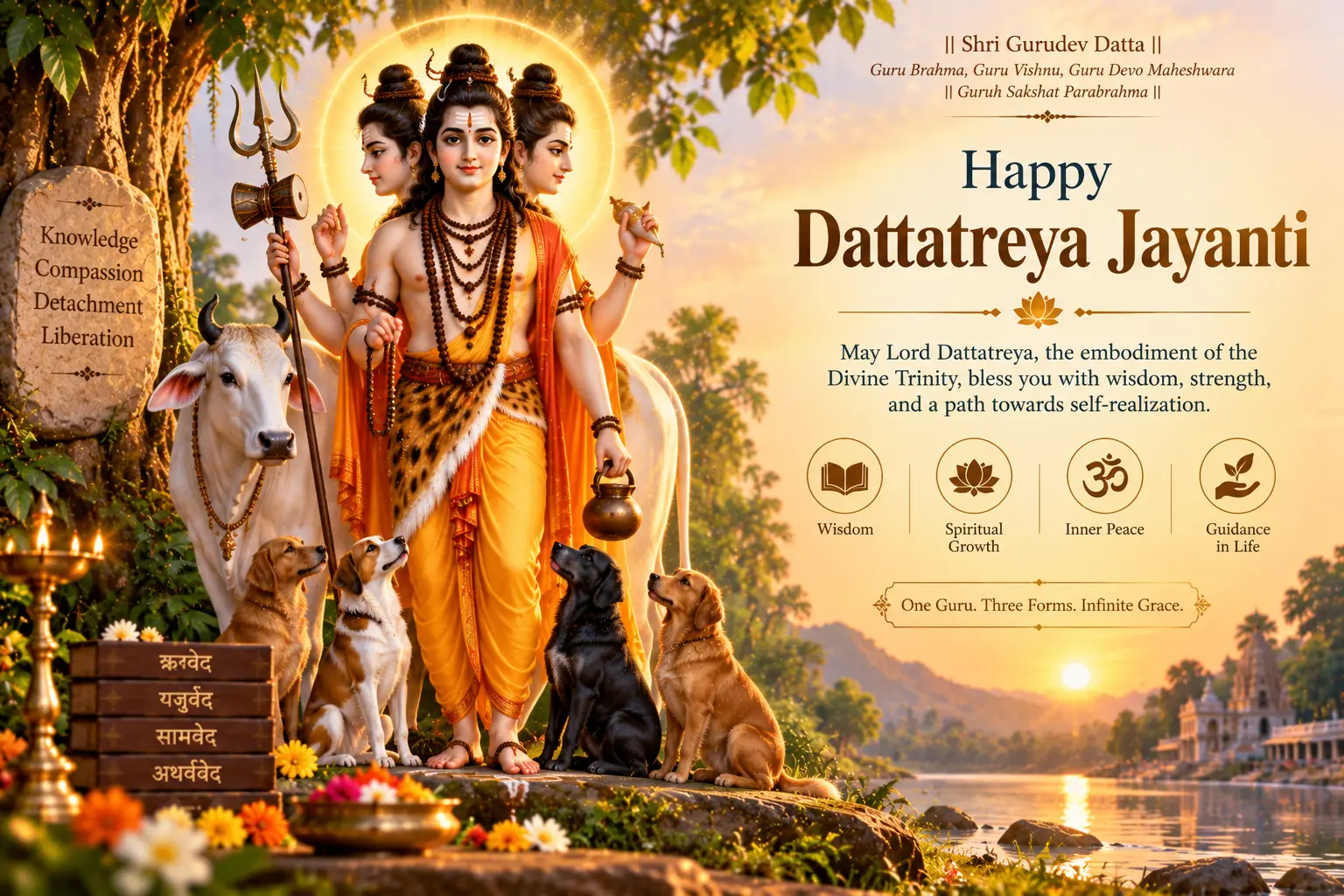
Dattatreya Jayanti
Dattatreya Jayanti, observed with profound esoteric reverence, ascetic contemplation, and devotional splendor across India, celebrates the auspicious divine advent of Lord Sri Dattatreya—the unified, primordial incarnation of the Hindu Supreme Trinity (Brahma, Vishnu, and Shiva). Occurring on the full moon day (Purnima tithi) of the sacred month of Margashirsha (November–December) under the radiant celestial influence of the Mrigashirsha nakshatra, this sacred festival commemorates the transcendental moment when the supreme archetypes of Creation (Brahma), Preservation (Vishnu), and Dissolution (Shiva) merged harmoniously into a singular transcendental form. Revering Dattatreya as the Adi Guru (the Primordial World Teacher), the Avadhuta of supreme renunciation, and the lord of all yogic wisdom, seekers celebrate this holy day to awaken inner discrimination, transcend the duality of earthly existence, and attain direct spiritual illumination.
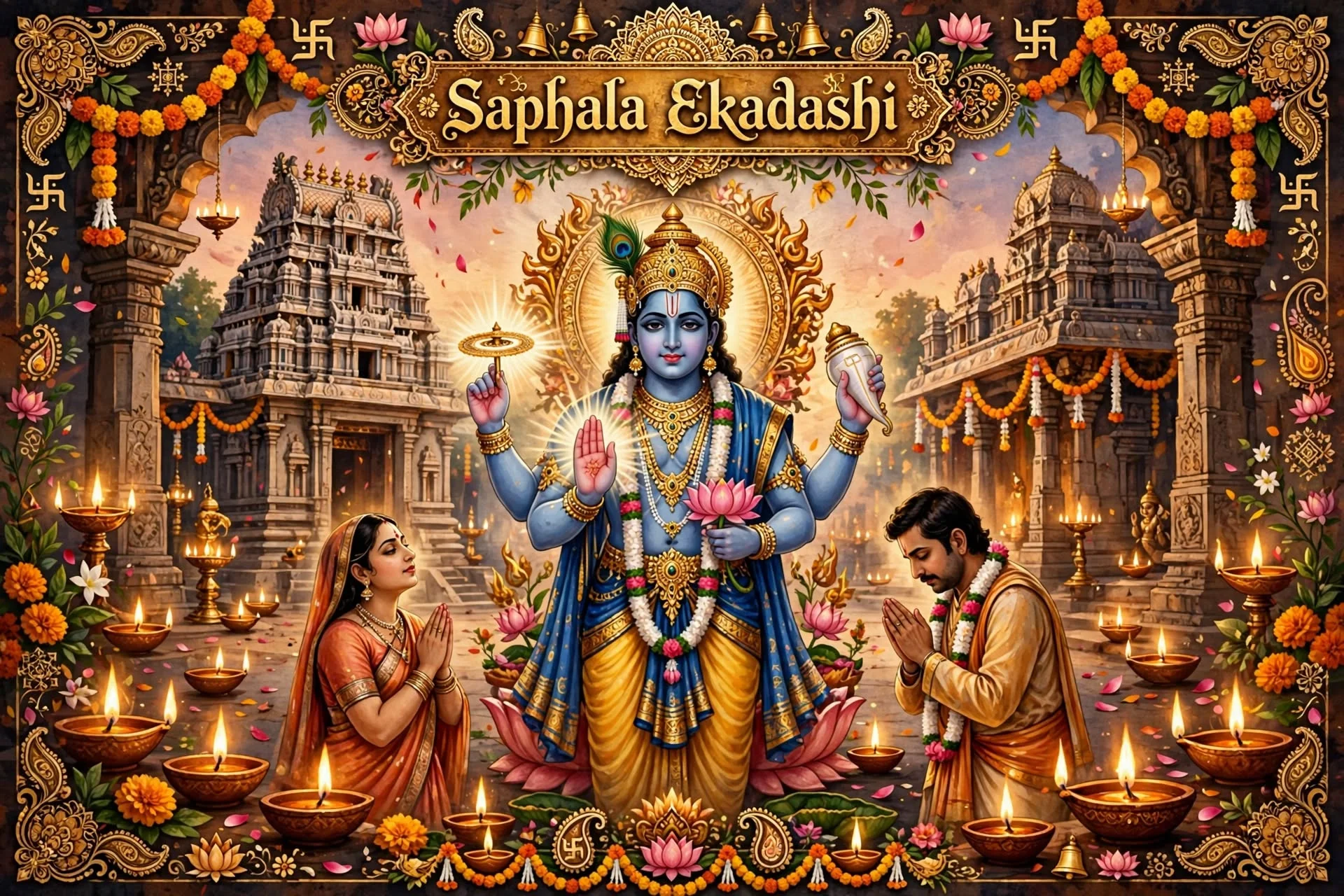
Saphala Ekadashi Vrat
Saphala Ekadashi, also known as Safala Ekadashi, is an important Hindu fasting day dedicated to Lord Vishnu. It is observed on the Ekadashi Tithi of Krishna Paksha in the month of Pausha according to the Purnimanta calendar. In the Amanta calendar, it falls in the Krishna Paksha of Margashirsha.
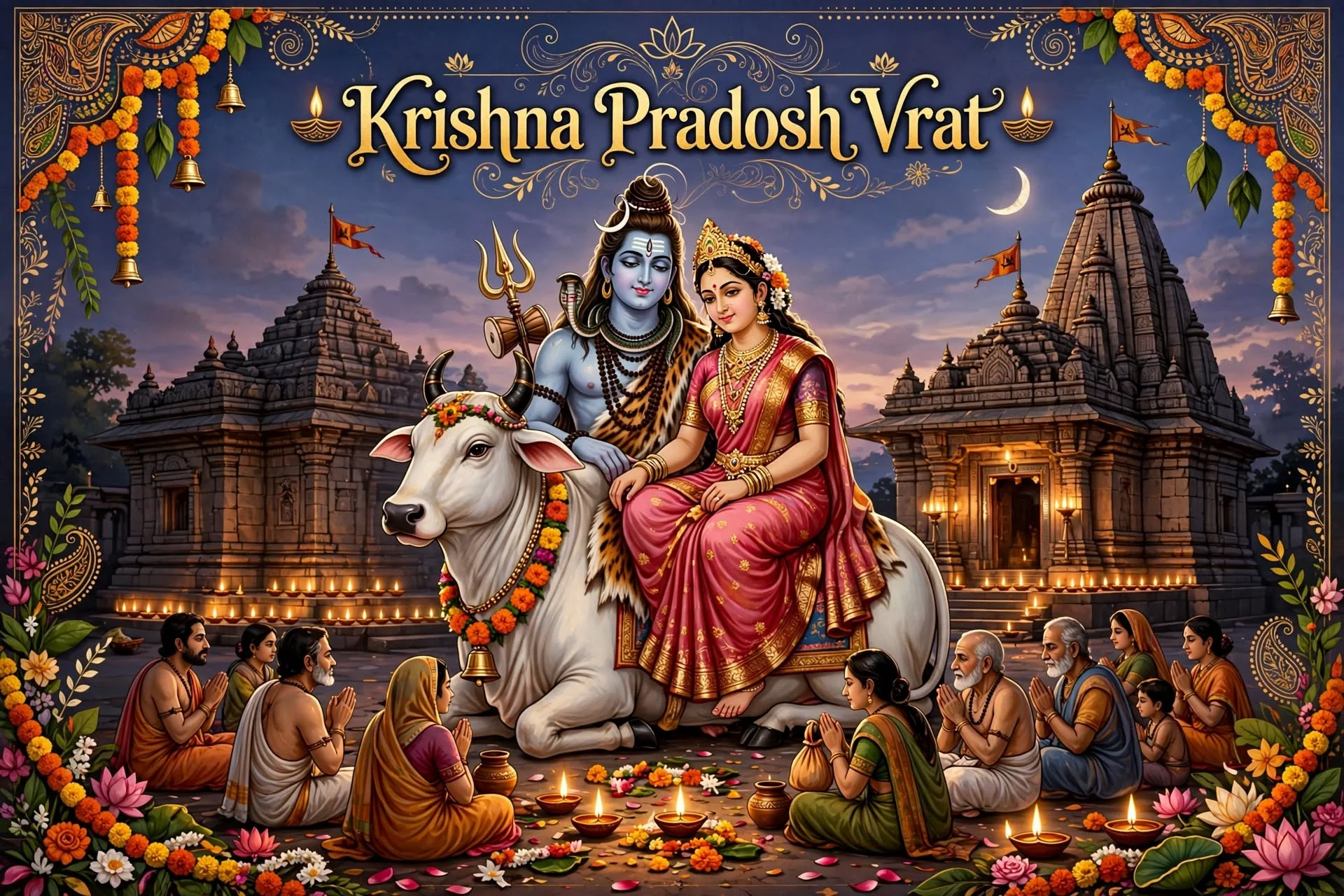
Krishna Pradosh Vrat
Masik Shivaratri is a monthly Hindu observance dedicated to Lord Shiva. It is observed on the Chaturdashi Tithi of Krishna Paksha, the fourteenth lunar day during the waning phase of the Moon. Devotees worship Lord Shiva with faith, observe a fast and perform night-time prayers to seek spiritual strength, peace and divine blessings.
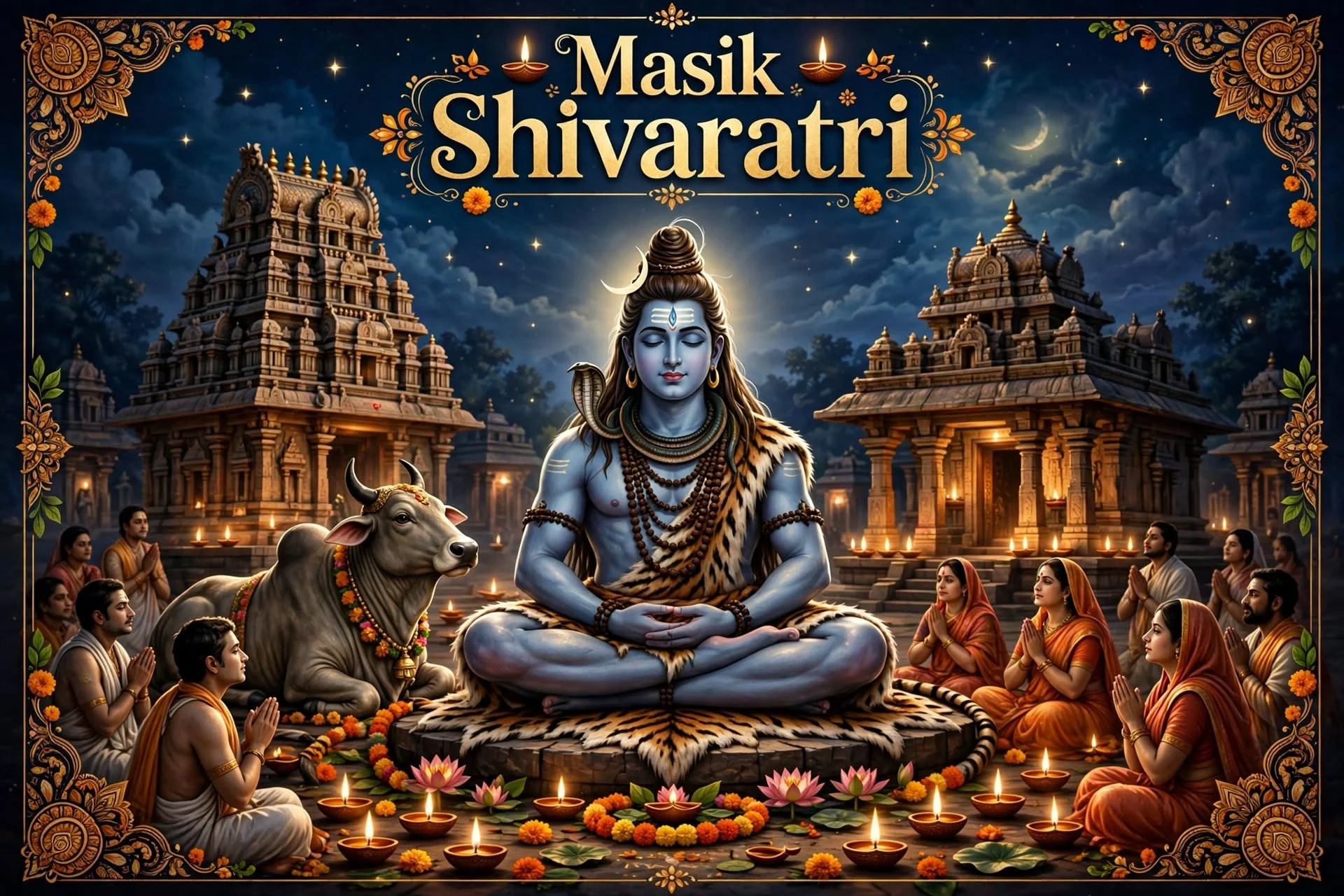
Masik Shivaratri
Masik Shivaratri, also known as Monthly Shivaratri or Masa Shivaratri, is a sacred Hindu observance dedicated to Lord Shiva. It is observed every lunar month on Krishna Paksha Chaturdashi, the fourteenth lunar day of the waning fortnight. Devotees worship Lord Shiva and Goddess Parvati, observe a vrat, perform Shiva Lingam Abhishek, chant sacred mantras and remain engaged in prayer during the night.
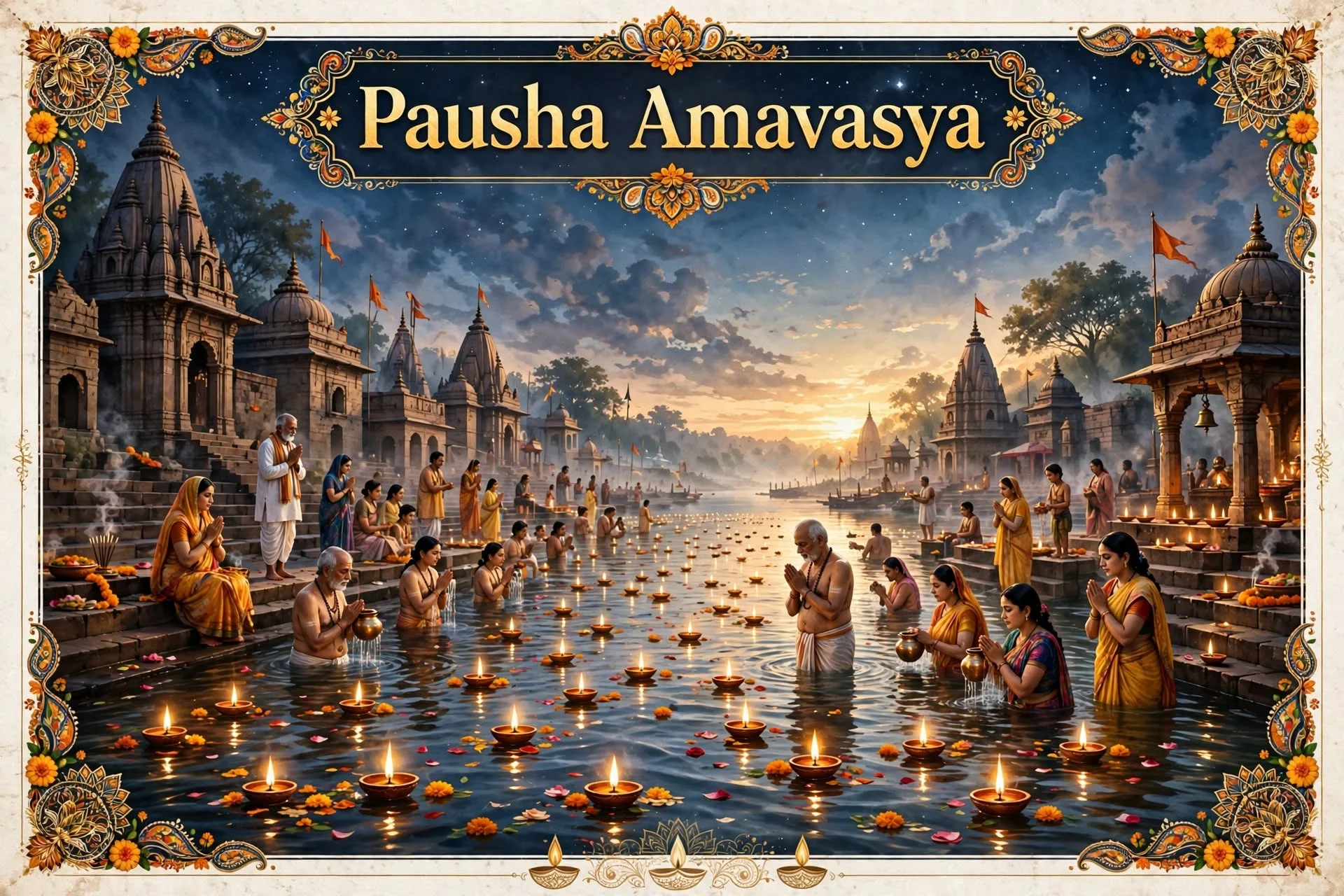
Pausha Amavasya
Pausha Amavasya is an important Hindu observance dedicated to remembering and honouring departed ancestors, known as Pitru. It falls on the Amavasya Tithi, or new-moon day, of the Hindu lunar month of Pausha. Devotees observe this day through sacred bathing, Pitru Tarpan, Shraddha, prayers, charity and acts of service. It is regarded as an appropriate occasion to express gratitude towards ancestors and seek their blessings for the wellbeing of the family.
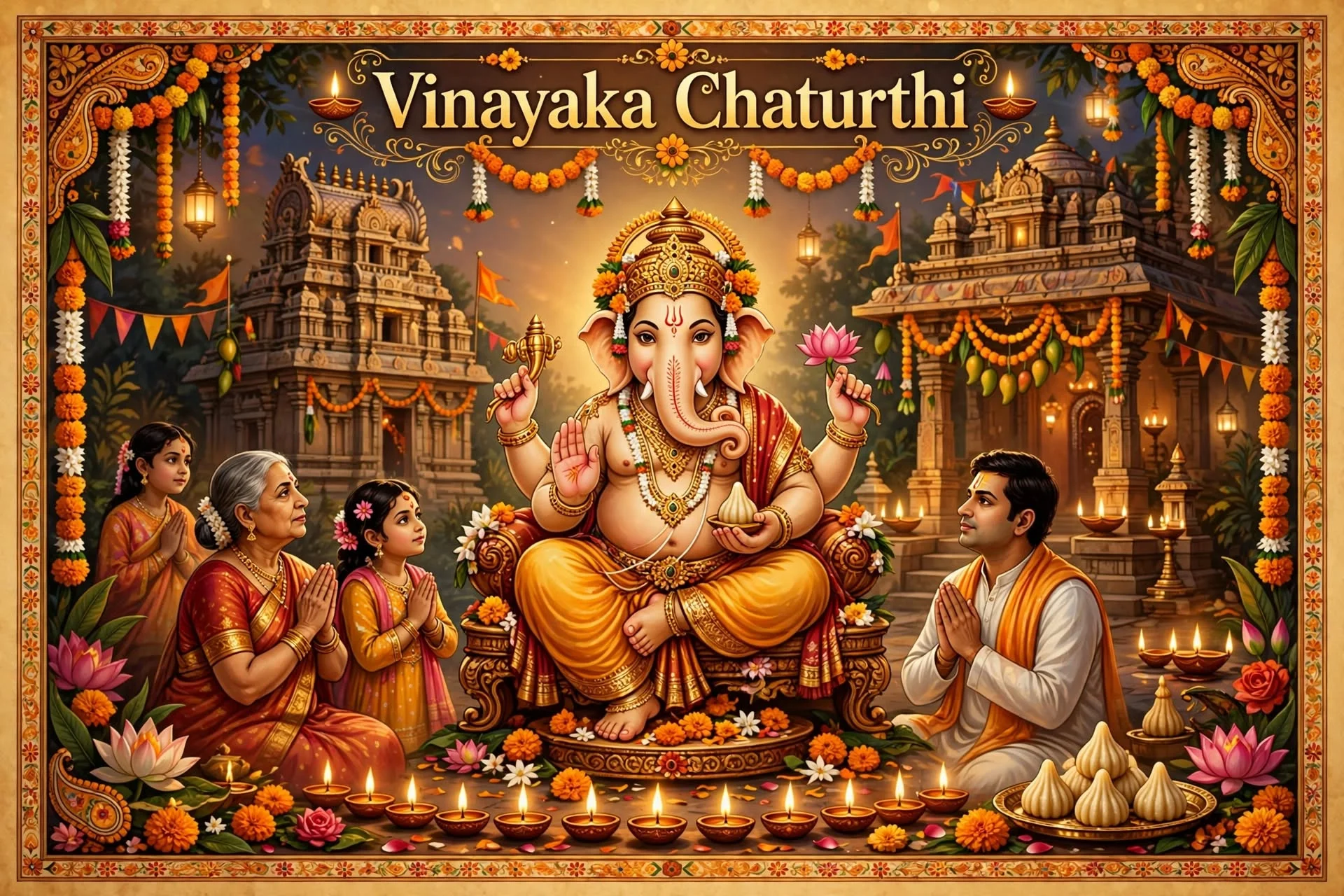
Vinayaka Chaturthi
Vinayaka Chaturthi is a Hindu religious observance dedicated to Lord Ganesha, the remover of obstacles, the deity of wisdom, knowledge and auspicious beginnings. It is observed on Shukla Paksha Chaturthi, the fourth lunar day of the waxing fortnight, in each Hindu lunar month. Devotees worship Lord Ganesha through prayers, fasting, mantra chanting, offerings and meditation to seek his blessings for success, prosperity, wisdom and the removal of difficulties.
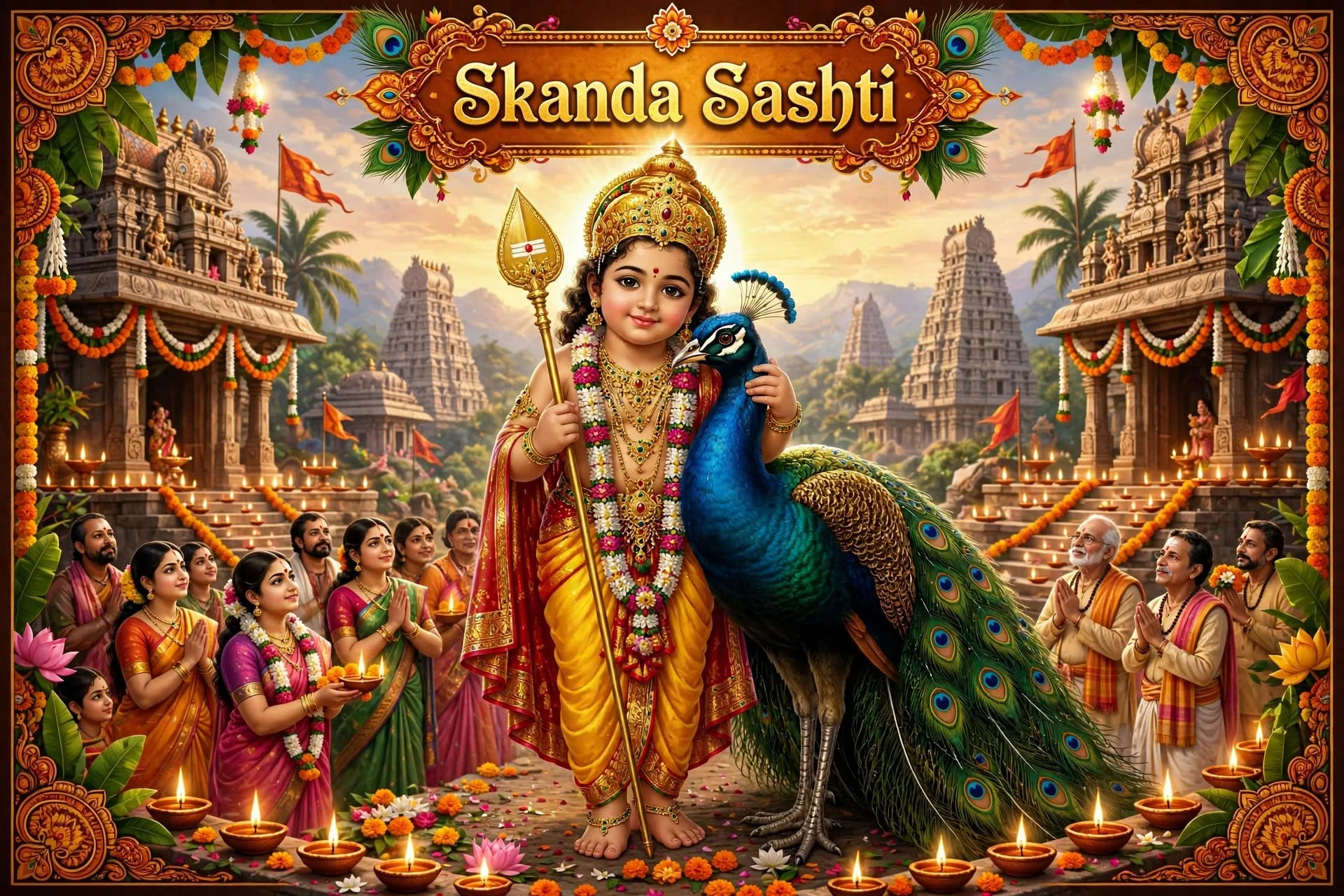
Skanda Sashti
Skanda Sashti, also known as Kanda Sashti or Skanda Shashthi, is an important Hindu festival dedicated to Lord Skanda, who is worshipped as Murugan, Kartikeya, Subramanya, Shanmukha and Kumara. The festival commemorates the victory of Lord Murugan over the demon Surapadman and the restoration of peace and righteousness. It is especially celebrated by devotees in Tamil Nadu and Tamil communities around the world.
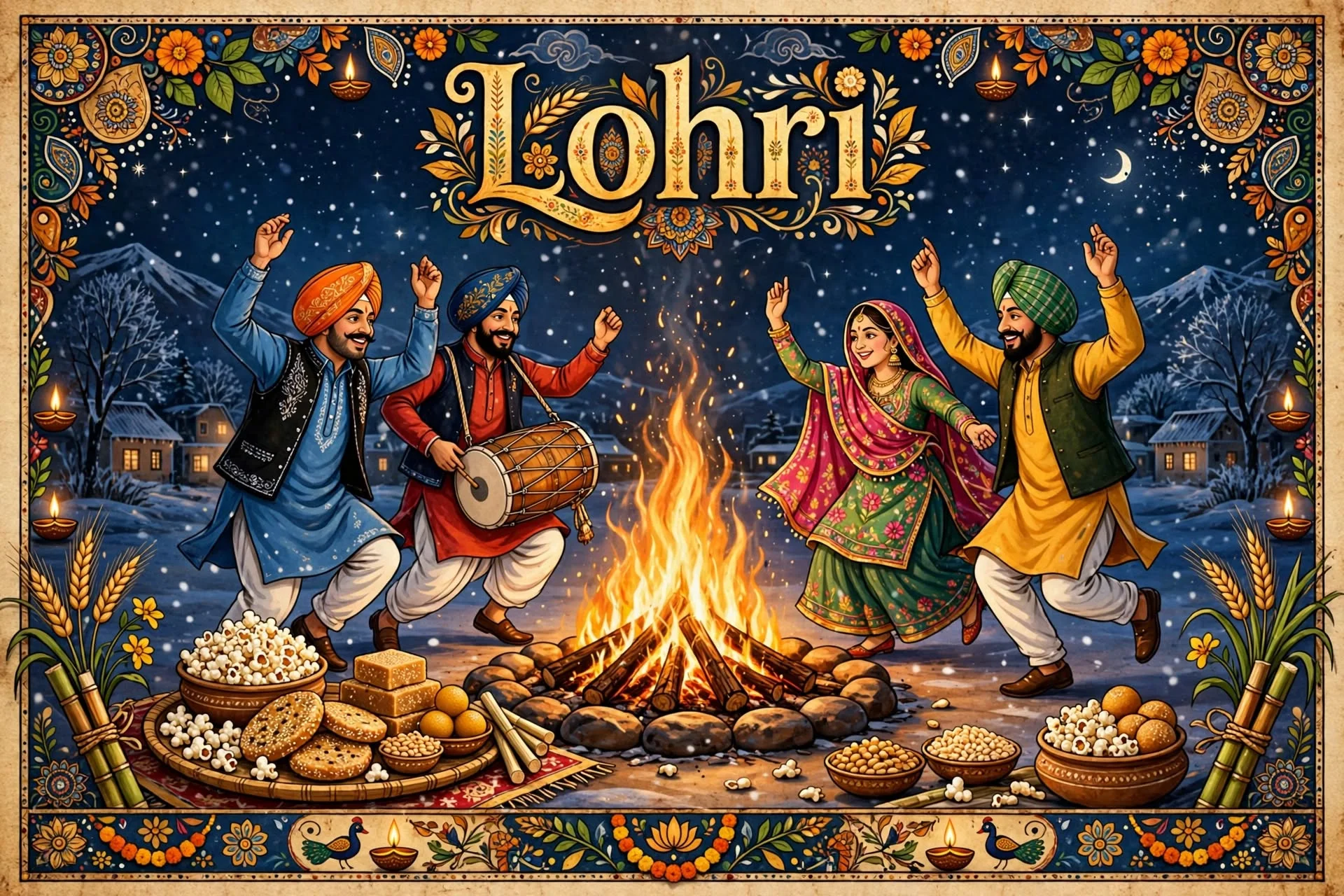
Lohri
Lohri is a popular winter folk festival celebrated with great enthusiasm in Punjab and other parts of northern India. It is especially associated with the Punjabi community and is observed by people of different religious backgrounds as a celebration of warmth, harvest, family, and community life.