




Mokshada Ekadashi, observed on the Shukla Paksha Ekadashi (the eleventh lunar day of the waxing moon) in the sacred winter month of Margashirsha (Agrahayana), is one of the most spiritually venerated and soteriologically potent fasting days in Sanatana Dharma. As its Sanskrit name unequivocally proclaims—'Mokshada', meaning 'the bestower of ultimate liberation (Moksha)'—this holy vrata possesses the extraordinary capacity to dissolve mountains of accumulated karmic transgressions, deliver departed ancestral souls from torment in lower realms (Naraka), and grant unalloyed devotion to Lord Sri Damodara-Krishna. Celebrated with intense ascetic discipline, scriptural recitation, and uninterrupted contemplation across India and Nepal, Mokshada Ekadashi holds supreme significance in both Smarta and Vaishnava traditions as an unshakeable bridge from the ocean of mortal sorrow to the eternal tranquility of Vaikuntha.
Mokshada Ekadashi 2026: Date, Puja Timings, Rituals & Stories
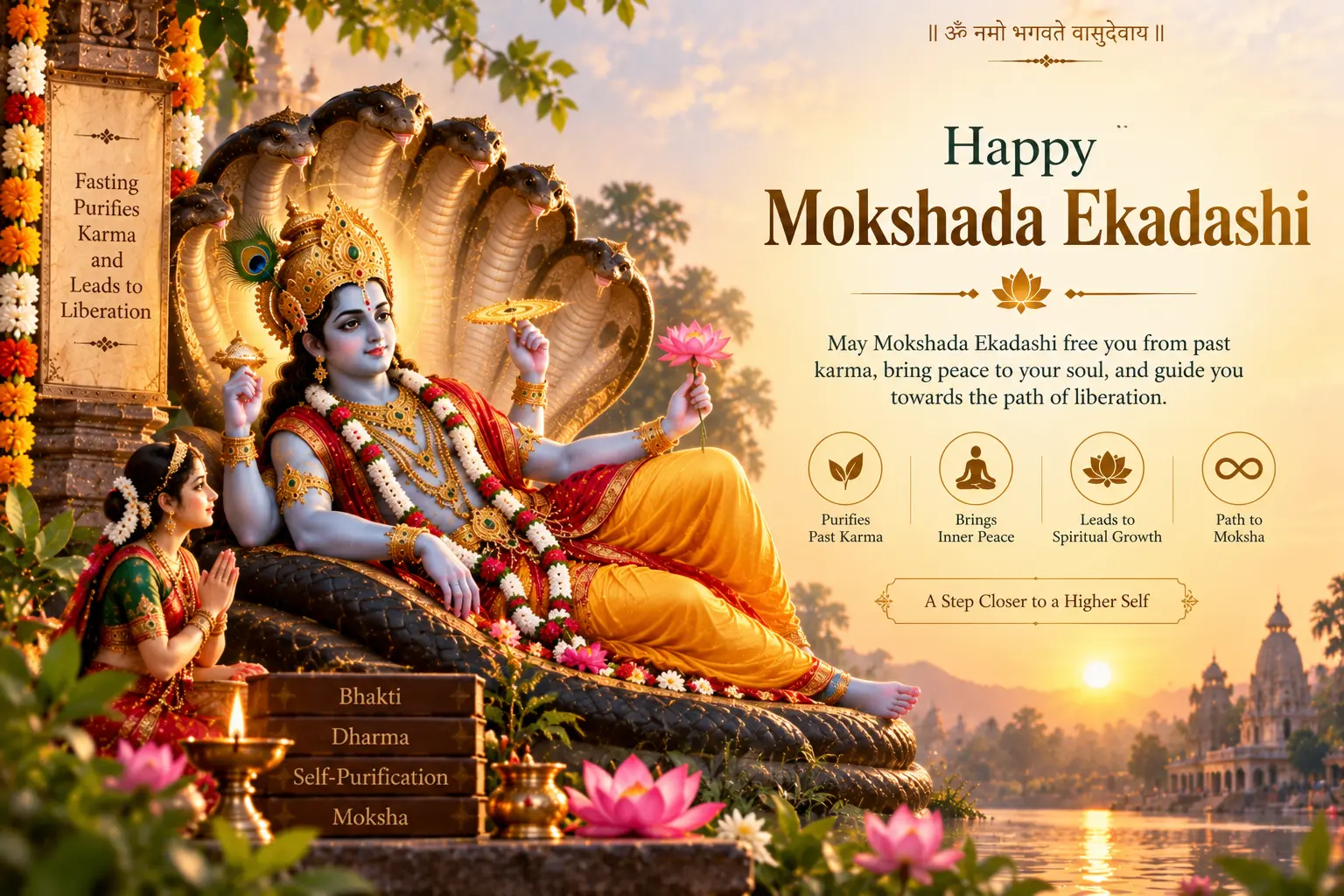
Mokshada Ekadashi Timings & Panchang
Important festival dates and auspicious timings
07:09 am
05:28 pm
Sunday, 20 Dec 2026
10:09 pm – 08:14 pm
Mokshada Ekadashi
The divine scriptural origin and transcendental glory of Mokshada Ekadashi are chronicled in the Uttara Khanda of the Padma Purana and the Brahmanda Purana through a sacred dialogue between Lord Sri Krishna and King Yudhishthira. In response to Yudhishthira's humble inquiry regarding the glories of Margashirsha Shukla Ekadashi, Bhagavan Krishna narrated the touching historical legend of King Vaikhanasa, a saintly monarch who ruled the prosperous city of Champakanagar. Despite living a life of virtue, King Vaikhanasa was tormented by vivid nocturnal visions in which he beheld his deceased father suffering excruciating agony in the hellish planetary systems due to past unrepented sinful deeds. Distressed by his inability to directly deliver his beloved sire, King Vaikhanasa sought the counsel of the omniscient hermit Sage Parvata. The enlightened sage revealed that only the complete transference of the spiritual merits of observing the upcoming Mokshada Ekadashi vrata could shatter the deceased father's hellish fetters and grant him ascension to heavenly realms.
Following the precise instructions of Sage Parvata, King Vaikhanasa, along with his royal queen, children, and subjects, observed the Mokshada Ekadashi vrata with flawless devotional rigor, complete fasting, and loving contemplation of Lord Vishnu. Upon the successful conclusion of the fast on Dwadashi, the king solemnly transferred the accumulated merit (Punya) to his father. Instantaneously, the torment ceased, and the father appeared in the celestial skies adorned with divine golden garlands and silk garments, showering heartfelt benedictions upon his dutiful son before journeying triumphantly to Vaikuntha. This legendary event established Mokshada Ekadashi as the supreme spiritual sanctuary for filial piety, ancestral redemption, and self-purification.
Why is Mokshada Ekadashi Celebrated?
Mokshada Ekadashi is celebrated on Margashirsha Shukla Ekadashi to invoke the supreme grace of Lord Sri Damodara-Vishnu for the attainment of spiritual liberation and the destruction of karmic encumbrances.
According to the Padma Purana, it commemorates the divine deliverance of King Vaikhanasa's deceased father from the agonizing torments of Naraka through the sincere transference of the vrata's spiritual merits.
It celebrates the exact anniversary of the revelation of the Srimad Bhagavad Gita by Lord Sri Krishna to Arjuna on the battlefield of Kurukshetra, uniting the path of devotion (Bhakti) with philosophical wisdom (Jnana).
Devotees observe this sacred day to perform filial and ancestral duty, praying that all departed forefathers, known and unknown, may be liberated from lower realms and attain peace in Vaikuntha.
It provides spiritual seekers with an intensive opportunity for sensory detoxification, mental purification, and unalloyed contemplation through strict fasting, scriptural study, and continuous chanting.
- Redeeming departed ancestral souls and forefathers from karmic debts and suffering in hellish planetary realms.
- Honoring the simultaneous advent of the Srimad Bhagavad Gita as the supreme universal manual of self-realization.
- Purifying the mind, body, and consciousness from accumulated sins through rigorous Ekadashi penance and fasting.
- Attaining the divine grace of Lord Vishnu in His all-attractive form as Sri Damodara and Parthasarathi.
- Cultivating spiritual detachment (Vairagya), equanimity (Samatvam), and unconditional devotion (Ananya Bhakti).
- Stepping symbolically through the Vaikuntha Dwara to signify the soul's ultimate journey from mortality to immortality.
The Historical and Scriptural Chronicle of Mokshada Ekadashi: The Legend of King Vaikhanasa and Sage Parvata
Yudhishthira's Inquiry and Lord Krishna's Divine Narration
In the golden pavilion of Indraprastha, King Yudhishthira, the personification of righteousness, approached Lord Sri Krishna with deep reverence, bowing at His lotus feet. 'O Janardana! O Master of the Universe!' Yudhishthira prayed. 'Kindly narrate to me the name, rituals, and transcendental glories of the Ekadashi that occurs during the waxing fortnight of the month of Margashirsha. Which presiding deity is worshipped on this day, and what specific spiritual benefit does a devotee acquire by observing its vows?'
Bhagavan Sri Krishna smiled with boundless grace and replied: 'O pious King! The Ekadashi of Margashirsha Shukla Paksha is renowned throughout the three worlds as Mokshada Ekadashi. It is infinitely dear to Me, for it destroys all sins just as a blazing fire consumes a dry forest. Merely listening to the transcendental history of this vrata purifies a seeker of the guilt of severe transgressions. Listen attentively, O son of Pandu, to the sacred historical narrative that I shall now unfold before you.'
The Anguish of King Vaikhanasa and the Nocturnal Vision
In ancient eras, there ruled a glorious and righteous monarch named Vaikhanasa over the prosperous city of Champakanagar. King Vaikhanasa treated his subjects as his own beloved children, governing strictly according to Vedic principles, honoring holy sages, and ensuring justice throughout his realm. However, one fateful night, the king experienced a harrowing nightmare that shattered his inner tranquility. In the vision, he beheld his deceased father trapped in the subterranean fires of Naraka, chained in heavy iron shackles, weeping bitterly, and crying out: 'O my son Vaikhanasa! Deliver me, deliver me from this terrible ocean of suffering!'
Awakening with his heart pounding and tears coursing down his face, King Vaikhanasa was plunged into overwhelming sorrow. Neither royal luxuries nor delectable meals brought him any comfort. He addressed his royal assembly of learned brahmanas and ministers: 'O venerable preceptors! Of what use is my sovereignty, my vast wealth, and my royal army if my own father is burning in the fires of hell? A son who fails to redeem his parents from suffering is a curse upon the earth. Tell me, O wise ones, what penance can I undertake to rescue my father?'
Metaphysical Wisdom: The Dissolution of Hereditary Karma, Sensory Sublimation, and the Alchemy of Moksha
The Concept of Karmic Inheritance and Filial Redemption
In Vedic metaphysics, the relationship between parents and offspring is not merely biological; it is a profound spiritual continuum known as the Pitru Rina (ancestral debt). The soul does not exist in isolation; actions, vibrations, and unfulfilled desires create subtle energetic cords that bind generations together. When an ancestor suffers due to unexhausted negative karmic impressions (Samskaras), their distress reflects as energetic blockages, unexplained domestic discord, and spiritual stagnation in the lives of their living descendants.
Mokshada Ekadashi demonstrates the sublime spiritual science of transferring Punya (spiritual merit). Just as monetary wealth can be wired across continents to settle an earthly debt, the spiritual energy generated through intense austerity, mantra japa, and divine surrender can be consciously directed across cosmic dimensions to liberate a suffering soul. The vrata exemplifies the peak of Sanatana Dharma's filial piety: love that transcends the grave, offering salvation to those who gave us life.
The Convergence with Gita Jayanti: Knowledge as True Liberation
The simultaneous occurrence of Mokshada Ekadashi and Gita Jayanti reveals a profound philosophical truth: fasting without spiritual wisdom is mere bodily starvation, and philosophical study without sensory discipline is mere intellectual gymnastics. Moksha (liberation) is not a physical geographical destination; it is the destruction of Moha (delusion). The word 'Moksha' is derived from the root 'Much', meaning 'to release' or 'to liberate from bondage'.
On Mokshada Ekadashi, while the physical body fasts from food grains to subdue the unruly senses, the intellect feasts upon the ambrosial verses of the Bhagavad Gita. By contemplating Sri Krishna's teachings on the eternal immortality of the Atman, the mechanics of Karma Yoga, and the supreme refuge of Sharanagati, the seeker cuts through the primal illusion of identifying with the perishable physical body. True Mokshada occurs when the light of the Gita dawns within the cave of the spiritual heart.
The Esoteric Symbolism of Lord Damodara
Ritual Protocols: Fasting Observances, Vaikuntha Dwara Puja, and Night Vigil
The Three-Day Observance Framework (Dashami, Ekadashi, Dwadashi)
A complete Ekadashi observance spans three consecutive days. On Dashami (the tenth day), devotees consume a single simple sattvic meal before sunset, avoiding heavy spices, bell metal utensils, and sensual stimulation, thus preparing the body for the austerity of the morrow. On Ekadashi, the devotee wakes before dawn during Brahma Muhurta, undertakes a purifying bath, and takes the solemn Sankalpa of complete fasting.
Depending upon physical constitution, the fast is observed as Nirjala (without water), Sajala (drinking only water and milk), or Phalahari (consuming fresh fruits, nuts, and sago). Throughout the day, the mind is anchored in scriptural study and japa. On Dwadashi morning, after completing morning worship and offering food to brahmanas, the fast is broken during the specific Parana muhurta, completing the sacred rite.
Worship of Lord Damodara and Sacred Tulasi Offerings
The central deity worshipped on Mokshada Ekadashi is Lord Sri Damodara-Krishna. The idol of the Lord is bathed with Panchamrita and pure Ganga water scented with fragrant sandalwood and rosewater. He is adorned in brilliant yellow silk garments (Pitambara) and adorned with fresh garlands of forest blossoms.
Supreme among all ritual offerings is the Tulasi leaf. Lord Vishnu accepts neither gold, silver, nor elaborate jewels if devoid of Tulasi; yet He readily gives Himself to one who offers a single fresh Tulasi leaf with pure love. Devotees offer 108 or 1008 Tulasi leaves inscribed with the holy name of Rama or Krishna while chanting the Vishnu Sahasranama (thousand names of Lord Vishnu).
Vaikuntha Dwara Darshan and Akhanda Night Vigil (Jagaran)
In major South Indian Vaishnava temples such as Srirangam, Tirupati, and Melkote, Mokshada Ekadashi is associated with the celestial opening of the northern portal, known as the Vaikuntha Dwara or Paramapada Vasal. Tens of thousands of pilgrims stand in queue from midnight to walk through this consecrated gateway, symbolizing the soul's triumphal entry into the supreme abode of God.
Mokshada Ekadashi Puja Vidhi (Step by Step)
- 1
Brahma Muhurta Snanam and Sankalpa
Awaken during the sacred Brahma Muhurta (roughly ninety minutes before sunrise). Cleanse the body thoroughly using pure water infused with holy Ganga jal and Tulasi leaves. Wear fresh, clean, unstitched yellow or white garments. Face east or north before the family altar, light a pure cow ghee lamp, and solemnly take the Sankalpa (sacred vow): 'O Supreme Lord Sri Damodara! On this holy Mokshada Ekadashi, I vow to observe a strict fast for Your divine pleasure and for the spiritual liberation of myself and my ancestors. Bestow Your unfailing grace upon me.'
- 2
Purification of Altar and Puja Implements (Bhumi Shuddhi)
Thoroughly clean the home mandir. Sprinkle consecrated water over yourself, the altar dais, and all ritual articles while chanting the sacred Pavamana Sukta or the purification shloka: 'Om Apavitrah Pavitro Va Sarvavastham Gato'pi Va, Yah Smaret Pundarikaksham Sa Bahyabhyantarah Shuchih'. Spread a fresh, clean yellow silk cloth over the wooden chauki.
- 3
Kalasha Sthapana and Divine Invocation
Place a pure copper, brass, or silver Kalasha filled with holy water, fragrant sandalwood paste, betel nut, and a silver coin upon the chauki. Place five mango leaves in its mouth and crown it with a husked coconut wrapped in red mauli thread. Invoke the presence of Lord Varuna, sacred rivers, and the divine Trinity into the vessel.
- 4
Mokshada Ekadashi Puja Samagri List
Altar Setup, Consecration Vessels, and Sacred Implements
- Conch shell (Dakshinavarti or blowing Shankha) and pure brass ritual bell (Ghanta)
- Pure copper, brass, or silver puja plate, tumblers, and spoon (Panchapatra and Achamani)
- Decorated wooden dais (Chauki or Bajot) and yellow silk altar cloth
- Copper or brass Kalasha, mango leaf bunch, coconut wrapped in red thread, and betel nut
- An authentic Sanskrit-vernacular edition of the Srimad Bhagavad Gita and wooden book-stand
- Idol or framed portrait of Lord Sri Damodara, Lord Krishna, or Lord Vishnu
Sacred Bathing, Fragrances, and Tilaka Ingredients
- Holy Ganga jal and clean spring water
- Panchamrita ingredients: pure cow milk, fresh curd, pure cow ghee, wild honey, and jaggery water
- Pure yellow sandalwood powder (Malayaja Chandana) and saffron (Kesar)
- Kumkum (vermilion), pure camphor (Bhimseni Kapur), and Ashtagandha paste
- Natural herbal incense sticks (Dhoop/Agarbatti) of sandalwood, guggul, or lotus
- Pure cow ghee or sesame oil with clean white cotton wicks (Vatti) for the lamps
Sacred Foliage, Floral Garlands, and Traditional Offerings
- Abundant fresh green Tulasi leaves and Tulasi Manjari (blossoms)
Mantras and Prayers for Mokshada Ekadashi
Mokshada Ekadashi Vrat Rules and Fasting Guidelines
Complete Abstinence from Food Grains and Legumes
The foundational rule of Mokshada Ekadashi is strict abstinence from all forms of cereal grains, including wheat, rice, barley, oats, corn, and all lentils and pulses. According to the Padma Purana, on Ekadashi tithi, all sins (Papapurusha) dwell within food grains; consuming grains on this day incurs heavy spiritual demerit. The fast should be maintained as Nirjala (without water), Sajala (drinking only pure water and milk), or Phalahari (consuming fresh fruits, nuts, and sago). Onions, garlic, mushrooms, and packaged food must be strictly avoided.
Sensory Control and Celibacy (Brahmacharya)
The observer of Mokshada Ekadashi must practice strict celibacy (Brahmacharya) from Dashami night until Dwadashi morning. Worldly sensual entertainment, gambling, watching television, idle gossip, criticizing others (Ninda), and anger must be consciously eliminated. The mind should be safeguarded against impure thoughts through continuous mental repetition of the Ashtakshara Mantra ('Om Namo Narayanaya').
Night-Long Vigil (Akhanda Jagaran)
Devotees should not sleep during the daytime on Ekadashi and should avoid sleeping during the sacred night. Pious seekers spend the entire night of Ekadashi awake in the company of devotees, singing devotional songs, performing kirtans, reciting the Vishnu Sahasranama, and reading the Bhagavad Gita. Staying awake in divine absorption ensures the complete fulfillment and transcendental merit of the vrata.
Timely Parana on Dwadashi Morning
The fast of Mokshada Ekadashi must be broken (Parana) on the subsequent morning of Dwadashi within the specific Parana muhurta before the Dwadashi tithi expires. Breaking the fast too early or after the muhurta elapses nullifies the spiritual fruits of the fast. Before breaking the fast, the devotee performs morning worship, feeds cows, and offers food and dakshina to pious brahmanas or spiritual seekers, concluding with the consumption of sanctified Charanamrita and a grain preparation.
Dos and Don'ts of Mokshada Ekadashi
Good Practices (Do's)
- Wake up early during Brahma Muhurta, take a purifying bath, and take a solemn vow (Sankalpa) of fasting for the pleasure of Lord Damodara.
- Abstain strictly from all grains, cereals, wheat, rice, corn, pulses, lentils, onions, garlic, and non-vegetarian foods.
- Offer fresh green Tulasi leaves, yellow flowers, fragrant sandalwood paste, and pure cow ghee lamps to Lord Vishnu.
- Read, chant, and contemplate the holy verses of the Srimad Bhagavad Gita to celebrate the auspicious Gita Jayanti.
- Stay awake during the sacred night in continuous prayer, singing kirtans, and chanting the Vishnu Sahasranama (Akhanda Jagaran).
Mokshada Ekadashi Across Regions
| Region | Local Name |
|---|---|
| South India (Tamil Nadu, Karnataka, Andhra Pradesh, Kerala) | Mokshada Ekadashi / Vaikuntha Ekadashi |
| Haryana and Kurukshetra | Mokshada Ekadashi & Gita Jayanti Mahotsav |
| Vrindavan and Mathura (Braj Region) | Mokshada Ekadashi Parva |
| Odisha (Puri Jagannath Temple) | Dhanu Ekadashi / Mokshada Ekadashi |
| Maharashtra and Gujarat | Mokshada Ekadashi Vrat |
Mokshada Ekadashi FAQs
What is the primary spiritual significance of Mokshada Ekadashi?
Mokshada Ekadashi is celebrated on Margashirsha Shukla Ekadashi to attain ultimate liberation (Moksha) from the cycle of birth and death, cleanse accumulated sins, and deliver departed ancestral souls from suffering in lower realms (Naraka) through the grace of Lord Damodara-Vishnu.
Why does Mokshada Ekadashi coincide with Gita Jayanti?
According to the Mahabharata and Padma Purana, Lord Sri Krishna delivered the immortal 700 verses of the Bhagavad Gita to Arjuna on the battlefield of Kurukshetra on this very Ekadashi tithi of Margashirsha, uniting the path of devotion with supreme philosophical wisdom.
What is the scriptural story behind the deliverance of King Vaikhanasa's father?
King Vaikhanasa was distressed by dreams of his father suffering in hell. Sage Parvata revealed that the father suffered due to past karmic neglect of his wife. The sage instructed the king to observe Mokshada Ekadashi and transfer the merits to his father. Upon doing so on Dwadashi, the father was instantly liberated and ascended to Vaikuntha.
Upcoming Festivals
View All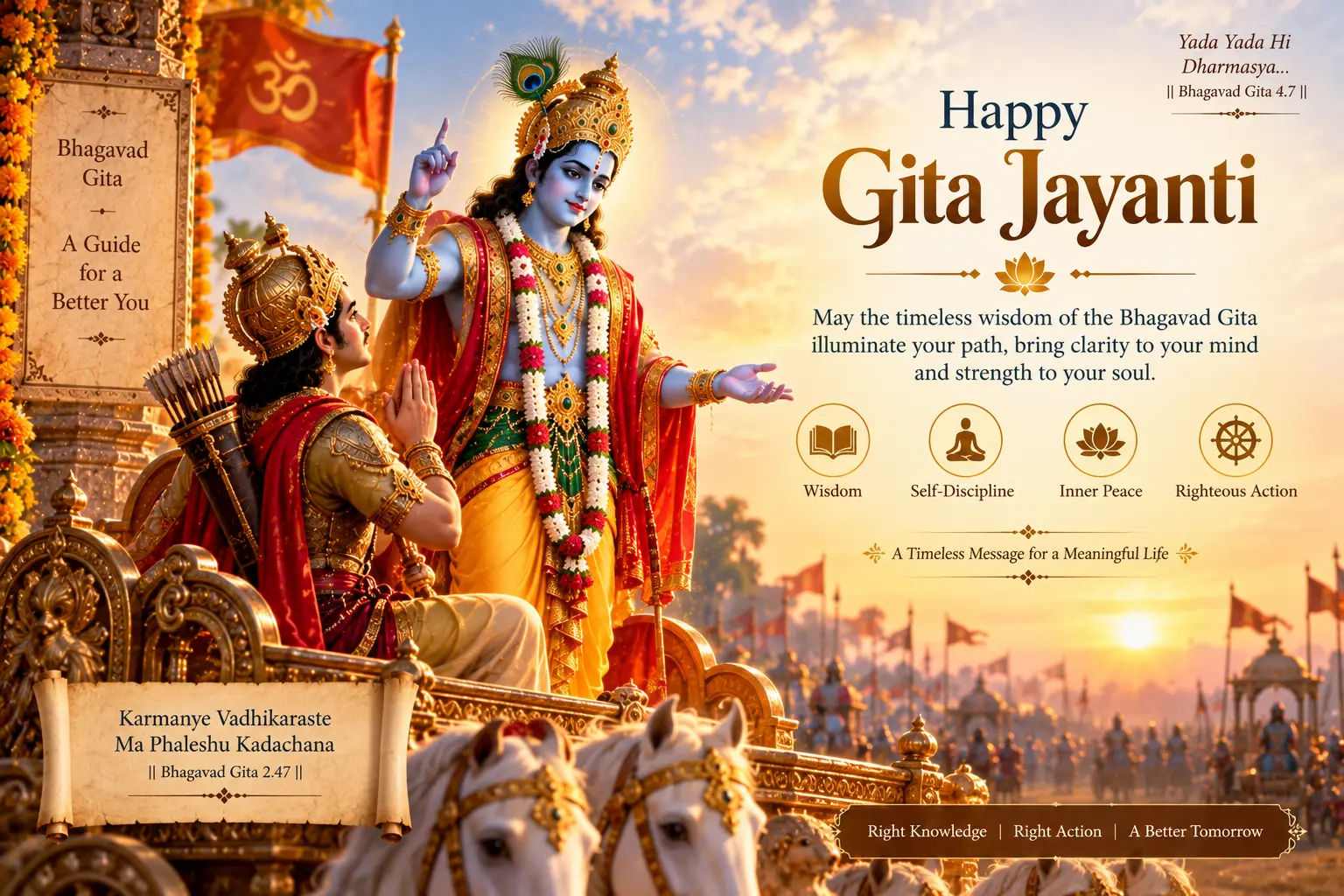
Gita Jayanti
Gita Jayanti is one of the most intellectually revered and spiritually profound festivals in Sanatana Dharma, celebrating the historic revelation of the Srimad Bhagavad Gita—the timeless song of the Supreme Personality of Godhead, Bhagavan Sri Krishna. Occurring on the auspicious Ekadashi tithi of Shukla Paksha in the holy winter month of Margashirsha (November–December), this sacred observance marks the hallowed occasion at Jyotisar in the ancient land of Kurukshetra where Sri Krishna imparted seven hundred verses of supreme spiritual wisdom to His bewildered friend and disciple, the Pandava prince Arjuna. Unlike conventional Hindu festivals that commemorate the earthly birthday or cosmic descent of deities, Gita Jayanti holds the unique distinction of celebrating the birth of a living philosophical scripture—a scripture that serves as the definitive manual for human existence, duty, self-realization, and devotion across all ages.
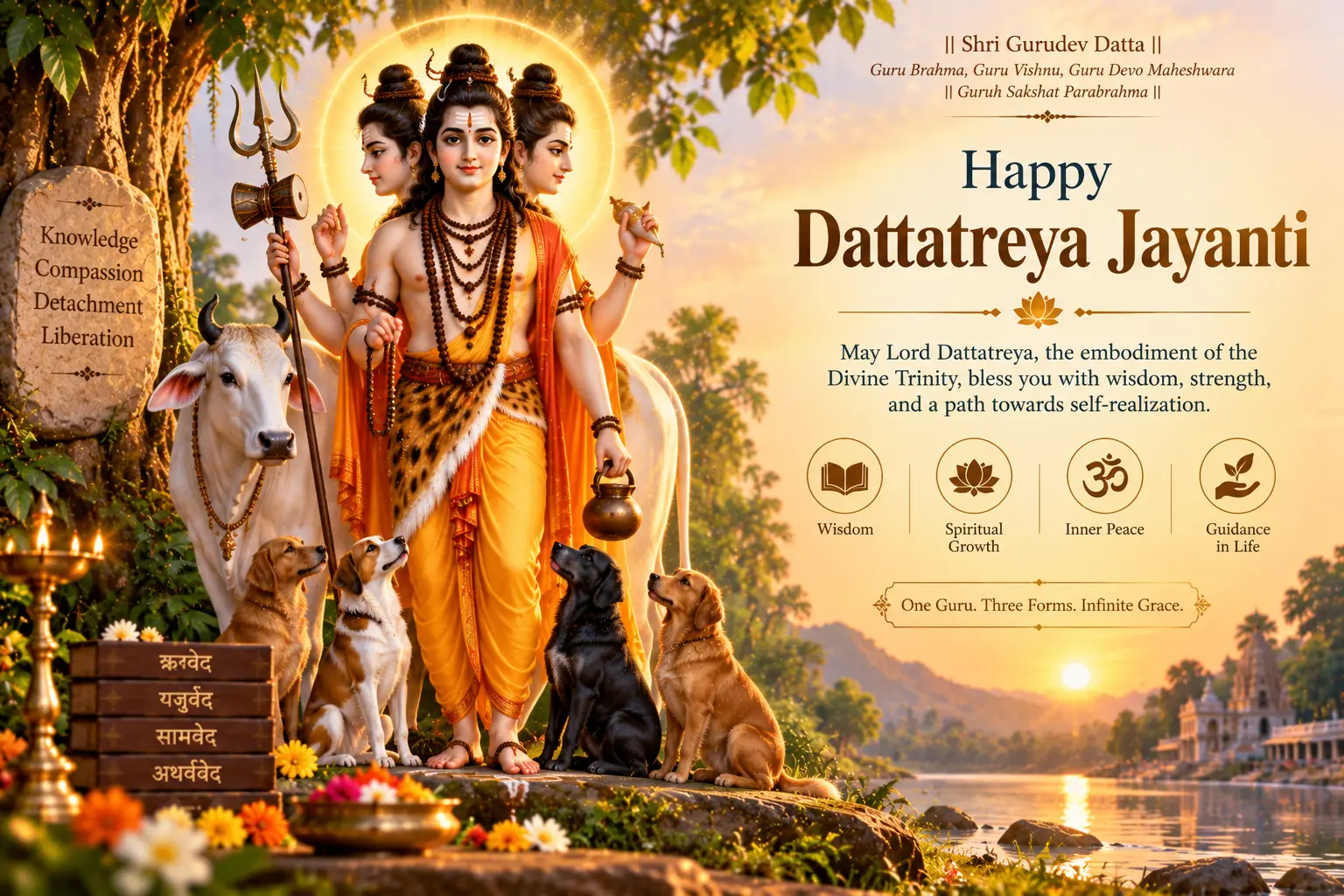
Dattatreya Jayanti
Dattatreya Jayanti, observed with profound esoteric reverence, ascetic contemplation, and devotional splendor across India, celebrates the auspicious divine advent of Lord Sri Dattatreya—the unified, primordial incarnation of the Hindu Supreme Trinity (Brahma, Vishnu, and Shiva). Occurring on the full moon day (Purnima tithi) of the sacred month of Margashirsha (November–December) under the radiant celestial influence of the Mrigashirsha nakshatra, this sacred festival commemorates the transcendental moment when the supreme archetypes of Creation (Brahma), Preservation (Vishnu), and Dissolution (Shiva) merged harmoniously into a singular transcendental form. Revering Dattatreya as the Adi Guru (the Primordial World Teacher), the Avadhuta of supreme renunciation, and the lord of all yogic wisdom, seekers celebrate this holy day to awaken inner discrimination, transcend the duality of earthly existence, and attain direct spiritual illumination.
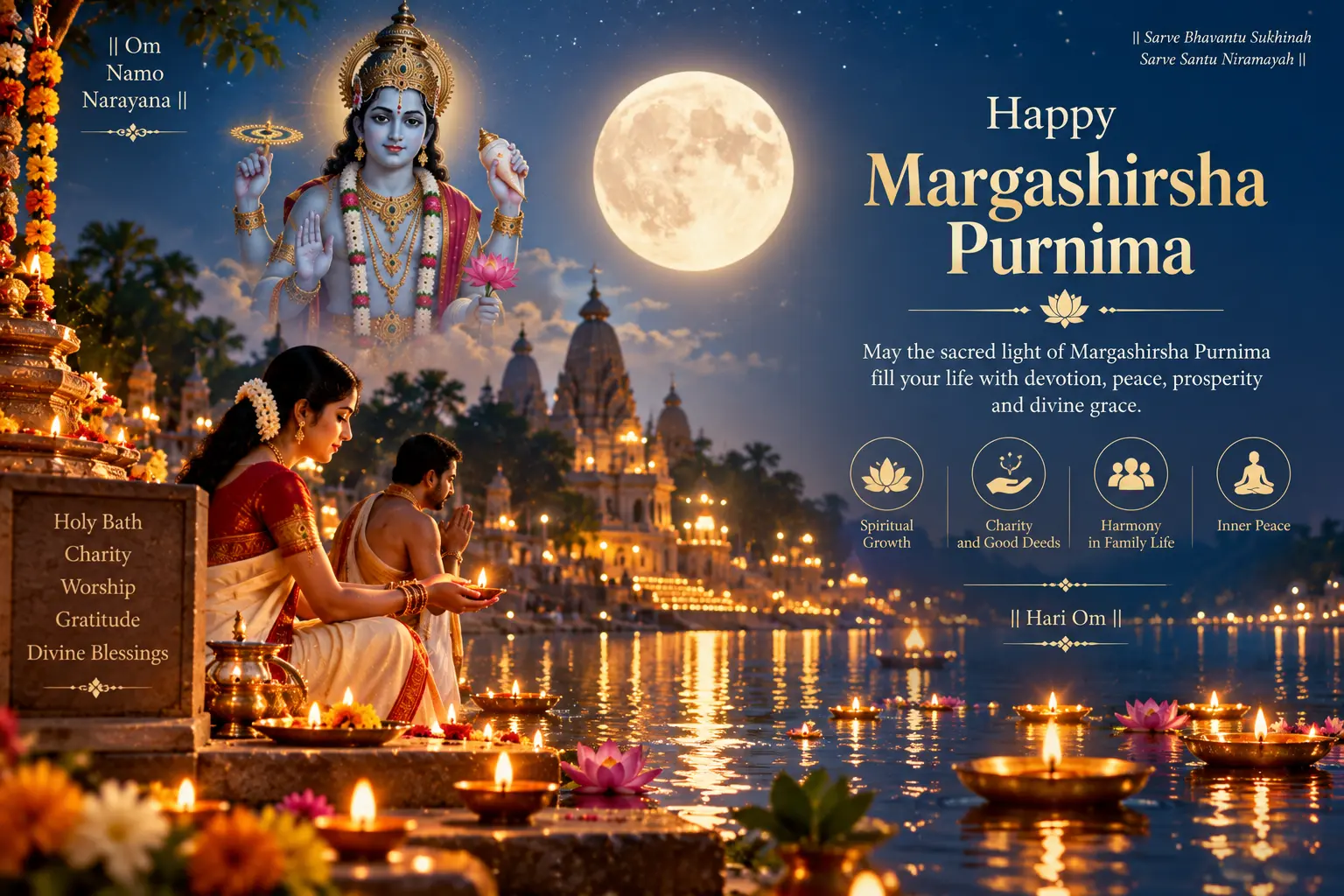
Margashirsha Purnima
Margashirsha Purnima, celebrated on the full moon day of the sacred month of Margashirsha (Agrahayana), is one of the most spiritually illuminating and astrologically auspicious full moon festivals in Sanatana Dharma. Occurring when the full moon shines in the constellation of Mrigashirsha (the celestial deer's head ruled by the planet Mars and presided over by Soma, the Moon God), this holy tithi marks the supreme spiritual culmination of the month that Lord Sri Krishna Himself declared to be His own transcendental self in the Bhagavad Gita ('Masanang Margashirsho'ham'). Popularly known in various regional cultures as Battisi Purnima, Moksha Purnima, and Korvai Deepam, this sacred day unites the worship of Lord Sri Satyanarayan, the divine advent of Lord Dattatreya, the celestial Cosmic Dance of Lord Nataraja (Arudra Darshan), and ancient river-bathing rites.
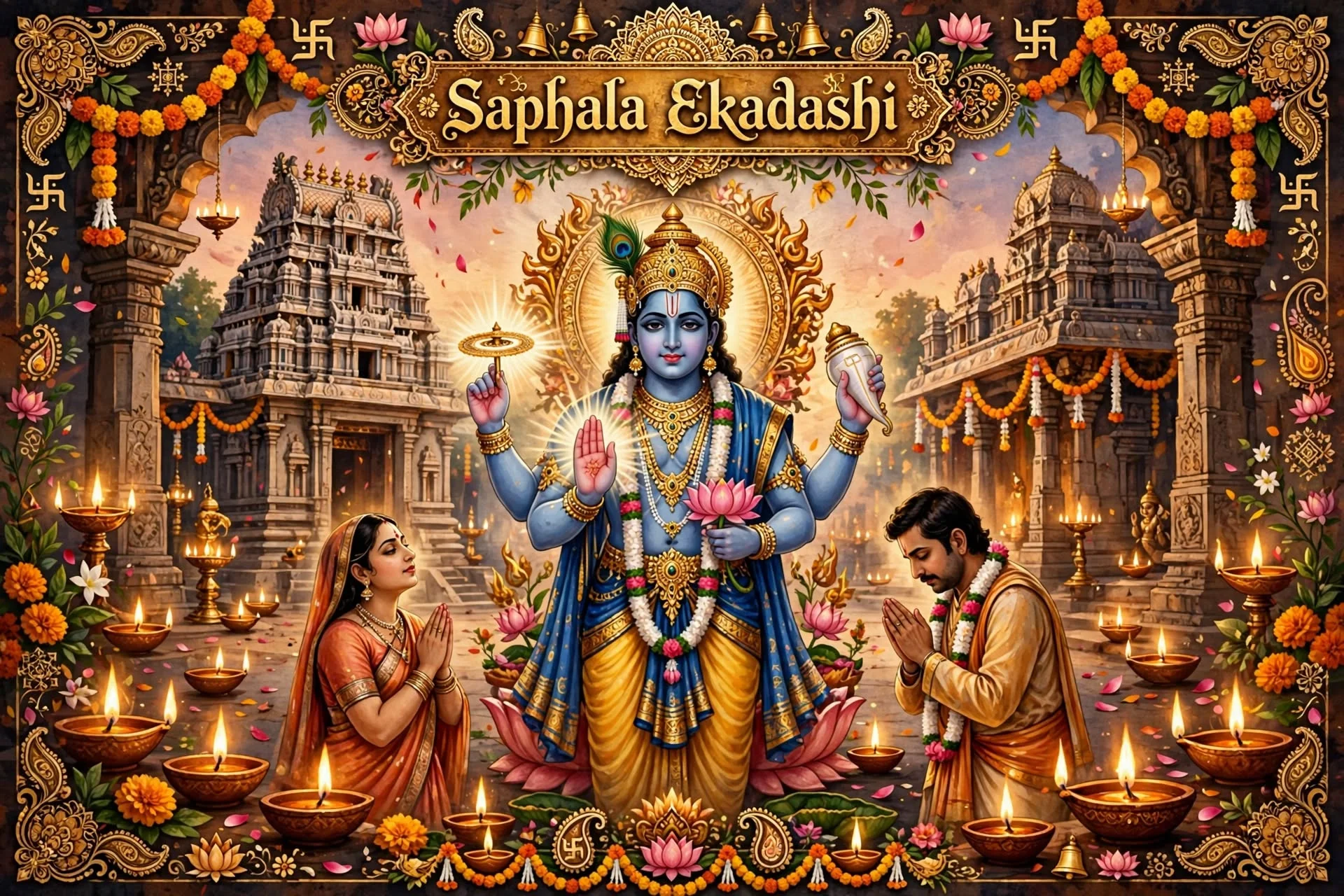
Saphala Ekadashi Vrat
Saphala Ekadashi, also known as Safala Ekadashi, is an important Hindu fasting day dedicated to Lord Vishnu. It is observed on the Ekadashi Tithi of Krishna Paksha in the month of Pausha according to the Purnimanta calendar. In the Amanta calendar, it falls in the Krishna Paksha of Margashirsha.
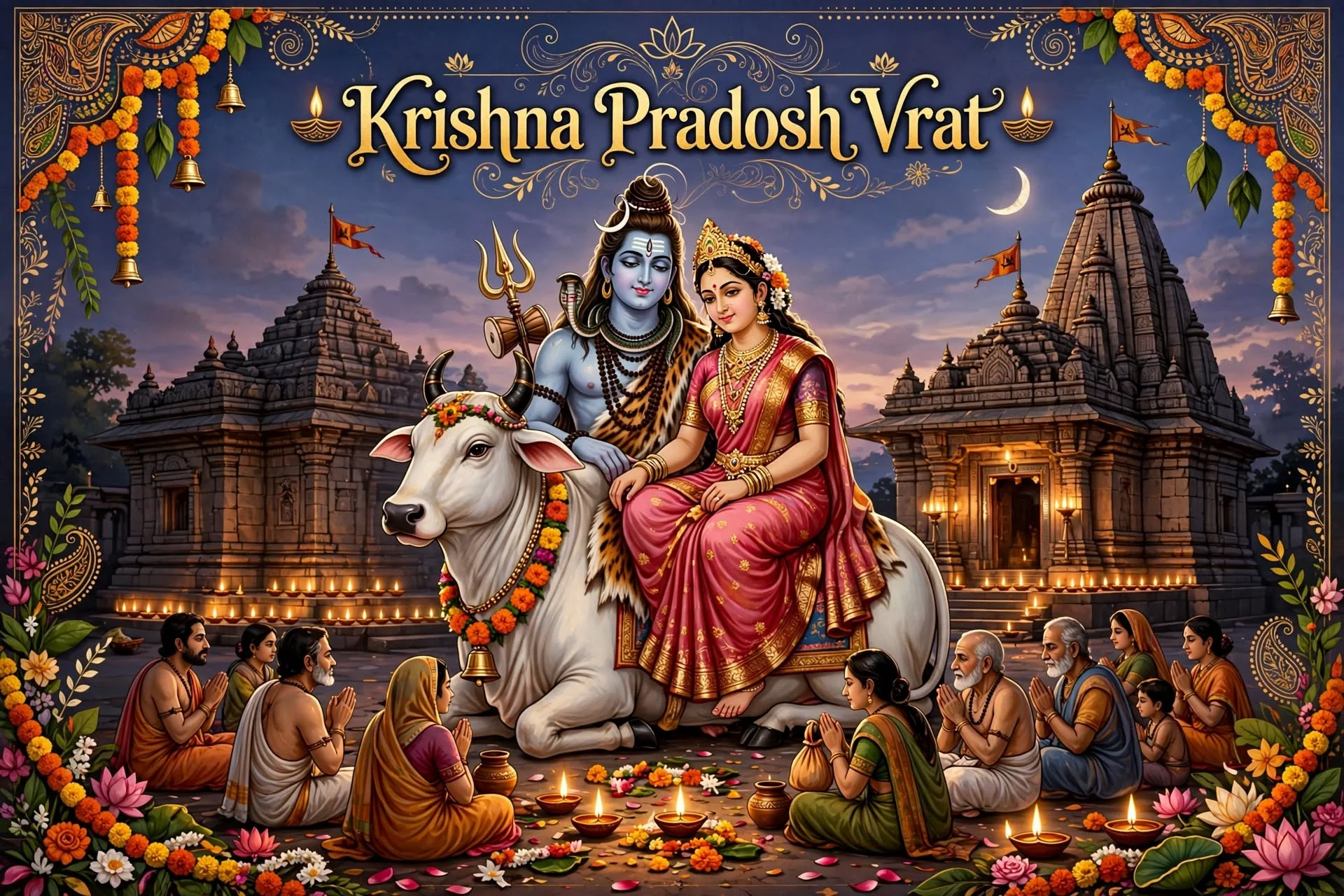
Krishna Pradosh Vrat
Masik Shivaratri is a monthly Hindu observance dedicated to Lord Shiva. It is observed on the Chaturdashi Tithi of Krishna Paksha, the fourteenth lunar day during the waning phase of the Moon. Devotees worship Lord Shiva with faith, observe a fast and perform night-time prayers to seek spiritual strength, peace and divine blessings.
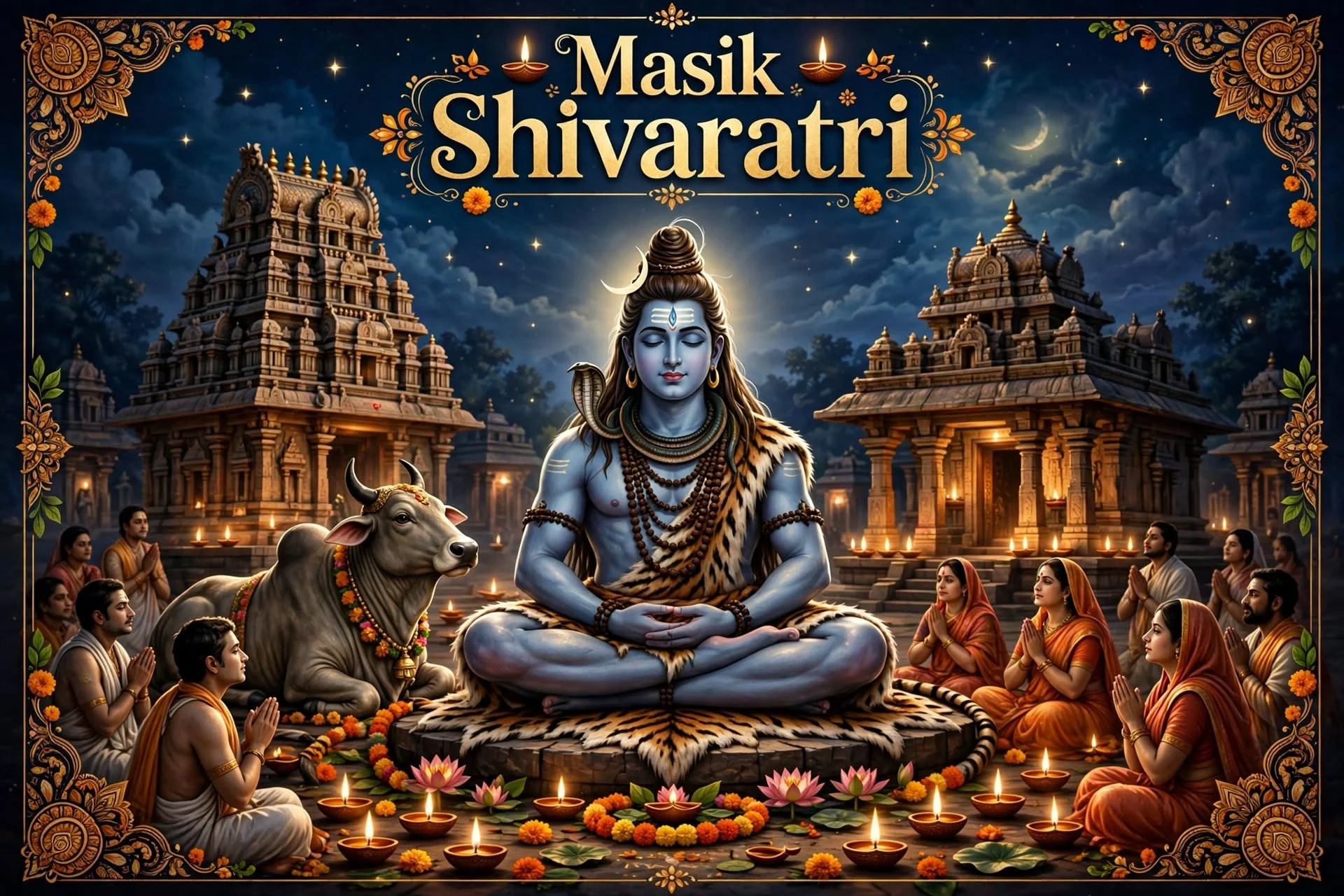
Masik Shivaratri
Masik Shivaratri, also known as Monthly Shivaratri or Masa Shivaratri, is a sacred Hindu observance dedicated to Lord Shiva. It is observed every lunar month on Krishna Paksha Chaturdashi, the fourteenth lunar day of the waning fortnight. Devotees worship Lord Shiva and Goddess Parvati, observe a vrat, perform Shiva Lingam Abhishek, chant sacred mantras and remain engaged in prayer during the night.
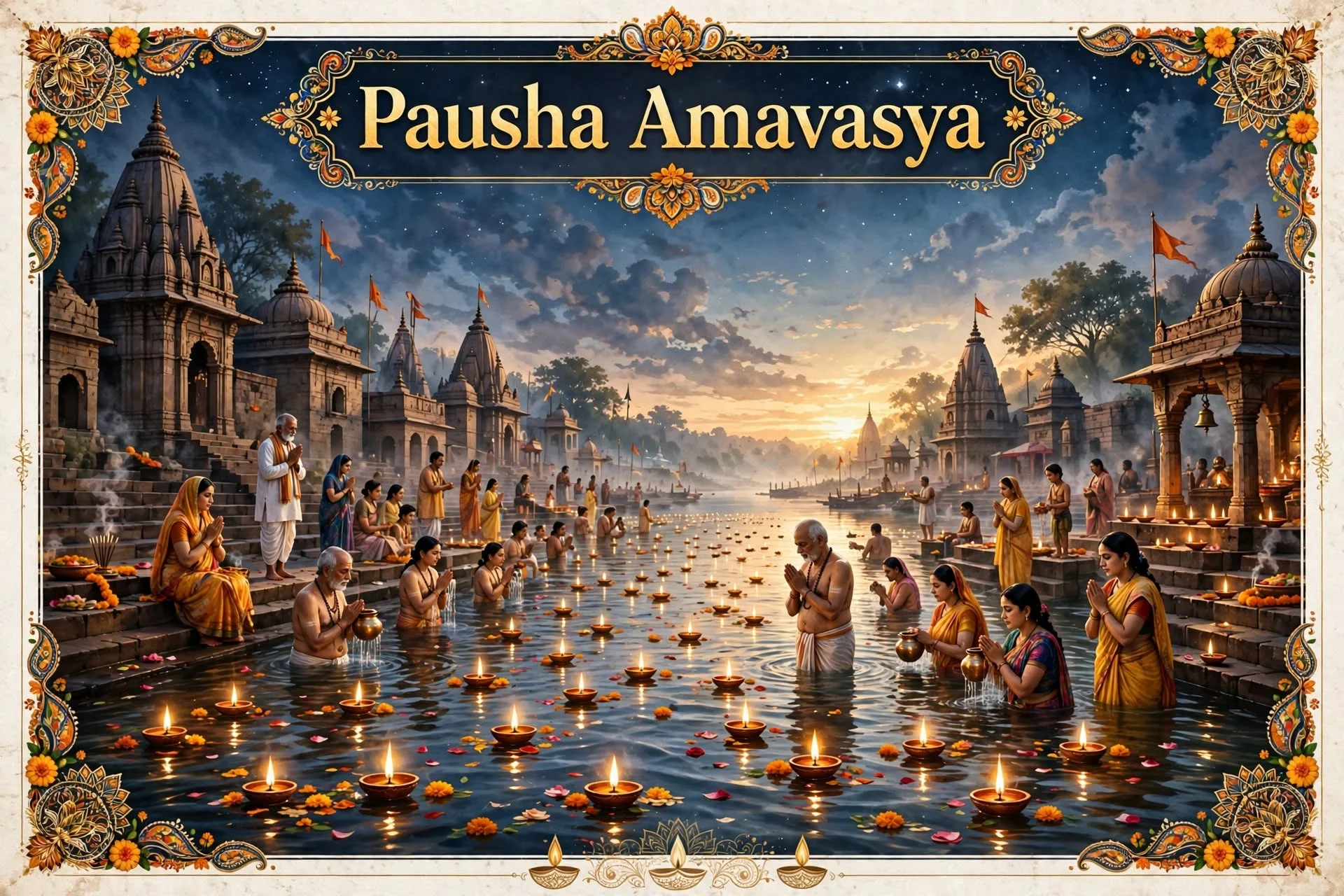
Pausha Amavasya
Pausha Amavasya is an important Hindu observance dedicated to remembering and honouring departed ancestors, known as Pitru. It falls on the Amavasya Tithi, or new-moon day, of the Hindu lunar month of Pausha. Devotees observe this day through sacred bathing, Pitru Tarpan, Shraddha, prayers, charity and acts of service. It is regarded as an appropriate occasion to express gratitude towards ancestors and seek their blessings for the wellbeing of the family.
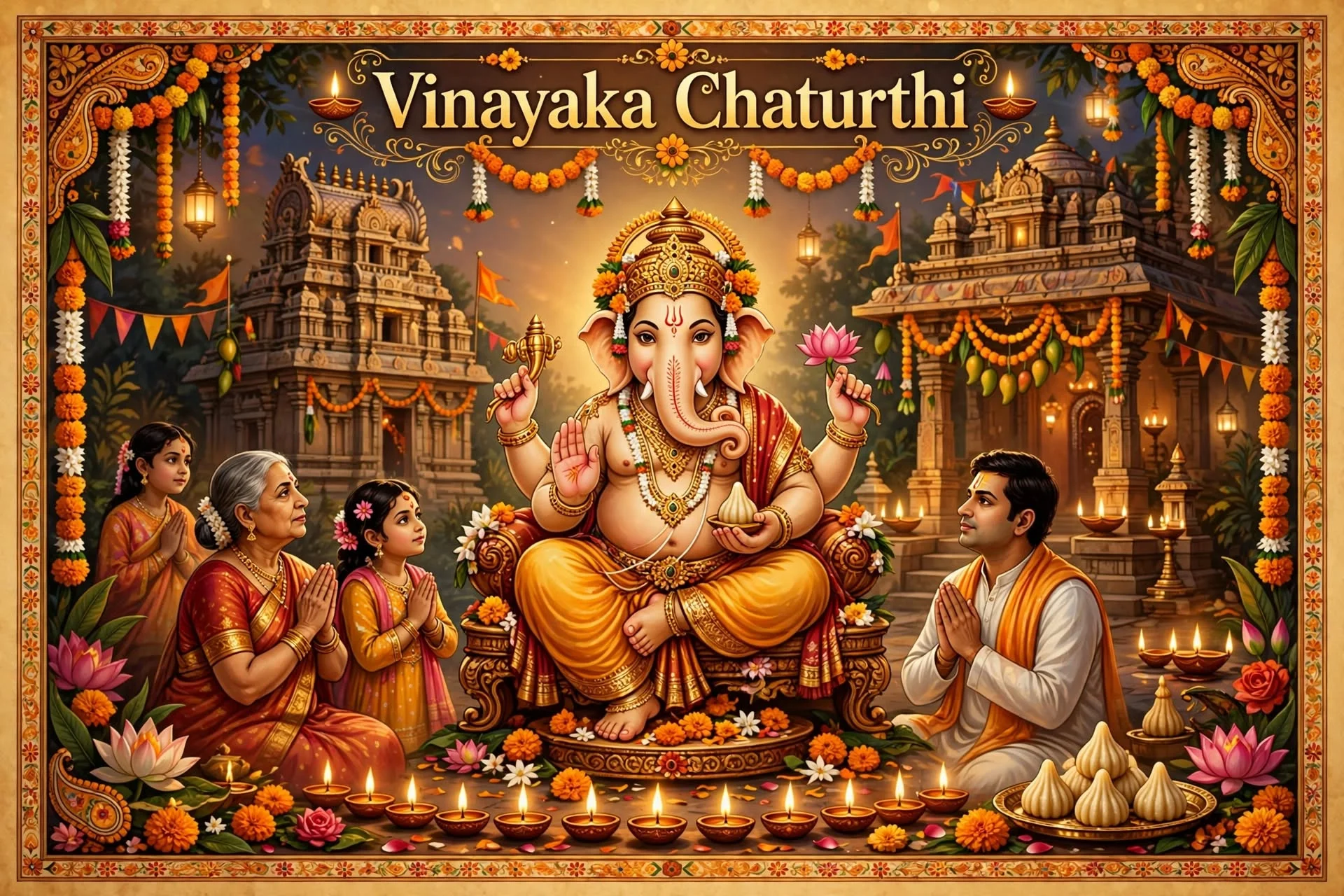
Vinayaka Chaturthi
Vinayaka Chaturthi is a Hindu religious observance dedicated to Lord Ganesha, the remover of obstacles, the deity of wisdom, knowledge and auspicious beginnings. It is observed on Shukla Paksha Chaturthi, the fourth lunar day of the waxing fortnight, in each Hindu lunar month. Devotees worship Lord Ganesha through prayers, fasting, mantra chanting, offerings and meditation to seek his blessings for success, prosperity, wisdom and the removal of difficulties.